A warehouse digital twin gives operators a live virtual model for testing warehouse decisions before changing physical operations. It connects layout, inventory, workflows, labor, equipment, automation, and operational data so teams can see how changes affect the facility.
Unlike a static 3D model, the twin can synchronize with WMS, WCS/WES, ERP, IoT, and automation data as conditions change. This makes it useful for layout planning, slotting, picking, labor allocation, capacity planning, and equipment optimization.
This guide explains how warehouse digital twins work, which technologies power them, where they create value, how to implement them, and which KPIs show whether optimization is working.
What Is a Warehouse Digital Twin?
A warehouse digital twin is a virtual representation of a physical warehouse that models its structure and operating behavior. It can represent aisles, racks, docks, inventory, equipment, workers, task rules, travel paths, queues, and automation logic.
Its value comes from modeling relationships. A layout change can affect walking distance, replenishment traffic, picking congestion, labor, and throughput at once.
PepsiCo shows the potential. In January 2026, early pilots at selected U.S. manufacturing and warehouse facilities used physics-based digital twins. Initial deployment produced a 20% throughput increase, nearly 100% design validation, and 10%–15% lower capital expenditure by finding hidden capacity and testing investments virtually.
How a Warehouse Digital Twin Works
A digital twin warehouse works by linking real-time data from inventory systems, sensors, and robotics to a virtual warehouse model. The model continuously mirrors operations, while a warehouse simulation and AI help teams test changes and optimize decisions without disrupting the physical warehouse.
Capturing Warehouse Data from Connected Systems Creates the Operating Baseline
Capturing warehouse data from connected systems starts with data integration. APIs connect the WMS, IoT devices, inventory systems, and robotics to bring together orders, inventory positions, SKU data, equipment events, labor availability, routing rules, and automation status.
Creating a Live Virtual Warehouse Model Connects Data with Physical Flow
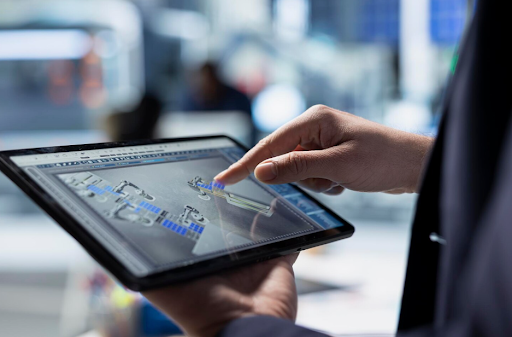
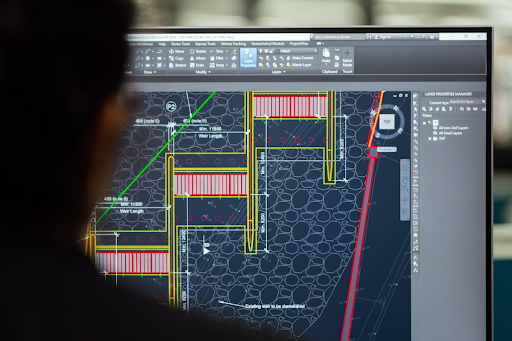
Creating a live virtual warehouse model uses physical mapping to represent the building layout, racks, aisles, docks, workstations, equipment, robots, and travel paths in 3D. Synkrato’s 3D Digital Twin helps teams visualize these operations and model changes before physical implementation.
Synchronizing Physical and Digital Operations Keeps the Twin Current
Synchronizing physical and digital operations provides continuous sync, updating the virtual model as inventory, movement, workload, and equipment conditions change. In June 2026, UPS said its global-network digital twin updates every 10 minutes.
Running Simulations and What-If Scenarios Measures Operational Tradeoffs
Running simulations and what-if scenarios supports process testing before warehouse changes are implemented. Teams can test new layouts, automation, worker or robot paths, and operating rules, then compare their effects on throughput, congestion, travel, equipment utilization, and cost.
Using AI to Optimize Warehouse Decisions Expands the Search Space
Using AI to optimize warehouse decisions adds path optimization and predictive insights to the digital twin. AI can identify shorter worker or robot routes, bottlenecks, labor requirements, and inventory risks, while simulation checks recommended changes against real operating constraints.
Technologies That Power a Warehouse Digital Twin
The technologies that power a warehouse digital twin include real-time IoT sensors, computer vision, artificial intelligence, 3D visualization platforms, enterprise systems, robotics, and cloud computing. Together, they provide the physical, operational, spatial, and computing inputs needed to maintain and analyze the virtual warehouse.
| Technology | Role in the Digital Twin | Data or Capability |
| WMS integration | Provides inventory and task information | Orders, picks, putaway, replenishment |
| WCS/WES integration | Provides automation execution information | Conveyor states, sorter events, equipment queues |
| ERP integration | Connects warehouse and enterprise demand | Purchase orders, production demand, inventory requirements |
| Internet of Things (IoT) & Smart Sensors | Provides live equipment and environmental telemetry | Temperature, vibration, equipment status, utilization |
| RFID and barcode | Identifies inventory and records movement | Item scans, pallet movements, location updates |
| Computer Vision & Autonomous Scanning | Uses cameras, object recognition, and LiDAR mapping | Stock levels, high-rack scans, physical floor changes |
| Artificial Intelligence & Machine Learning | Produces predictive and warehouse optimization insights | Labor forecasts, slotting optimization, predictive maintenance |
| AMRs and AGVs | Provides mobile automation information | Robot routes, tasks, traffic, charging status |
| Cloud Computing & Big Data Platforms | Handles large multi-source data streams | WMS, IoT, robotics, and edge-device data |
| 3D Rendering & Open Simulation Engines | Creates spatial models for scenario analysis | Layouts, workflows, equipment positions, process scenarios |
Key Benefits of Using a Warehouse Digital Twin
Some of the key benefits of using a warehouse digital twin are real-time warehouse visibility, risk-free testing, higher operational efficiency, and lower costs. It helps managers test changes safely, spot bottlenecks, and optimize daily operations using current warehouse conditions.
- Real-Time Warehouse Visibility: Supports live operations, asset tracking, and bottleneck detection by showing inventory, equipment, workload, queues, and congestion as conditions change. Managers can identify where operational slowdowns are developing and respond earlier.
- Improved Warehouse Layout Optimization: Provides risk-free testing of racks, storage zones, staging areas, aisles, workstations, and equipment. Teams can use what-if scenarios to compare layouts before committing labor, capital, or downtime to physical changes.
- Higher Inventory Accuracy: Improves decisions by maintaining reliable item, quantity, and location information. Better asset tracking also helps teams identify inventory movement, reduce stockouts and overstocking, and avoid unnecessary searching during warehouse execution.
- Faster Picking and Order Fulfillment: Comes from reducing pick-path travel and improving SKU placement, routing, and replenishment. Synkrato’s AI Slotting Recommendations analyzes inventory, demand patterns, and order flows to recommend better slot locations.
- Better Labor Planning and Workforce Productivity: Supports labor management by matching staffing levels and shift schedules with expected workload, task requirements, travel, process rates, and zone capacity. Teams can evaluate labor requirements before workload changes reach warehouse operations.
- Predictive Maintenance for Warehouse Equipment: Uses equipment condition and operating patterns to identify potential failures earlier. Managers can assess how downtime could affect queues, throughput, and connected processes, then prioritize maintenance before critical equipment disrupts fulfillment.
- Lower Operating Costs and Improved ROI: Lower operating costs and improved ROI come from testing operational and capital tradeoffs before implementation. At Ferrero’s Alba, Italy, high-bay warehouse, virtual commissioning reduced commissioning from 19 to 13 weeks, a 30% reduction.
- Better Customer Service and Order Accuracy: Results from more stable inventory, picking, labor, and equipment performance. Fewer stockouts, picking errors, bottlenecks, and missed cutoffs help warehouses maintain more predictable order fulfillment.
Warehouse Operations You Can Optimize with a Digital Twin
You can optimize warehouse operations with a digital twin across layout, slotting, picking, inventory, labor, capacity, docks, and automation. For instance:
- Improve warehouse layout planning and space utilization by testing racks, storage zones, aisles, and workstations.
- Apply slotting optimization and dynamic slotting based on SKU demand, velocity, cube, and travel.
- Use picking path optimization and pick path mapping to reduce worker and robot travel.
- Improve inventory replenishment and verification through inventory verification and replenishment thresholds.
- Optimize dock scheduling around doors, staging, labor, and workload.
- Use labor allocation and forecasting and labor forecasting for staffing.
- Test warehouse capacity planning under demand scenarios.
- Improve robot fleet and conveyor optimization through warehouse robotic fleet testing.
- Support workforce onboarding and navigation with guided onboarding.
Real-World Warehouse Digital Twin Use Cases
Real-world warehouse digital twin use cases show how different facilities apply virtual testing, real-time monitoring, and simulation to specific operating constraints.
E-Commerce Fulfillment Centers Use Digital Twins to Manage Peak Demand
E-commerce fulfillment centers use digital twins to simulate what-if changes, manage labor shortages, improve pick paths, and scale robot fleets safely. Teams can stress-test peak-season order volumes and automation capacity without slowing live fulfillment operations.
Retail Distribution Centers Use Digital Twins to Improve Layout and Slotting Design
Retail distribution centers use digital twins for layout and slotting design, including smart slotting, floor-plan testing, and bottleneck detection. In its 2026 U.S. deployment, PepsiCo identified up to 90% of potential issues before physical modifications.
Manufacturing Warehouses Use Digital Twins for Robot and Automation Testing
Manufacturing warehouses use digital twins for robot and automation testing, including hardware fit, conveyor behavior, AGV paths, and virtual commissioning. Ferrero reached 98% target availability in three weeks instead of six months and detected about 95% of errors before final commissioning.
Cold Storage Warehouses Use Digital Twins for Real-Time Monitoring and Safety
Cold storage warehouses use digital twins for real-time monitoring and safety, including temperature zones, equipment condition, door activity, and material movement. Live heat maps can also reveal congestion where people, forklifts, and automated equipment share constrained spaces.
3PL Providers Use Digital Twins for Workforce and Process Optimization
3PL providers use digital twins for workforce and process optimization across customers with different volumes and SLAs. They can test labor allocation, order-grouping rules, storage demand, capacity, and peak scenarios before committing shared warehouse resources.
How to Implement a Warehouse Digital Twin Successfully
You can implement a warehouse digital twin successfully by starting with a focused, high-impact use case, connecting the required data, building a minimum viable model, validating it, and then scaling it into a real-time decision-support tool.
Step 1: Assess Warehouse Processes and Define Goals and Use Cases
Assess warehouse processes and define goals and use cases by selecting a high-cost problem such as picker travel, bottlenecks, sorting, or fleet sizing. Set measurable KPIs for throughput, labor efficiency, or asset utilization before building the model.
Step 2: Identify and Map the Available Data Ecosystem
Identify and map the available data ecosystem by auditing warehouse management systems (WMS), enterprise resource planning (ERP), internet of things (IoT), telematics, spatial, environmental, and automation data. Prioritize the inputs required for the selected use case instead of connecting every available data source initially.
Step 3: Create a Minimum Viable Digital Warehouse Model
Create a minimum viable digital warehouse model that represents the physical facility, resources, process logic, travel paths, operating rules, and capacity constraints. Add model details only when it improves the accuracy of the targeted operational decision.
Step 4: Integrate WMS, ERP, IoT, and Automation Systems
Integrate WMS, ERP, IoT, and automation systems in stages using APIs and connected data feeds. Start with the systems required for the first use case, then expand connectivity as the digital twin supports more operational decisions.
Step 5: Simulate and Validate the Digital Twin with Historical Data
Simulate and validate the digital twin by testing what-if scenarios and comparing outputs with historical throughput, travel, queues, and utilization. Synkrato’s Simulation & Optimization helps teams compare scenarios before changing layouts, labor plans, or pick paths.
Step 6: Scale, Upskill, and Continuously Optimize the Digital Twin
Scale, upskill, and continuously optimize the digital twin by moving from a warehouse planning model to real-time decision support. Train warehouse and continuous improvement teams, compare simulated results with actual performance, and feed operational changes back into the model.
Common Implementation Challenges and How to Overcome Them
Common warehouse digital twin implementation challenges include poor data quality, siloed systems, high setup costs, skill gaps, employee resistance, and cybersecurity vulnerabilities. Clean data practices, gradual integration, and targeted team training can reduce these risks.
Poor Data Quality and Siloed Systems Require Strong Data Governance
Poor data quality and siloed systems can make the virtual model unreliable. Establish data rules to clean and verify inventory records, and use APIs or middleware to connect WMS, ERP, and other operational systems consistently.
High Costs and Complex Setup Require a Phased Business Case
High costs and complex setup can make facility-wide deployment difficult. Start small with a high-value zone, measure operational improvements and ROI, then use proven results to support investment in additional areas.
Staff Resistance and Skill Gaps Require Targeted Team Training
Staff resistance and skill gaps can limit adoption of digital-twin recommendations. Provide hands-on training and involve warehouse operators early so teams understand the model, challenge inaccurate assumptions, and confidently apply its insights.
Cybersecurity Vulnerabilities Require Controlled System Access
Cybersecurity vulnerabilities increase as equipment, sensors, software, and cloud systems become connected. Use encryption, restricted user access, authentication, and routine security audits to protect operational data and reduce unauthorized access across connected systems.
How to Measure the Success of a Warehouse Digital Twin
You can measure the success of a warehouse digital twin by tracking KPIs across operational efficiency, predictive accuracy, and financial return against pre-implementation baselines.
- Travel and Path Optimization: Track reductions in average pick-and-putaway travel distance and time.
- Throughput and Cycle Time: Compare order volume and fulfillment speed with baseline performance.
- Space Utilization: Measure effective storage capacity and slotting density improvements.
- Forecast Variance: Compare labor and demand forecasts with actual warehouse results.
- Bottleneck Identification: Track whether predicted constraints match physical workflow bottlenecks.
- Downtime Reduction: Measure unplanned equipment failures and predictive maintenance accuracy.
- Inventory and Picking Accuracy: Track physical inventory variance and correctly picked orders.
- Cost Avoidance: Quantify savings from testing changes virtually before physical implementation.
- Deployment Speed: Measure time saved when launching validated automation or software changes.
Future Trends in Warehouse Digital Twin Technology
Future trends in warehouse digital twin technology will make twins more AI-driven, autonomous, collaborative, robotics-aware, sustainable, and connected across supply chains.
| Future Trend | How It Will Change Warehouse Digital Twins |
| Generative AI and Reinforcement Learning | Generate and evaluate packing, routing, inventory placement, and capacity strategies with less manual scenario design. |
| Autonomous Warehouse Optimization | Connect detection, prediction, simulation, approval, and execution to shorten operational decision loops. |
| Green Warehousing | Model energy consumption, equipment movement, asset utilization, and process alternatives to support more sustainable operations. |
| Hyperautomation and Robot Fleet Pre-Training | Train AMRs and AGVs in physics-based virtual environments for path planning and interactions before physical deployment. |
| Supply Chain Digital Twins and Industrial Metaverse Collaboration | Connect warehouses, transportation, production, and inventory while enabling teams to collaborate in shared virtual environments. |
Transform your warehouse decisions with Synkrato’s digital twin platform. Book a demo to explore simulation-driven optimization, improve throughput, and achieve faster, data-backed operational outcomes.
Frequently Asked Questions
What is a warehouse digital twin?
A warehouse digital twin is a virtual model combining layout, inventory, workflows, resources, and operational data. Synkrato uses a 3D Digital Twin so warehouse changes can be visualized and tested before execution.
How does a warehouse digital twin work?
A warehouse digital twin connects operational data to a virtual model, synchronizes changing warehouse conditions, and runs simulations. With Synkrato, teams can also evaluate AI-driven recommendations before applying them physically.
How is a warehouse digital twin different from a warehouse simulation?
Warehouse simulation tests modeled scenarios, while a digital twin can remain synchronized with changing physical operations. Synkrato combines the digital warehouse model with simulation so teams can repeatedly test operational decisions.
What technologies are required to build a warehouse digital twin?
Warehouse digital twins can integrate WMS, WCS/WES, ERP, IoT, RFID, barcode data, computer vision, AI, robotics, cloud, and edge computing. The exact technology stack depends on the processes being modeled.
Can a warehouse digital twin integrate with an existing WMS?
Yes. WMS data can supply inventory, locations, orders, tasks, replenishment, and execution history to the digital twin. Synkrato’s Digital Twin is designed to extend warehouse decision-making beyond existing WMS workflows.
How much does a warehouse digital twin cost?
Warehouse digital twin cost depends on model scope, required fidelity, integrations, telemetry, simulation complexity, and number of facilities. A focused implementation can begin with one valuable operational problem before expanding.
How long does implementation take?
Implementation time depends on data readiness, integration complexity, warehouse size, model fidelity, and validation requirements. Starting with a defined flow or constraint reduces unnecessary modeling and supports phased deployment.
Which industries benefit the most from warehouse digital twins?
E-commerce, retail distribution, manufacturing, cold storage, and 3PL operations can benefit when complex flows or automation make physical experimentation expensive. Synkrato can model layout, labor, slotting, and other warehouse decisions before implementation.
Can small and mid-sized warehouses use digital twins?
Yes. Small and mid-sized warehouses can start with a narrow operational problem rather than modeling every process immediately. Synkrato’s approach allows teams to focus simulation on decisions with measurable operational impact.
What KPIs should you track after implementation?
Track fulfillment cycle time, picking accuracy, inventory accuracy, throughput, space utilization, labor productivity, equipment uptime, and cost per order. Also compare simulated outcomes with actual results to maintain digital-twin accuracy.