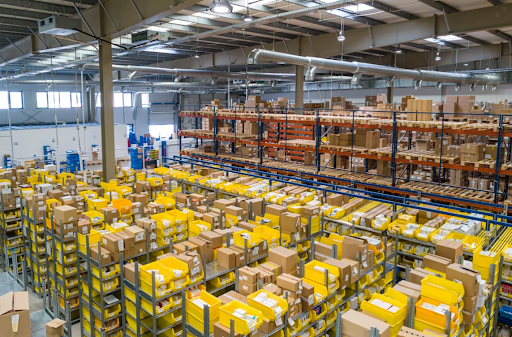
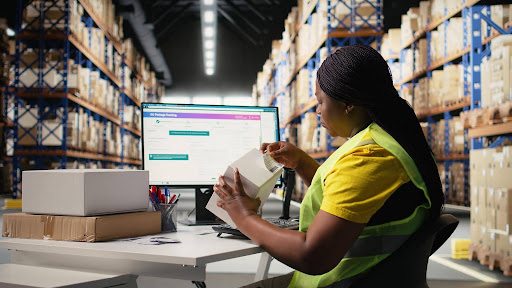
Warehouse digitalization is the shift from disconnected warehouse execution to a connected operating model in which transactions, equipment, labor, inventory, and decisions share contextual data. This includes shortening the time between an event on the floor and the best response to it.
That helps as cost pressure rises. About 48.6% consider cost reduction as their primary organizational goal. Thus, the strongest digitalization programs start with measurable operational constraints, connect systems around them, and automate decisions only where data quality supports consistently reliable action.
In this blog, we cover warehouse digitalization technologies, processes, benefits, implementation challenges, and future trends.
What Is Warehouse Digitalization?
Warehouse digitalization is the shift from manual, disconnected warehouse processes to connected, data-driven operations. It combines WMS software with barcodes, RFID, IoT sensors, computer vision, mobile devices, and robotics to track inventory, coordinate work, and move goods.
Instead of only recording activity, digital warehouses use real-time data to respond to changes in demand, inventory, congestion, and equipment availability.
Digital Warehousing vs. Traditional Warehousing
Digital warehousing uses connected systems and real-time data to make faster decisions, while traditional warehousing relies more on manual processes and periodic updates.
| Area | Traditional | Digital |
| Data | Paper and spreadsheets | Real-time connected data |
| Labor | Manual movement | Automated workflows |
| Decisions | Periodic and reactive | Real-time and responsive |
| Cost | Lower upfront cost | Higher initial investment |
| Scale | Harder to scale | Built for higher complexity |
Signs Your Warehouse Needs Digitalization
Some signs that indicate your warehouse needs digitalization include recurring inventory errors, slow processing, labor pressure, and limited visibility that can no longer be solved reliably with more staff or supervision.
- Frequent inventory discrepancies point to tracking gaps
Frequent inventory discrepancies such as stock mismatches, misplaced items, and emergency cycle counts show that physical inventory and system records are drifting apart. Bohn reduced inventory management time by 92%, from six hours to 30 minutes, in Mexico in 2025 using RFID-supported tracking.
- Heavy reliance on spreadsheets or paper slows decisions
Heavy paper reliance becomes a problem when clipboards, spreadsheets, and manual logs control replenishment, slotting, or exceptions. Updates reach warehouse teams too late to support real-time decisions.
- Slow order processing exposes workflow bottlenecks
Slow processing times often result from waiting between picking, replenishment, packing, and shipping. Digital workflows expose these delays and help coordinate the next task faster.
- High labor costs and overtime expose inefficient work
Labor shortages, high turnover, overtime, and excessive walking make labor-intensive operations harder to scale. In June 2026, U.S. warehousing and storage employees averaged $26.85 per hour and 39.7 hours weekly.
- Limited operational visibility hides errors and wasted capacity
High error rates in picking and shipping become harder to correct when managers cannot see inventory, backlog, labor, and equipment together. Poor space utilization can also remain hidden without accurate location and capacity data.
- Difficulty scaling operations exposes manual dependencies
Difficulty scaling becomes clear when higher-order volumes require proportionally more people, spreadsheets, and manual coordination. Digitalization standardizes workflows, data, and exception rules so operations can handle growth without adding the same level of overhead.
Core Technologies That Enable Warehouse Digitalization
The core technologies that enable warehouse digitalization are WMS, WES, cloud computing, IoT, AI, identification tools, robotics, computer vision, digital twins, and predictive analytics. Together, they connect warehouse data with physical execution and decision-making.
| Technology | Role in a Digital Warehouse |
| Cloud-Based WMS | Controls inventory flow, stock levels, replenishment, order allocation, and worker tasks in real time. |
| Warehouse Execution Systems (WES) | Connects WMS-level priorities with conveyors, robotics, and other floor automation to coordinate execution. |
| Barcodes and Mobile Scanners | Capture receiving, picking, packing, and shipping transactions quickly without paper-based data entry. |
| RFID Tags | Enable line-of-sight-free identification, bulk inventory tracking, and faster cycle counts. |
| IoT Sensors | Track location, temperature, utilization, and equipment condition. DHL reported nearly 800,000 IoT sensors globally in 2025. |
| AI and Machine Learning | Optimize slotting, forecasting, replenishment, anomaly detection, and resource allocation as conditions change. |
| Autonomous Mobile Robots (AMRs) | Move goods dynamically and reduce non-value-added worker travel. AS/RS & Cube Storage add automated high-density storage and retrieval. |
| Wearables and Voice Picking | Provide hands-free task instructions that support faster picking and reduce unnecessary movement. |
| Cloud Computing | Connects warehouse applications, APIs, analytics, and data across facilities without separate infrastructure at every site. |
| Computer Vision | Detects defects, verifies loads, counts inventory, and validates movement using cameras and AI. |
| Digital Twins | Model layout, inventory, labor, equipment, and material flow so changes can be tested before physical implementation. |
| Predictive Analytics | Anticipates workload, congestion, replenishment needs, capacity constraints, and equipment failures before they disrupt operations. |
Which Warehouse Processes Should Be Digitalized First?
Warehouse processes such as receiving and inventory logging should be digitized first because accurate inbound data supports every process that follows. From there, prioritize processes where digitalization can reduce delays, improve control, or prevent errors from moving downstream.
- Receiving and Inspection should establish accurate inbound data: Use digital receiving to validate ASNs, quantities, condition, and exceptions as goods enter the warehouse. This creates a reliable starting record before inventory moves deeper into the facility.
- Put-Away Tracking should maintain location accuracy: Assign and confirm bin locations during putaway based on capacity, SKU velocity, handling requirements, and downstream demand. This prevents inventory from becoming difficult to locate immediately after receiving.
- Cycle Counting should protect inventory accuracy continuously: Replace large periodic counts with targeted digital cycle counting based on inventory movement, discrepancies, and risk. IKEA used 250+ autonomous inventory drones across 73 locations in nine countries in 2024 to support inventory checks.
- Slotting Optimization should adapt locations to demand: Use order history, SKU affinity, dimensions, replenishment frequency, and congestion to identify better storage locations as demand patterns change. For example, Synkrato’s AI Slotting uses warehouse and order data to identify better SKU locations as demand and inventory patterns change.
- Order Picking should optimize end-to-end fulfillment: Move from printed pick lists toward digitally directed picking. Optimize travel and pick sequences without creating replenishment shortages or downstream packing congestion.
- Packing and Shipping should strengthen final verification: Connect packing, weighing, labeling, documentation, carrier selection, and shipment validation so errors can be caught before orders leave the warehouse.
- Returns Management should accelerate inventory disposition: Digitally classify returned goods for restocking, inspection, repair, quarantine, or disposal so usable inventory becomes available sooner.
- Workforce Scheduling should follow the expected workload: Use order profiles, inbound schedules, backlog, cutoffs, and expected volume to allocate labor by shift and warehouse zone instead of relying mainly on historical staffing levels.
Benefits of Warehouse Digitalization
The main benefits of warehouse digitalization are better inventory accuracy, higher productivity, faster fulfillment, lower costs, greater visibility, better decisions, improved space use, and more reliable customer service.
- Improve inventory accuracy: Live tracking and automated checks reduce mismatches between physical and recorded stock. They also support better replenishment and reduce stockouts or excess inventory.
- Increase warehouse productivity: Digital workflows reduce searching, unnecessary travel, and repetitive work. PUMA reports 99% order accuracy, 150,000+ units shipped daily at peak, and 10X higher inventory capacity in its automated fulfillment operation.
- Accelerate order fulfillment: Live order status helps teams identify priority orders, shortages, and capacity constraints before they delay picking, packing, or shipping.
- Reduce operational costs: Intelligent warehouse data exposes repeated handling, rework, idle equipment, unnecessary travel, and overtime, so managers can target specific sources of waste.
- Enhance warehouse visibility: Managers can see inventory, orders, labor, and equipment together. In 2025, 90%+ of DHL warehouses worldwide had at least one warehouse automation or digitalization solution, supported by 7,500+ robots and 200,000+ smart handheld devices.
- Improve decision-making with real-time data: Current demand, inventory, capacity, and workflow data help managers make better labor, slotting, replenishment, and automation decisions.
- Optimize warehouse space utilization: Digital models reveal unused cube, poor SKU placement, congestion, and honeycombing, helping warehouses gain capacity without immediately adding space.
- Increase customer satisfaction: Better inventory accuracy and more predictable fulfillment reduce wrong orders, cancellations, late shipments, and avoidable returns.
Warehouse Digitalization Roadmap: Step-by-Step Implementation
A warehouse digitalization roadmap should move from assessment to goals, implementation, and scale.
Step 1. Assess current warehouse operations
Start with a clear performance baseline.
- Map receiving, storage, picking, packing, and shipping.
- Track accuracy, cycle time, throughput, overtime, and cost per order.
- Identify paper, manual entry, and disconnected systems.
Step 2. Identify bottlenecks and opportunities
Find where delays, errors, and costs originate.
- Measure where orders and inventory wait.
- Identify recurring exceptions and manual interventions.
- Rank opportunities by impact and feasibility.
- Separate process issues from warehouse technology gaps.
Step 3. Set warehouse digital transformation goals
Turn the biggest problems into measurable targets.
- Set 3–5 targets for accuracy, fulfillment, throughput, or cost.
- Give each KPI a baseline, target, and owner.
- Match investment and timelines to expected returns.
Step 4. Choose the right technology stack
Choose technology based on the operational need.
- Establish the WMS as the digital core.
- Match RFID, IoT, mobile tools, analytics, or robotics to specific constraints.
- Define SKU, location, dimension, and weight data standards.
- Check APIs, scalability, security, and integration.
- Redesign inefficient workflows before automating them.
Step 5. Integrate existing systems
Create reliable data flow across smart warehouse systems.
- Clean and migrate master data.
- Connect WMS with ERP, eCommerce, transportation, and automation systems.
Step 6. Launch a pilot project
Test the solution before wider deployment. Synkrato’s Simulation & Optimization can take this further by testing layout, labor, and workflow changes virtually before committing them to the live warehouse.
- Pilot one zone, shift, product group, or process.
- Test peaks, exceptions, and downtime.
- Compare results with baseline KPIs.
- Fix problems before scaling.
Step 7. Train warehouse teams
Prepare employees for new workflows and exceptions.
- Cover devices, workflows, and escalation procedures.
- Define when automated recommendations can be overridden.
- Use frontline feedback to refine processes.
Step 8. Monitor, optimize, and scale
Scale only after results are consistent.
- Track KPIs against targets.
- Add technology as new constraints emerge.
- Expand successful workflows using common standards.
- Recalculate ROI as volumes and costs change.
Common Challenges and How to Overcome Them
The main warehouse digitalization challenges are high upfront costs, legacy system integration, poor data quality, workforce resistance, and cybersecurity risks. Each needs a different response to protect adoption and ROI. For instance:
- Large investments in hardware, software, and robotics can create high initial costs and ROI uncertainty. Start with high-value use cases, consider modular solutions or RaaS, and expand after results justify further investment.
- New automation can struggle with legacy system integration when older WMS and ERP systems cannot exchange data easily. Middleware and APIs can bridge these systems without requiring immediate replacement.
- Automation and AI depend on reliable inputs, making poor data quality a major risk. Fix duplicate SKUs, incorrect dimensions, location errors, and missing records, then establish clear data ownership and validation rules.
- Workforce resistance can slow adoption when employees do not trust new processes. Involve floor teams early, provide hands-on training, and show how technology changes their daily work.
- Connected robots, sensors, controllers, and cloud applications increase cybersecurity risks. Go for OT-specific controls that account for security, reliability, performance, and safety.
Real-World Warehouse Digitalization Examples
Some of the real-world warehouse digitalization examples are as follows:
Retail and eCommerce use automation to compress fulfillment time
PUMA combines automated storage with software-driven fulfillment to support high-volume eCommerce. Its AutoStore operation has achieved 99% order accuracy, 10X warehouse capacity, and 150,000+ units shipped per day, while reducing peak delivery times from about two weeks to near same-day delivery.
Manufacturing connects autonomous movement with production demand
BMW’s Regensburg plant connected nearly 50 automated tugger trains and more than 140 Smart Transport Robots in 2024. It handles about 10,000 part deliveries per workday through a cloud-based traffic-control system.
3PLs digitalize at network scale
DHL has invested more than €1 billion in contract logistics automation over three years, showing that 3PL digitalization increasingly involves repeatable technology standards across customers and facilities.
Healthcare operations use digital twins to reduce implementation risk
Terumo’s warehouse project in Belgium uses a digital twin for Factory Acceptance Tests, allowing multiple operating scenarios to be tested virtually before commissioning. The project targets 70% more storage capacity in the same space while maintaining continuous operations.
The same approach can be applied with Synkrato’s 3D Digital Twin, which lets warehouse teams model the facility and evaluate operational changes before altering the physical environment.
Food and beverage operations use simulation for high-availability automation
Ferrero used a warehouse digital twin to reduce high-bay warehouse commissioning time by 30% and identify about 95% of errors before the hot commissioning phase. More importantly, the operation reached its 98% target availability in three weeks instead of the six months normally required, reducing time to target availability by 88%.
Future Trends in Warehouse Digitalization
The key future trends in warehouse digitalization are AI orchestration, autonomous robots, real-time IoT visibility, digital twins, predictive maintenance, RaaS, and sustainable operations.
| Trend | What Changes Next |
| AI and Advanced Orchestration | Balances work across people, inventory, and automation in real time. |
| Autonomous Mobile Robots (AMRs) | Handle more dynamic movement using live mapping and traffic data. |
| IoT and Real-Time Visibility | Turns live sensor and inventory data into immediate actions. |
| Digital Twins | Continuously test layouts, labor, volume, and automation changes. |
| Predictive Maintenance | Detects equipment issues before they cause downtime. |
| Robotics-as-a-Service (RaaS) | Adds flexible robotic capacity without large upfront investment. |
| Sustainable Operations | Optimizes energy, travel, equipment use, and storage efficiency together. |
How Synkrato Helps Accelerate Warehouse Digitalization
Synkrato helps warehouses digitalize operations by connecting AI-driven optimization, digital twins, simulation, and execution tools with existing systems.
- Improve slotting, putaway, replenishment, labor, and workflows with AI-driven optimization.
- Gain digital visibility through a 3D digital twin of warehouse operations.
- Use intelligent analytics to test layouts, labor, pick paths, and operational changes before implementation.
- Support scalable digital transformation by connecting AI slotting, simulation, labeling, mobility, and AI agents.
Build a smarter, connected warehouse with Synkrato. Book a Demo today.
Conclusion
Warehouse digitalization succeeds when it improves decisions before it adds technology. Start with measurable operational constraints, establish reliable data, connect execution systems, and then introduce AI, automation, sensors, or simulation where they can change an outcome.
The most advanced warehouses are therefore not simply more automated. They can see current conditions, test alternatives, respond faster, and continuously learn which operating decisions produce better cost, throughput, accuracy, and service.
Frequently Asked Questions
What is warehouse digitalization?
Warehouse digitalization connects inventory, labor, equipment, transactions, and analytics so warehouse decisions can respond to real-time conditions. Synkrato extends this approach by adding AI-driven optimization and digital-twin simulation above existing warehouse systems.
What technologies are used in digital warehouses?
Digital warehouses combine warehouse management systems (WMS), cloud applications, IoT sensors, RFID, mobile devices, computer vision, AI, robotics, predictive analytics, and digital twins. Synkrato connects several of these data sources to support simulation and operational decision-making.
How much does warehouse digitalization cost?
Warehouse digitalization has no standard cost because investment depends on facility size, integration complexity, automation, sensors, software, and implementation scope. A lower-risk approach is to prove ROI on one measurable constraint before scaling across the warehouse.