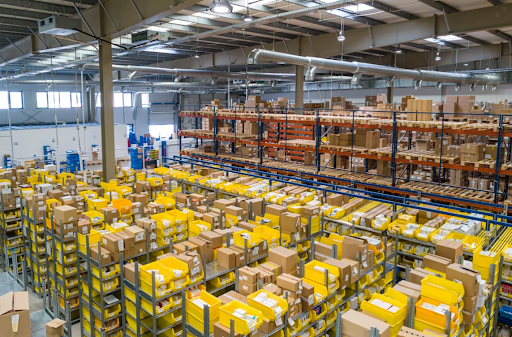

Choosing between Just-in-Time (JIT) and Just-in-Case (JIC) as an inventory strategy for your business is a working-capital, service-level, and supply-risk decision. U.S. manufacturers and trade businesses held $2.7402 trillion in inventory in June 2026, up 3.0% year over year, while the inventory-to-sales ratio fell from 1.39 to 1.30. The data shows why inventory value alone cannot determine the right strategy.
This blog covers JIT, JIC, their benefits and tradeoffs, selection factors, and when a hybrid inventory strategy works best.
Just-in-Time vs. Just-in-Case at a Glance
The main difference between Just-in-Time and Just-in-Case inventory is how each strategy balances inventory cost against supply and stockout risk. JIT operates with tighter inventory and depends on reliable replenishment. JIC deliberately holds more inventory where shortages could disrupt production, sales, or customer service.
| Factor | Just-in-Time (JIT) | Just-in-Case (JIC) |
| Inventory Level | Lower and closely aligned with consumption | Higher, with deliberate buffers |
| Primary Goal | Reduce excess inventory and working capital | Protect supply and service continuity |
| Storage Cost | Generally lower | Generally higher |
| Risk of Stockouts | Higher when demand or supply varies unexpectedly | Lower when safety stock is properly sized |
| Demand Suitability | Stable, visible, repeatable demand | Volatile, seasonal, or critical demand |
| Supplier Dependency | High; consistent supplier performance is essential | Lower short-term dependence because buffers absorb delays |
| Cash Flow | Less cash tied up in inventory | More cash committed to stock |
| Supply Chain Resilience | Depends on rapid replenishment and recovery | Provides additional response time |
| Best For | Predictable, frequently replenished products | Critical, long-lead-time, or supply-constrained products |
| Inventory Strategy | Pull-based and replenishment-driven | Risk-, forecast-, and safety-stock-driven |
What Is Just-in-Time (JIT) and How Does JIT Work?
Just-in-Time (JIT) is an inventory and production strategy where materials, parts, or products arrive only as they are needed for production or customer demand. It relies on real-time demand, short replenishment cycles, accurate inventory data, and dependable suppliers rather than building large inventories in advance.
JIT works through four connected mechanisms:
- Pull Production: Production or replenishment starts in response to actual demand instead of producing ahead of need.
- Demand Signals: Kanban cards, digital triggers, or system alerts signal when more materials or products should be made or moved.
- Frequent Deliveries: Suppliers deliver smaller quantities more often so materials arrive closer to when operations need them.
- Close Partnerships: JIT depends on trusted suppliers that can maintain quality and respond within tight lead times.
It changes warehouse execution. Synkrato’s AI Slotting Recommendations analyze inventory, demand patterns, seasonality, item velocity, and order flows so SKU locations can adjust as replenishment and demand conditions change.
Benefits of Just-in-Time Inventory
The main benefits of Just-in-Time inventory are lower holding costs, better cash flow, less waste, higher efficiency, stronger quality control, and better use of warehouse capacity. By keeping stock closer to actual requirements, businesses can reduce the cost and operational complexity created by unnecessary inventory.
Key benefits of Just-in-Time inventory include:
- Reduces warehousing, storage, insurance, handling, depreciation, and other inventory carrying costs.
- Frees working capital that would otherwise remain tied up in raw materials, work-in-process, or finished goods.
- Reduces overproduction and exposure to expired, outdated, damaged, or obsolete inventory.
- Improves inventory turnover by keeping stock moving instead of accumulating in reserve storage.
- Makes defects and process problems easier to identify because production and replenishment occur in smaller batches.
- Uses warehouse capacity more efficiently by reducing excess reserve inventory and unnecessary storage locations.
- Reduces material handling and internal inventory movements created by maintaining large stock buffers.
- Makes changes in actual demand more visible because excess inventory is less likely to hide slow-moving products.
What Is Just-in-Case (JIC) and How Does JIC Work?
Just-in-Case (JIC) is an inventory management strategy where companies store extra inventory, known as buffer or safety stock, to prepare for unexpected supply chain delays or demand spikes. Unlike JIT, JIC plans inventory ahead of expected requirements using demand, supply, and risk data.
JIC works through four connected mechanisms:
- Forecasting Demand: Historical sales, seasonality, forecasts, and demand variability help determine baseline inventory requirements and appropriate buffers.
- Stockpiling Material: Raw materials, components, or finished products are purchased ahead of expected requirements and held as safety stock.
- Triggering Reorders: Reorder points are set above zero based on factors such as consumption, safety stock, and replenishment lead time, allowing new inventory to arrive before existing stock is depleted.
- Absorbing Shocks: When demand exceeds forecasts or replenishment is delayed, buffer inventory covers the gap until normal supply resumes.
JIC should not mean increasing every SKU equally. Kenvue, for example, maintains two or more active sources for critical materials or appropriate safety stock. Inventory buffers can instead reflect lead-time variability, supplier concentration, demand volatility, and SKU criticality.
Benefits of Just-in-Case Inventory
The main benefits of Just-in-Case inventory are preventing stockouts, maintaining production during disruptions, responding to demand spikes, protecting supply continuity, and maintaining high customer satisfaction. Safety stock provides an operational buffer when actual demand or supply conditions differ from the plan.
Key benefits of Just-in-Case inventory include:
- Prevents stockouts when demand exceeds forecasts or replenishment arrives later than expected.
- Keeps production running when raw materials or components are delayed by suppliers.
- Protects operations from supply chain disruptions such as transportation delays, severe weather, supplier shortages, or factory shutdowns.
- Provides inventory to handle sudden demand spikes without waiting for the next replenishment cycle.
- Supports higher order fill rates by keeping products available when customers place unexpected or urgent orders.
- Maintains customer satisfaction by reducing backorders, delayed shipments, and unavailable products.
- Reduces the need for emergency purchasing or premium freight when normal supply is interrupted.
Higher JIC buffers can, however, increase storage and replenishment requirements. Synkrato’s 3D Digital Twin can model additional inventory inside a virtual warehouse, helping teams identify potential space, congestion, and material-flow constraints before increasing physical stock.
Challenges of Just-in-Time and Just-in-Case
The main challenges of Just-in-Time and Just-in-Case supply chain strategies come from opposite inventory positions: JIT has less protection against supply and demand variability, while JIC carries the financial and operational burden of additional stock.
| Challenge | Just-in-Time (JIT) | Just-in-Case (JIC) |
| Supply Chain Vulnerability | Supplier, transportation, or production delays can quickly interrupt operations because inventory buffers are limited. | Larger buffers reduce immediate exposure, but prolonged disruptions can still exhaust available stock. |
| Demand Shock Sensitivity | Sudden demand spikes can create shortages when replenishment cannot respond quickly enough. | Unexpectedly weak demand can leave the business holding more inventory than required. |
| Forecasting Precision | Requires accurate demand and replenishment data because forecast errors leave less time to correct shortages. | Overforecasting can create excess inventory, while underforecasting can make existing buffers insufficient. |
| Zero Error Margin | Limited buffers leave less room for defective materials, inaccurate inventory records, or logistics bottlenecks. | Additional inventory can hide underlying forecasting, supplier, or process problems for longer. |
| High Carrying Costs | Lower inventory limits carrying-cost exposure. | Storage, handling, insurance, administration, and financing costs rise as buffer inventory increases. |
| Tied-Up Capital | Less capital is committed to inventory, but shortages can create lost sales or downtime. | Working capital remains tied up in safety stock instead of being available elsewhere in the business. |
| Obsolescence and Spoilage | Lower stock levels reduce exposure to aging inventory. | Longer holding periods increase the risk of products expiring, deteriorating, or losing market relevance. |
| Space Requirements | Requires less storage but depends on efficient receiving and replenishment. | Additional stock requires more warehouse capacity and can increase congestion and material movement. |
Key Factors to Consider Before Choosing an Inventory Strategy
The key factors businesses should consider before choosing JIT or JIC are supplier reliability, demand predictability, lead times, disruption risk, carrying costs, demand volatility, supplier vulnerability, obsolescence risk, and warehouse capacity. The decision should balance supply chain risk and cost rather than focus only on inventory volume.
Key factors to evaluate include:
- Supplier reliability: Measure on-time-in-full (OTIF), defect rates, lead-time variability, and recovery time. JIT requires consistently dependable suppliers, while weaker performance may justify additional buffers.
- Demand predictability: Use SKU-level forecast error and historical variability. Stable demand supports tighter inventory, while volatile or seasonal demand may require greater protection.
- Lead times: Measure the complete replenishment cycle from ordering through receiving and putaway. Short, consistent lead times support JIT; long or variable lead times increase buffer requirements.
- Disruption risk: Assess exposure to transportation interruptions, supplier concentration, geopolitical events, and material shortages that could stop replenishment.
- Carrying costs: Include financing, storage, insurance, handling, shrinkage, and administration when determining whether additional JIC inventory is financially justified.
- Demand volatility: Determine how quickly unexpected demand spikes could consume available inventory before replenishment arrives.
- Supplier vulnerability: Evaluate single-source dependencies, geographic concentration, capacity constraints, and the availability of alternative suppliers.
- Obsolescence risk: Consider whether inventory can expire, deteriorate, become outdated, or lose value while held as safety stock.
- Warehouse capacity: Evaluate whether additional stock will increase slot utilization, replenishment, staging, congestion, travel, or labor requirements.
Synkrato’s Simulation & Optimization can test different inventory levels inside a digital twin, helping teams compare JIT and JIC scenarios against space, labor, flow, and warehouse constraints before implementation.
When to Choose Just-in-Time vs. Just-in-Case
Businesses should choose Just-in-Time (JIT) when demand is steady, forecasting is precise, and suppliers are reliable; Just-in-Case (JIC) is better when demand or supply is uncertain, and stockouts have high consequences. A hybrid approach may suit businesses where these conditions vary by SKU or supplier.
| Decision Factor | Best Scenarios for Just-in-Time | Best Scenarios for Just-in-Case |
| Stable Demand | Customer orders follow predictable patterns with low forecast error. | Demand is volatile, seasonal, or subject to sudden spikes. |
| Dependable Suppliers | Suppliers consistently meet quality, quantity, and delivery requirements. | Supplier performance is unstable or alternative sources are limited. |
| Lead Times | Replenishment is short, consistent, and responsive to changing demand. | Lead times are long, variable, or exposed to transportation delays. |
| Disruption Risk | Supply routes and suppliers have relatively low disruption exposure. | Global events, weather, shortages, or logistics interruptions threaten supply. |
| Critical Protection | A temporary shortage can be recovered without major operational impact. | A stockout could stop production, delay critical orders, or cause significant revenue loss. |
| Holding Costs | High inventory costs make tighter stock levels financially important. | Carrying additional inventory costs less than the expected impact of shortages. |
| Bulk Discounts | Smaller, frequent purchases remain economically viable. | Volume discounts or purchasing economics justify larger order quantities. |
When a Hybrid Inventory Strategy Makes Sense
A hybrid JIT-JIC strategy makes sense when products have different combinations of demand variability, lead time, supplier risk, margin, and service criticality. Predictable SKUs can operate with tighter replenishment, while high-risk or long-lead-time inventory receives larger buffers.
Amazon shows the scale possible with differentiated inventory positioning. In 2025, more than 13 billion Prime items arrived the same or next day globally, including more than 8 billion in the U.S.; U.S. volume increased more than 30% year over year.
How Synkrato Helps Optimize JIT and JIC Inventory Strategies
Synkrato helps warehouses evaluate how JIT, JIC, and hybrid inventory strategies could affect warehouse operations before implementation. This is important because changing inventory levels can also change space, replenishment, labor, congestion, and material flow.
With Synkrato, warehouse teams can:
- Compare different inventory levels and buffer strategies before making physical changes.
- Identify whether additional safety stock could create storage, congestion, or replenishment constraints.
- Evaluate how leaner inventory could affect SKU placement, picking, and material flow.
- Test JIT, JIC, and hybrid scenarios against warehouse capacity and operating conditions.
- Adjust inventory positioning as demand patterns, item velocity, seasonality, and order flows change.
By connecting inventory decisions for either Just In Time vs. Just In Case warehousing execution, Synkrato helps teams balance inventory availability, operating efficiency, and capacity instead of optimizing each independently.
Book a Demo to see how Synkrato can help optimize your inventory strategy.
FAQs
When should businesses choose a Just-in-Time inventory strategy?
Businesses should choose JIT when demand is predictable, suppliers are reliable, lead times are controlled, and carrying costs are high. It works best when replenishment problems can be identified and corrected quickly.
How can Synkrato help businesses determine the right inventory strategy?
Synkrato can simulate how JIT, JIC, and different inventory levels affect warehouse operations. Its simulation capabilities help teams evaluate space, flow, congestion, and labor before implementing inventory changes.
What are the benefits of Just-in-Case inventory management?
JIC reduces stockout risk and protects operations during demand spikes, supplier delays, or transportation disruptions. Its value is highest for critical inventory where the cost of running short exceeds the cost of carrying additional stock.
Why is inventory strategy optimization difficult without tools such as Synkrato?
Inventory changes affect working capital, storage, replenishment, travel, congestion, and labor simultaneously. Synkrato makes these operational tradeoffs visible through digital twin and simulation capabilities before changes reach the warehouse floor.
What factors should businesses consider when choosing between JIT and JIC?
Businesses should evaluate demand variability, supplier performance, lead-time variability, carrying cost, stockout impact, risk tolerance, and warehouse capacity. These factors determine whether leaner inventory or additional protection creates more value.
How does Synkrato support inventory optimization beyond JIT and JIC strategies?
Beyond selecting an inventory policy, Synkrato can support AI-driven slotting and scenario testing. These capabilities help teams determine where inventory should sit and how proposed inventory changes could affect warehouse performance.
Can businesses combine Just-in-Time and Just-in-Case strategies?
Yes. Businesses can use JIT for predictable, fast-moving SKUs while maintaining larger JIC buffers for critical, volatile, or supply-constrained inventory. This hybrid approach balances inventory efficiency with protection against demand and supply disruptions.