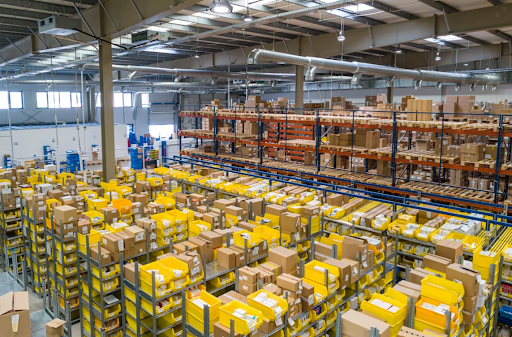

Warehouse labeling is the process of assigning clear, standardized identifiers to storage locations, inventory, equipment, and workflows so every item can be located, tracked, and handled accurately throughout warehouse operations. A well-designed warehouse labeling system eliminates ambiguity, enabling faster picking, replenishment, putaway, cycle counting, and shipping while supporting real-time inventory visibility.
UPS reported a 67% reduction in packages loaded onto the wrong vehicle after implementing its RFID-based Smart Package Smart Facility program across more than 1,000 U.S. facilities. The same approach helps warehouses use labels to validate inventory movements instead of simply marking storage locations.
This guide covers warehouse labeling best practices, label types, WMS integration, and practical ways to improve inventory accuracy and warehouse efficiency.
What Is Warehouse Labeling?
Warehouse labeling is the process of identifying storage locations, inventory, equipment, and shipments using labels linked to a WMS. Each label typically includes a human-readable location code and a machine-readable barcode, QR code, or RFID tag.
For example, a warehouse rack label like DC02-B-17-04-03 tells the WMS exactly where inventory should be stored or picked. This allows workers and scanners to verify every movement accurately.
Why Is Warehouse Labeling Important?
A well-designed warehouse labeling system improves inventory control, operational efficiency, and warehouse safety throughout daily operations.
Improves Inventory Accuracy
Warehouse labeling gives every storage location a unique identity, allowing the WMS to maintain a single source of truth for inventory. It also improves cycle counting, replenishment, and inventory reconciliation by linking every transaction to a verified location.
Speeds Up Picking and Putaway
A standardized location numbering system helps workers find storage locations faster while enabling the WMS to assign tasks in the most efficient sequence. Predictable warehouse paths reduce unnecessary travel and improve labor productivity.
Reduces Picking and Shipping Errors
Warehouse labels allow the WMS to verify the correct location, inventory, and destination before each transaction. This helps detect errors before inventory is picked, packed, or loaded while improving traceability across warehouse operations.
Enhances Warehouse Safety
Warehouse labels support safer operations by clearly identifying pedestrian walkways, forklift routes, hazardous zones, battery charging areas, and quarantine locations. The warehousing industry recorded 4.8 workplace injury and illness cases per 100 full-time workers in 2024.
Supports WMS and Warehouse Automation
Accurate warehouse location labeling enables the WMS to validate inventory movements, cycle counts, replenishment, and automated warehouse workflows. Synkrato extends this further by combining barcode scanning with Enterprise Mobility. This enables workers to complete warehouse tasks through guided mobile workflows while keeping inventory synchronized in real time.
Types of Warehouse Labels
Different warehouse labels serve different purposes, from identifying storage locations to tracking inventory, shipments, and warehouse assets.
Rack Labels
Rack labels identify storage locations for accurate picking and putaway.
- Beam and Shelf Labels: Identify bays, levels, and pick locations.
- Multi-Level or Totem Labels: Display multiple rack-level barcodes for ground-level scanning.
- Magnetic Rack Labels: Repositionable labels for changing warehouse layouts.
- Retro-Reflective Labels: Support long-range forklift scanning in high-bay warehouses.
- Capacity and Safety Plaques: Display rack load limits and safety information.
Shelf and Bin Labels
Shelf and bin labels organize small-part storage and improve inventory control.
- Magnetic Shelf Labels: Easy to update and reposition.
- Self-Adhesive Barcode Labels: Permanent or removable shelf identification.
- Color-Coded Shelf Tags: Visually identify storage zones or inventory status.
- Plastic Label Holders: Allow quick replacement of barcode inserts.
- Tote and Container Labels: Designed for reusable bins and containers.
- LPN Bin Labels: Unique barcode identifiers linked to the WMS.
Floor Labels
Floor labels define warehouse zones and traffic routes.
- Heavy-Duty Adhesive Labels: Resist forklift traffic and abrasion.
- Metal Floor Barcode Plates: Protect barcodes in high-traffic areas.
- Color-Coded Floor Markers: Identify staging lanes, docks, walkways, and forklift routes.
- Retro-Reflective Floor Labels: Improve long-distance scanning.
Pallet Labels
Pallet labels track logistics units throughout warehouse operations.
- LPN Labels: Link pallets to inventory, lot numbers, and expiration dates.
- Corner-Wrap Labels: Improve barcode visibility from multiple angles.
- SSCC Labels: GS1-standard identifiers for supply chain tracking.
- Special Handling Labels: Indicate fragile, hazardous, mixed, or temperature-controlled pallets.
Shipping and Receiving Labels
These labels support accurate inbound and outbound warehouse operations.
Receiving
- LPN or Pallet Labels: Record incoming inventory.
- Inspection and Status Labels: Identify quality holds and quarantine stock.
- Dock Door and Staging Labels: Mark receiving lanes and temporary storage.
Shipping
- Destination and Carrier Labels: Display delivery and tracking information.
- Special Handling Labels: Identify fragile, hazardous, or temperature-sensitive shipments.
- Outbound Staging Labels: Organize shipments by dock or route.
Asset and Equipment Labels
Asset labels identify warehouse equipment and support maintenance.
- Barcode Labels: Track assets and maintenance records.
- QR Code Labels: Link to manuals and service history.
- RFID Tags: Enable contactless equipment identification.
- Metal and Foil Nameplates: Withstand heat, chemicals, and outdoor environments.
- Tamper-Evident Labels: Show signs of removal to discourage theft or unauthorized replacement.
Barcode vs. RFID Labels: Which Should You Choose?
Barcodes and RFID solve different operational problems. A barcode is often better when a worker must prove that a specific location and item were selected. RFID is valuable when the warehouse needs to detect movement without stopping every item for an individual scan.
| Decision factor | Warehouse Barcode labels | Warehouse RFID labels |
| Reading method | Normally requires a visible code and an intentional scan | Can be read without direct line of sight |
| Label and infrastructure cost | Lower label and equipment cost | Higher tag, reader, antenna, integration, and testing costs |
| Reading speed | Usually, one intentional transaction at a time | Can detect several tagged units within a read zone |
| Process control | Strong when the worker must deliberately confirm a location or item | Strong when automatic presence, movement, or bulk detection is required |
| Infrastructure | Printers, scanners, mobile devices, and WMS integration | Tags, fixed or handheld readers, antennas, read-zone design, middleware, and WMS integration |
| Environmental considerations | Print quality, dirt, glare, damage, distance, and label orientation | Metal, liquids, tag orientation, interference, duplicate reads, and uncontrolled read zones |
| Ideal warehouse uses | Rack locations, bins, directed picking, putaway, receiving, shipping, and cycle counting | Dock-door detection, reusable assets, garment inventory, high-volume parcel movement, and unattended tracking |
Warehouse Labeling Standards and Best Practices
Following consistent labeling standards improves scan accuracy, simplifies warehouse operations, and keeps inventory records reliable as the warehouse grows.
- Create a Logical Location Numbering System: Build location codes using a consistent hierarchy, such as Zone–Aisle–Bay–Level–Bin (Z1-A03-B02-L04-P01). This helps workers, scanners, and the WMS identify locations without ambiguity. If slotting changes frequently, Synkrato’s AI Slotting recommends optimal storage locations while maintaining standardized location structures.
- Use Consistent Naming Conventions: A standardized structure improves inventory accuracy, simplifies cycle counting, and reduces picking errors. Keep numbering sequential, use consistent label placement, and ensure physical location IDs exactly match the corresponding records in the WMS.
- Apply Color Coding Where Appropriate: Use color coding to quickly identify warehouse zones, inventory status, and restricted areas without replacing barcode-based identification. Maintain consistent colors for receiving, storage, shipping, quarantine, and safety zones across the facility.
- Choose Durable Label Materials: Polyester and polypropylene labels work well for racks and shelves; retro-reflective labels support long-range scanning. Freezer-grade and heavy-duty floor labels withstand cold storage and high forklift traffic. Match adhesives to the mounting surface to prevent peeling and reduce replacement frequency.
- Ensure Labels Are Easy to Scan: Labels should be readable from normal operating distances using the warehouse’s existing scanners. Use high-resolution printing, adequate barcode size, sufficient quiet zones, and high-contrast colors to improve first-pass scan rates. Avoid placing labels where stretch wrap, pallets, or equipment can obstruct scanning.
- Regularly Inspect and Replace Labels: Include label inspections in routine cycle counts and warehouse audits. Replace faded, torn, or damaged labels immediately, and verify barcode readability before returning locations to service. Tracking scan failures and replacement frequency also helps identify problem areas, allowing warehouses to improve label materials and placement over time.
How to Implement a Warehouse Labeling System
Implementing a warehouse labeling system requires a structured approach that aligns physical locations, label data, and WMS workflows.
Step 1: Evaluate Your Warehouse Layout
Review your warehouse layout before creating labels to identify gaps and eliminate location errors.
- Audit both physical locations and WMS records.
- Verify racks, storage areas, docks, staging lanes, workstations, and temporary storage.
- Identify duplicate IDs, missing labels, inactive locations, and numbering inconsistencies.
- Update outdated location records before printing new labels.
Step 2: Design Warehouse Location Codes
Create a location structure that is easy to scale and maintain.
- Use a logical hierarchy for the warehouse.
- Reserve numbering for future warehouse expansion.
- Keep permanent location IDs separate from changing product information.
- Validate the structure for receiving, picking, replenishment, and cycle counting.
Step 3: Select the Right Label Types
Choose labels based on operating conditions instead of using one type throughout the warehouse.
- Use retro-reflective labels for high-bay racks.
- Select freezer-grade labels for cold storage.
- Install heavy-duty labels for warehouse floors.
- Use synthetic labels for reusable pallets and outdoor assets.
Step 4: Print and Install Labels
Generate labels from approved master data to maintain consistency.
- Print labels directly from WMS location records.
- Install labels in standard positions across all storage locations.
- Verify every barcode after installation.
- Record installation details for future maintenance.
Step 5: Integrate Labels with Your WMS
Ensure every label references a single source of location data.
- Configure physical and virtual storage locations.
- Define capacity, inventory restrictions, and workflow rules.
- Connect barcode scanners and mobile devices to the same WMS records.
- Avoid maintaining separate location lists outside the WMS.
Step 6: Test and Maintain the System
Validate the labeling system before full deployment and monitor performance continuously.
- Test receiving, putaway, picking, replenishment, packing, and shipping.
- Verify system responses to incorrect scans, duplicate labels, and damaged barcodes.
- Monitor scan success rates, inventory variances, and label replacement frequency.
- Use maintenance data to improve label placement and material selection over time.
Common Warehouse Labeling Mistakes to Avoid
Even a well-designed labeling system can create inventory errors if common implementation and maintenance mistakes are overlooked.
- Inconsistent Location IDs: Different naming formats can create multiple location records for the same storage position. Use standardized, system-generated location IDs from a single master data source.
- Poor Label Placement: Labels should remain visible and easy to scan during normal warehouse operations. Avoid placing them behind pallets, under stretch wrap, or in high-damage areas.
- Low-Quality or Damaged Labels: Faded, torn, or peeling labels reduce scan accuracy and increase inventory errors. Replace damaged labels promptly using materials suited to the warehouse environment.
- Ignoring Barcode Verification: Printing a barcode does not guarantee reliable scanning. Verify barcode quality after printing to identify issues before labels enter warehouse operations.
- Lack of Regular Maintenance: Warehouse layouts and storage locations change over time. Schedule regular label audits and update both physical labels and WMS records together to maintain inventory accuracy.
How Does Warehouse Labeling Work with a WMS?
Warehouse labels act as the physical reference points that connect inventory movements with the warehouse management system (WMS). When a worker scans a barcode, QR code, or RFID tag, the system verifies that the correct inventory is at the correct location before allowing the task to continue.
As every warehouse task references the same location data, the WMS maintains real-time inventory visibility while reducing manual data entry, incorrect storage locations, and inventory discrepancies. Therefore, warehouse labeling becomes an operational control that helps ensure every inventory movement follows approved warehouse workflows.
How Synkrato Helps Simplify Warehouse Labeling
Synkrato connects warehouse labeling with inventory, workflows, and warehouse systems to improve operational visibility.
- Integrates barcode scanning with WMS, ERP, and MES platforms.
- Standardizes label data and warehouse workflows across facilities.
- Tracks scan success, inventory variances, compliance issues, and label replacements.
- Helps maintain synchronized warehouse layouts, location records, and inventory movements.
Book a demo to discover how Synkrato connects warehouse labels, inventory, and workflows through a single intelligent platform.
FAQs
What is warehouse labeling?
Warehouse labeling is the process of identifying storage locations, inventory, equipment, and shipments using barcodes, QR codes, or RFID tags linked to a WMS. It enables warehouses to accurately track inventory movements, reduce errors, and improve operational efficiency.
What are the different types of warehouse labels?
Common warehouse labels include rack labels, shelf and bin labels, floor labels, pallet labels, shipping and receiving labels, and asset labels. Each serves a specific purpose, from identifying storage locations to tracking inventory, equipment, and outbound shipments.
What information should a warehouse label include?
A warehouse label includes a unique location or inventory ID, a barcode, QR code, or RFID tag, and, where required, details such as product information, lot or batch numbers, serial numbers, expiration dates, or handling instructions. The information should match the corresponding records in the WMS.
Should I use barcode or RFID labels?
It depends on the warehouse operations. Barcode labels are cost-effective and ideal for receiving, putaway, picking, shipping, and cycle counting, where workers intentionally scan each item. RFID labels are better suited for high-volume environments that require contactless or bulk identification, such as dock-door tracking and reusable asset management.
How does warehouse labeling improve inventory accuracy?
Warehouse labeling gives every storage location and inventory item a unique identifier that the WMS can verify during each transaction. This reduces incorrect putaway, picking, and shipping while providing real-time inventory visibility and complete traceability across warehouse operations.
How often should warehouse labels be replaced?
Warehouse labels should be inspected during routine warehouse audits and replaced immediately if they become faded, damaged, peeling, or difficult to scan. High-traffic areas and harsh environments may require more frequent replacement to maintain reliable scanning and inventory accuracy.
How can Synkrato improve warehouse labeling?
Synkrato connects warehouse labeling with WMS, ERP, and MES systems to create standardized, connected warehouse workflows. Its platform combines barcode scanning, AI Slotting, 3D Digital Twin, and real-time inventory visibility to improve label accuracy, optimize storage locations, reduce inventory errors, and simplify warehouse operations.