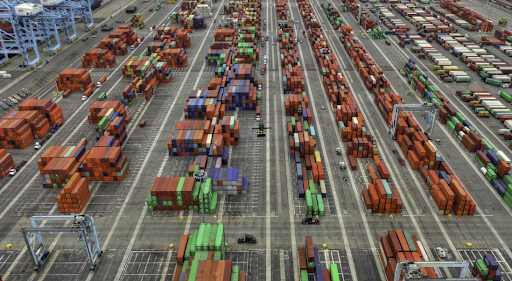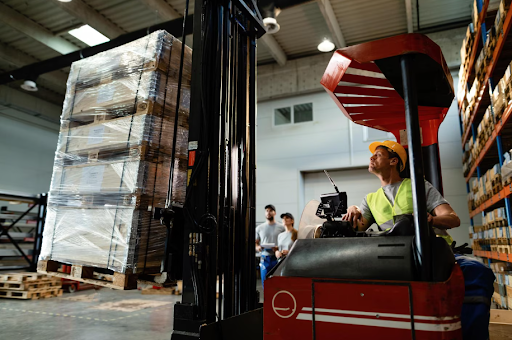
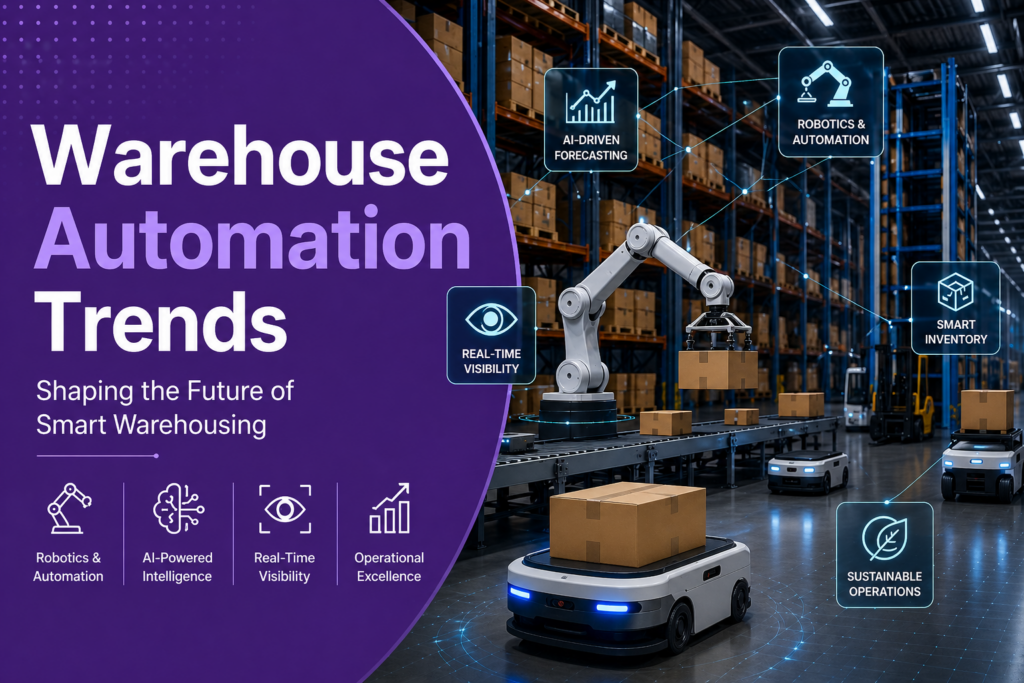
Not long ago, warehouses were defined by clipboards, forklifts, and long hours of manual sorting, but that picture is rapidly fading. Today, smart systems are making split-second decisions, machines are collaborating with humans, and speed has become the ultimate competitive edge. The real shift isn’t just automation, but intelligence woven into every inch of the operation. A report by MHI indicates that over 80% of supply chain leaders plan to increase investment in AI and automation over the next five years.
In this blog, we’ll explore the key warehouse automation trends shaping the future of warehousing. It provides a technical perspective on how these innovations are transforming throughput, accuracy, and resilience across complex supply chain environments.
1. Robotics: AMRs, AGVs, and Collaborative Robots
Warehouse robotics and automation trends are shifting toward flexible, software-defined systems that adapt in real time to dynamic warehouse conditions. These technologies are enabling higher throughput without increasing infrastructure rigidity. Key advancements shaping robotic warehouse operations include:
- Autonomous Mobile Robots (AMRs): AMRs use AI-driven navigation and real-time mapping to optimize routes dynamically, reducing congestion and improving picking efficiency in high-density, fast-changing warehouse environments.
- Automated Guided Vehicles (AGVs): Modern AGVs integrate hybrid navigation technologies, enabling operation beyond fixed paths while maintaining reliability in repetitive transport tasks across structured warehouse zones.
- Collaborative Robots (Cobots): Cobots work alongside human operators in goods-to-person workflows, enhancing productivity, reducing ergonomic strain, and improving accuracy in repetitive picking and packing operations.
- Multi-Robot Orchestration Systems: Advanced fleet management platforms coordinate large robot fleets, optimizing task allocation, minimizing idle time, and ensuring balanced workload distribution across warehouse operations.
Synkrato integrates with warehouse systems and robotics platforms to deliver AI-driven orchestration, enabling optimized task allocation, resource coordination, and performance across automated operations.
Suggested Read: What is Warehouse Automation
2. Advanced Picking Technologies: Pick-to-Light and Voice Picking
Advanced picking technologies are central to smart warehouse automation trends, enabling faster, more accurate fulfillment in high-SKU, high-velocity environments. These systems reduce cognitive load while improving operator productivity across complex workflows. Key innovations transforming picking operations include:
- Pick-to-Light Systems: Light-directed picking systems guide operators visually to exact locations, significantly reducing search time, minimizing errors, and improving pick rates in dense, high-frequency order environments.
- Voice Picking Solutions: Voice-directed systems leverage speech recognition and natural language processing to guide operators hands-free, improving accuracy, safety, and efficiency in complex picking workflows.
- Hybrid Picking Environments: Combining pick-to-light and voice technologies enables warehouses to optimize different picking zones, supporting diverse order profiles while maintaining consistent performance across operations.
Advanced picking systems integrate with execution platforms to enable real-time task updates, dynamic prioritization, and continuous optimization of picking sequences based on demand changes.
Suggested Read: Warehouse Automation Statistics
3. AI-Driven Forecasting and Predictive Maintenance
AI trends in warehouse automation are enabling predictive, data-driven decision-making across inventory planning, slotting, and equipment reliability. These capabilities reduce uncertainty while improving efficiency in highly automated warehouse environments.
According to McKinsey & Company, AI-driven supply chain optimization can reduce forecasting errors by up to 50%, significantly improving inventory planning. Key applications driving this transformation include:
- Demand Forecasting With Machine Learning: AI models analyze historical demand, seasonality, and external variables to improve forecast accuracy, enabling better inventory positioning and reducing stockouts or excess inventory risks.
- AI-Driven Dynamic Slotting: AI continuously optimizes SKU placement based on velocity, order patterns, and proximity, reducing travel time and improving picking efficiency in high-density warehouse environments.
- Predictive Maintenance for Equipment: IoT sensors and AI algorithms continuously monitor equipment health, identifying anomalies early and preventing unexpected failures that could disrupt automated warehouse operations.
- Prescriptive Decision-Making Systems: Advanced AI systems recommend optimal actions, such as inventory rebalancing, slotting optimization, or maintenance scheduling, to improve efficiency and reduce operational risks.
- Real-Time Data Processing and Insights: AI platforms process large volumes of operational data in real time, enabling faster decision-making and continuous optimization across warehouse workflows and automation systems.
Synkrato applies AI-driven optimization and digital twin simulation to enhance forecasting accuracy, enable dynamic slotting, and continuously optimize warehouse performance under changing demand conditions.
Suggested Read: How Much Does Warehouse Automation Cost
4. WMS Integration for Real-Time Visibility
WMS integration is evolving from system connectivity to real-time orchestration across robotics, automation, and execution layers. It enables synchronized decision-making and end-to-end visibility across complex warehouse operations. Key capabilities enabling real-time visibility include:
- Unified System Orchestration: Integrated WMS, WES, and WCS platforms coordinate tasks across automation systems, enabling real-time execution, improved synchronization, and reduced operational silos in high-throughput environments.
- Real-Time Inventory Visibility: Continuous data exchange between systems ensures accurate, up-to-date inventory visibility, enabling better decision-making, reduced discrepancies, and improved order fulfillment reliability.
- Dynamic Task Allocation: WMS integration enables intelligent task prioritization and allocation based on real-time conditions, such as order urgency, resource availability, and system constraints.
- Exception Management and Alerts: Integrated systems provide real-time alerts for disruptions, enabling faster issue resolution and minimizing the impact of bottlenecks or system failures on operations.
- Data-Driven Performance Optimization: Advanced analytics leverage integrated data streams to identify inefficiencies, optimize workflows, and continuously improve warehouse performance across automated and manual processes.
Synkrato acts as the decision-intelligence layer across WMS, WES, and WCS, enabling real-time visibility, intelligent task orchestration, and seamless data flow across automation systems and warehouse processes.
5. Customization and Customer Experience Automation
Customization is becoming a core requirement in warehouse automation trends, driven by rising expectations for speed, personalization, and order accuracy. Automation systems are evolving to support highly variable order profiles without compromising efficiency. Key capabilities enabling customer-centric automation include:
- Dynamic Order Configuration: Automation systems adapt to varying order requirements, enabling customized kitting, bundling, and packaging while maintaining high throughput in complex fulfillment environments.
- Automated Packaging Optimization: Intelligent packaging systems select optimal box sizes and materials, reducing waste, lowering shipping costs, and improving sustainability across fulfillment operations.
- Personalization at Scale: Automated workflows support value-added services such as labeling, inserts, and custom packaging, enabling personalized customer experiences without increasing operational complexity or labor dependency.
- Order Prioritization and SLA Management: Advanced algorithms prioritize orders based on delivery commitments, customer segments, and service levels, ensuring faster fulfillment for high-priority shipments.
- Seamless Omnichannel Fulfillment: Integrated automation supports multiple fulfillment channels, enabling a consistent customer experience across e-commerce, retail, and B2B operations with real-time execution visibility.
Suggested Read: Benefits of Warehouse Automation
6. Sustainability and Green Automation
Sustainability is becoming a critical driver in warehouse automation technology trends, as organizations align operational efficiency with environmental responsibility. Automation is enabling measurable reductions in energy consumption, waste, and carbon footprint. Key advancements supporting green warehouse operations include:
- Energy-Efficient Automation Systems: Modern robotics and automated equipment are designed with energy optimization features, reducing power consumption while maintaining high throughput in large-scale warehouse operations.
- AI-Driven Energy Optimization: AI systems analyze energy usage patterns across equipment and processes, enabling real-time adjustments that minimize consumption without impacting operational performance.
- Sustainable Packaging Automation: Automated packaging systems optimize material usage, reducing waste and supporting the use of recyclable or eco-friendly packaging materials in fulfillment processes.
- Optimized Travel and Routing: Intelligent routing algorithms reduce unnecessary movement of robots and equipment, lowering energy usage and improving overall operational efficiency within automated environments.
- Carbon Footprint Monitoring and Reporting: Integrated systems track emissions and energy metrics, enabling organizations to measure sustainability performance and meet regulatory and corporate environmental goals.
7. Resilience Through Distributed Warehousing
Distributed warehousing is emerging as a strategic response to disruption, enabling organizations to decentralize inventory and reduce dependency on single-node operations. Automation ensures consistency, control, and efficiency across these geographically dispersed facilities. Key capabilities strengthening network resilience include:
- Decentralized Inventory Optimization: AI-driven systems dynamically allocate inventory across multiple nodes, balancing demand variability while reducing stockouts, excess inventory, and inter-facility transfers.
- Network-Level Orchestration: Integrated platforms coordinate operations across distributed warehouses, ensuring synchronized execution, standardized processes, and consistent performance across all locations.
- Faster Last-Mile Fulfillment: Proximity-based inventory positioning reduces delivery times, enabling same-day or next-day fulfillment while lowering transportation costs and improving service levels.
- Risk Mitigation and Continuity Planning: Distributed networks reduce operational risk by isolating disruptions, allowing unaffected facilities to maintain fulfillment continuity during regional or system-level failures.
- Scalable Expansion Strategies: Modular automation enables rapid deployment of new warehouse nodes, supporting business growth without requiring large, centralized infrastructure investments.
Suggested Read: Warehouse Automation ROI
8. Automated Storage and Retrieval Systems
Automated Storage and Retrieval Systems (AS/RS) are evolving into highly flexible, high-density solutions that support rapid access and scalability in modern fulfillment environments. These systems are central to automated warehouse systems trends focused on space optimization and throughput efficiency. Key advancements driving AS/RS adoption include:
- High-Density Storage Optimization: AS/RS solutions maximize vertical and horizontal space utilization, enabling warehouses to store more inventory within limited footprints while maintaining fast retrieval capabilities.
- Shuttle and Cube-Based Systems: Modern AS/RS designs use shuttle and cube storage technologies to deliver higher throughput, flexibility, and scalability compared to traditional crane-based systems.
- Dynamic Slotting Integration: Integration with AI-driven slotting systems enables continuous optimization of storage locations, reducing retrieval time and improving overall picking efficiency in high-SKU environments.
- Seamless System Integration: AS/RS integrates with WMS, WES, and robotics platforms, enabling synchronized operations and real-time inventory visibility across automated warehouse workflows.
- Throughput and Accuracy Enhancement: Automated retrieval processes reduce manual intervention, improving order accuracy while supporting high-volume, high-speed fulfillment requirements.
9. Fleet Management Systems
Fleet Management Systems (FMS) are critical in scaling warehouse robotics and automation trends, enabling centralized control and coordination of large robotic fleets. These systems ensure efficient, synchronized operations across complex, high-throughput environments. Key capabilities driving advanced fleet management include:
- Multi-Robot Orchestration: FMS platforms coordinate tasks across diverse robot types, optimizing task allocation, minimizing idle time, and ensuring balanced workload distribution across warehouse operations.
- Real-Time Traffic and Congestion Control: AI-driven routing algorithms manage robot movement dynamically, preventing bottlenecks, reducing delays, and improving overall system throughput in dense automation environments.
- Adaptive Task Prioritization: Fleet systems adjust task priorities in real time based on order urgency, system conditions, and resource availability, ensuring efficient execution of critical workflows.
- Performance Monitoring and Analytics: Continuous tracking of robot performance enables identification of inefficiencies, supporting data-driven improvements and long-term optimization of automated operations.
- Interoperability Across Automation Systems: Advanced FMS platforms integrate with WMS, WES, and other automation systems, enabling seamless communication and coordinated execution across the entire warehouse ecosystem.
Suggested Read: Automated Warehouse Picking Systems
10. Automated Sortation Systems
Automated sortation systems are essential in high-volume fulfillment environments, enabling rapid, accurate routing of items across complex distribution workflows. These systems are a key component of automated warehouse systems trends focused on speed, scalability, and precision. Key technologies driving efficiency in sortation include:
- High-Speed Sortation Technologies: Cross-belt, tilt-tray, and sliding shoe sorters enable fast, continuous sorting of items, supporting high throughput requirements in large-scale distribution centers.
- AI-Driven Sorting Logic: Intelligent algorithms optimize sorting decisions in real time, improving accuracy and dynamically adjusting to changes in order profiles, volumes, and destination requirements.
- Seamless System Integration: Sortation systems integrate with upstream picking and downstream shipping processes, ensuring synchronized flow and minimizing delays across the fulfillment lifecycle.
- Scalability for Peak Demand: Modular sortation designs allow capacity expansion, enabling warehouses to handle seasonal spikes and fluctuating order volumes without compromising performance.
- Error Reduction and Accuracy Improvement: Automated sorting minimizes manual handling, reducing mis-sorts and ensuring precise order consolidation, which is critical for maintaining high customer satisfaction levels.
Synkrato orchestrates sortation systems within a unified fulfillment workflow by integrating upstream picking, downstream shipping, and real-time visibility across the fulfillment lifecycle.
How Synkrato Empowers Businesses With Warehouse Automation
Synkrato enables enterprises to operationalize warehouse automation trends by connecting fragmented systems into a unified, intelligent execution layer. It focuses on orchestrating automation, not just integrating it, ensuring real-time synchronization across complex warehouse environments. Key capabilities that differentiate Synkrato include:
- Unified Automation Orchestration: Synkrato connects WMS, WES, WCS, robotics, and IoT systems into a single execution framework, enabling real-time coordination and eliminating operational silos across automated workflows.
- AI-Driven Simulation and Optimization: The platform uses digital twin and simulation capabilities to model warehouse scenarios, validate automation strategies, and optimize performance before physical implementation.
- Dynamic Slotting and Intelligent Tasking: AI-driven slotting continuously optimizes SKU placement based on demand patterns, while intelligent task orchestration improves labor and robot productivity across operations.
- Real-Time Visibility and Control: Synkrato provides end-to-end operational visibility, enabling proactive decision-making, faster exception handling, and continuous performance optimization in automated environments.
Curious how these warehouse automation trends apply to your operations? Schedule a demo with Synkrato and explore how real-time orchestration can unlock efficiency, visibility, and scalability.
Suggested Read: 3pl Warehouse Automation
FAQs
What are the latest warehouse automation trends?
The latest warehouse automation trends include AI-driven forecasting, robotics adoption, real-time system integration, distributed warehousing, and sustainability-focused automation. These trends emphasize scalability, flexibility, and data-driven decision-making to improve efficiency, resilience, and performance in complex supply chain environments.
How does Synkrato support warehouse automation trends?
Synkrato supports warehouse automation technology trends by providing a unified execution layer that integrates WMS, robotics, and automation systems. It enables real-time orchestration, AI-driven optimization, and simulation capabilities to help organizations align automation strategies with operational goals.
Why is warehouse automation becoming important?
Warehouse automation is becoming critical due to rising order volumes, labor constraints, and increasing customer expectations for speed and accuracy. It enables organizations to scale operations efficiently, reduce errors, and maintain consistent performance in highly dynamic and complex fulfillment environments.
Can Synkrato help optimize automated warehouse operations?
Yes, Synkrato helps optimize automated warehouse operations through AI-driven simulation, dynamic slotting, and intelligent task orchestration. Its platform enables continuous performance improvement by providing real-time insights, predictive analytics, and data-driven decision-making across automated workflows.
How is AI influencing warehouse automation trends?
AI trends in warehouse automation are enabling predictive forecasting, dynamic slotting, and real-time optimization. These capabilities allow organizations to anticipate demand, improve inventory positioning, reduce downtime, and make proactive decisions that enhance efficiency and operational resilience.
Does Synkrato integrate with warehouse automation systems?
Yes, Synkrato integrates with a wide range of warehouse automation systems, including robotics, AS/RS, and sortation systems. Its interoperable architecture ensures seamless data exchange and coordinated execution across all systems within the warehouse ecosystem.
How are automation trends changing order fulfillment?
Automation trends are transforming order fulfillment by enabling faster processing, higher accuracy, and greater flexibility. Technologies such as robotics, AI, and automated sortation systems reduce lead times, improve order precision, and support complex, high-volume fulfillment requirements.