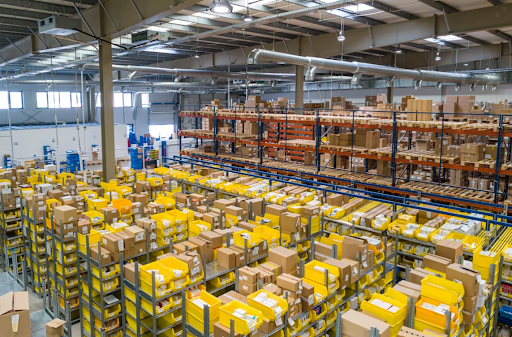
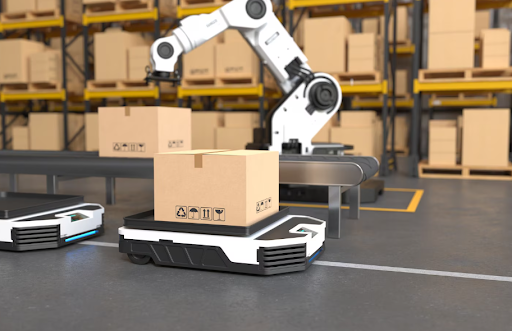
Artificial intelligence is changing how logistics companies plan, move, store, and deliver goods. Instead of relying on historical reports and manual decisions, businesses are using AI to predict disruptions, optimize operations, automate repetitive tasks, and respond to changes in real time.
Moreover, modern logistics platforms combine data from warehouses, transportation, inventory, suppliers, and fleets. They recommend or automate operational decisions while keeping people in control of critical actions.
In this blog, you’ll learn what is driving the future of AI in logistics, the technologies shaping the industry, real-world applications, business benefits, implementation challenges, and what AI-powered supply chains are expected to look like over the next decade.
What’s Driving the Future of AI in Logistics?
Several operational and market trends are accelerating AI adoption in logistics.
Labor shortages and workforce challenges
Labor shortages are becoming a long-term constraint for logistics companies. Japan projects a 34% transportation-capacity shortage by FY2030, equivalent to 940 million tons of freight.
Businesses are using AI to automate labor planning, prioritize exceptions, schedule maintenance, and coordinate daily operations more efficiently.
E-commerce growth and rising customer expectations
Businesses must decide what inventory to stock, where to position it, and how demand may change before an order is even placed. AI supports these decisions by improving demand forecasts and optimizing inventory across warehouses and fulfillment locations.
Increasing transportation and fuel costs
The average U.S. on-highway diesel price reached $5.024 per gallon in June 2026, which makes inefficient routes increasingly expensive. To reduce these costs, AI transportation management solutions evaluate fuel consumption, traffic, delivery windows, driver hours, vehicle capacity, and customer priorities together instead of simply finding the shortest route.
Supply chain disruptions and resilience planning
During the Red Sea crisis, Shanghai container spot rates increased 122%, while Shanghai-to-Europe rates rose 256% between December 2023 and February 2024. AI identifies risks early and recommends alternative suppliers, routes, or inventory transfers before operations are affected.
Sustainability and ESG initiatives
Global road transport emitted just over 6 gigatons of CO₂ in 2024, with trucks responsible for about one-third of those emissions. AI helps businesses balance these goals by improving routing, increasing vehicle utilization, and selecting lower-emission transport options where possible.
Growing data volumes and operational complexity
Modern logistics operations rely on data from warehouses, transport systems, suppliers, fleets, sensors, and customers. As this information grows, maintaining consistent and reliable data becomes increasingly difficult. AI delivers better results when operational data is standardized.
AI Technologies That Will Define the Next Generation of Logistics
These AI technologies are reshaping how modern logistics operations are planned and executed.
Machine Learning for Predictive Decision-Making
Machine learning is commonly used to forecast demand, estimate delivery delays, predict equipment failures, and identify stockout risks before they occur.
For instance, Wells Vehicle Electronics reported a 7% reduction in inventory within three months of implementing AI while improving product availability.
Generative AI for Planning and Workflow Automation
Generative AI helps logistics teams process unstructured information such as emails, bills of lading, customs documents, contracts, and customer messages. It extracts important details, connects them with operational systems, and automates routine workflows.
Beyond document processing, generative AI can summarize operational exceptions, generate shipment plans, and draft responses to suppliers and customers.
Computer Vision for Warehouse Operations
Computer vision detects damaged goods, verifies pallet positions, monitors loading operations, estimates trailer space, and improves workplace safety.
Instead of only identifying objects, modern systems compare what cameras see with warehouse workflows to detect operational exceptions.
Natural Language Processing (NLP) for Logistics Communication
NLP allows employees and customers to interact with logistics systems using everyday language. It helps answer shipment queries, summarize documents, interpret emails, and retrieve operational information without navigating multiple systems.
For instance, CSX’s AI assistant, Chessie, handled more than 4,000 customer conversations within its first 45 days.
Predictive Analytics for Forecasting and Risk Management
Predictive analytics analyzes historical patterns alongside live operational data to forecast demand, detect shipment delays, estimate warehouse capacity, and identify supplier risks.
Rather than generating more alerts, it helps businesses focus on the issues most likely to affect cost, service, or customer commitments.
AI Agents for Autonomous Decision-Making
AI agents can automate tasks such as checking inventory, comparing carrier rates, updating shipment plans, and notifying stakeholders based on predefined business rules.
Additionally, Synkrato connects enterprise systems, operational data, and AI agents to automate routine logistics workflows while keeping high-risk decisions under human control.
Digital Twins for Logistics Simulation
A digital twin is a virtual model of a warehouse, fleet, or supply chain that allows businesses to test operational changes before implementing them.
Ferrero reduced warehouse commissioning time by 30%, reached target availability 88% faster, and identified around 95% of operational errors before go-live by using digital twin technology.
Edge AI and IoT for Real-Time Logistics Intelligence
Edge AI processes information directly on connected vehicles, equipment, cameras, and sensors instead of relying entirely on the cloud. This allows safety-critical decisions to be made immediately, even when network connectivity is limited.
By September 2025, Volvo Trucks had connected more than one million trucks worldwide and enabled real-time vehicle monitoring, predictive maintenance, and remote software updates.
How AI Is Reshaping the Logistics Value Chain
AI is improving decisions across every stage of the logistics value chain.
Demand Forecasting and Inventory Planning
Inventory decisions affect product availability, working capital, and customer service. AI demand forecasting helps businesses make these decisions with greater accuracy.
This includes:
- Predicting demand by product and location
- Optimizing safety stock
- Improving replenishment planning
- Balancing inventory across warehouses
Warehouse Management and Fulfillment
Warehouse performance depends on how efficiently inventory, labor, and equipment work together. AI helps coordinate these activities in real time.
Common applications include:
- Balancing storage and receiving capacity
- Reducing picking congestion
- Allocating labor efficiently
- Prioritizing outbound orders
- Coordinating dock operations
Transportation Planning and Route Optimization
Transportation costs depend on many decisions beyond route selection. AI evaluates these factors together to improve efficiency.
It supports:
- Carrier and mode selection
- Route optimization
- Shipment consolidation
- Delivery sequencing
- Dynamic rerouting
Fleet Management and Predictive Maintenance
Unexpected vehicle failures disrupt deliveries and increase operating costs. AI fleet management helps reduce these risks by identifying maintenance needs earlier.
Typical use cases include:
- Monitoring vehicle health
- Predicting component failures
- Scheduling maintenance proactively
Last-Mile Delivery Optimization
The last mile is often the most expensive and unpredictable stage of the delivery process. Synkrato enables AI-powered last-mile orchestration across dispatch, routing, and delivery execution.
Key applications include:
- Route optimization
- Accurate delivery estimates
- Fewer failed deliveries
- Better vehicle utilization
- Real-time schedule updates
Reverse Logistics and Returns Management
Returns require businesses to recover as much product value as possible while controlling costs. AI helps determine the most efficient next step.
Possible actions include:
- Return to inventory
- Refurbishment
- Resale
- Recycling
- Safe disposal
Customer Service and Shipment Visibility
Customers expect more than shipment tracking. They also want accurate updates and faster resolution when delays occur.
AI supports this through:
- Predictive delivery updates
- Delay explanations
- Automated notifications
- Faster issue resolution
What Will AI-Powered Logistics Look Like by 2035?
The next generation of logistics will be more connected, predictive, and autonomous.
- Autonomous Warehouses with Minimal Human Intervention: AI warehouse automation will continue to grow, but fully autonomous facilities will remain limited to highly standardized environments. People will continue managing quality, maintenance, and operational exceptions.
- Self-Optimizing Supply Chains: AI will continuously detect disruptions, evaluate response options, and recommend or automate approved actions. Human oversight will remain essential for strategic business decisions.
- AI-Powered Logistics Control Towers: Control towers will evolve into decision-support platforms that prioritize critical issues instead of displaying every alert. This will help logistics teams respond faster and with greater confidence.
- Autonomous Freight Networks and Smart Transportation: Autonomous freight will expand first in controlled environments such as highways, ports, and industrial corridors. Wider adoption will increase as technology and regulations mature.
- Human-AI Collaboration in Logistics Operations: AI will automate routine decisions while people focus on exceptions, oversight, and continuous improvement. Human expertise will remain central to complex logistics operations.
- Sustainable and Carbon-Aware Logistics: AI will balance cost, service, capacity, and carbon emissions within everyday logistics planning. This will help businesses make more sustainable operational decisions before shipments move.
Real-World Examples of AI in Logistics
Leading logistics companies are already using AI to improve operational performance.
AI at Amazon: Warehouse Robotics and Fulfillment Optimization
Amazon combines AI with inventory management, robotics, and warehouse design to improve fulfillment efficiency.
Key outcomes include:
- Inventory stored up to 75% faster
- Order processing reduced by up to 25%
- Better coordination between software, robotics, and warehouse operations
AI at DHL: Predictive Logistics and Warehouse Automation
DHL uses AI agents to reduce manual coordination across logistics operations.
The deployment supports:
- Appointment scheduling
- Driver communication
- Hundreds of thousands of emails annually
- Millions of voice minutes each year
AI at UPS: Route Optimization
UPS uses AI for route optimization and continuously adapts them as operating conditions change.
The platform helps by:
- Optimizing delivery sequencing
- Dynamically updating routes
- Saving 10-14 miles per driver per day
- Reducing transportation costs at scale
Business Impact of AI in Logistics
AI creates measurable business value by improving operational and financial performance.
Improving Operational Efficiency
Efficiency gains come from reducing operational friction rather than increasing automation alone. AI shortens decision cycles, removes repetitive coordination, and allows people to focus on exceptions that require operational judgment.
Reducing Logistics and Transportation Costs
AI shifts cost optimization from individual departments to the entire logistics network. Instead of minimizing one expense, it continuously balances inventory, transportation, labor, warehouse capacity, and service commitments to reduce total operating costs.
Enhancing Decision-Making with Real-Time Insights
Faster decisions are valuable only when they lead to better outcomes. Synkrato adds business context to operational data by ranking priorities, managing workflows, and recommending the most effective response before disruptions escalate.
Increasing Customer Satisfaction and Service Levels
Reliable service depends on managing customer expectations as much as delivery performance. AI helps businesses improve consistency by anticipating issues, recommending corrective actions, and supporting proactive communication throughout the order lifecycle.
Strengthening Supply Chain Resilience
Supply chain resilience depends on having executable alternatives before disruptions occur. AI helps businesses evaluate multiple recovery scenarios, compare trade-offs, and switch to the most practical response with minimal operational impact.
Supporting Sustainability and ESG Goals
Environmental performance is becoming another operational constraint alongside cost and service. AI allows businesses to optimize carbon emissions, resource utilization, and delivery performance simultaneously instead of treating sustainability as a separate initiative.
Challenges in AI Adoption in Logistics
Successful logistics automation depends on overcoming technical, operational, and organizational challenges.
- Poor Data Quality and Fragmented Systems: Creating a single operational view across warehouses, fleets, suppliers, and enterprise systems is a challenge. Without trusted data, AI produces inconsistent recommendations and unreliable automation.
- Legacy Technology and Integration Challenges: Most logistics organizations operate dozens of interconnected systems that cannot be replaced overnight. AI adoption depends on an integration architecture that allows new capabilities to coexist with legacy applications while minimizing operational risk.
- Cybersecurity and Data Privacy Concerns: Every connected AI workflow increases the potential attack surface across the supply chain. Organizations must secure AI agents, operational systems, APIs, and data flows without slowing day-to-day logistics operations.
- AI Governance, Ethics, and Regulatory Compliance: As AI begins influencing operational decisions, organizations need clear governance for accountability, auditability, model performance, and regulatory compliance. The objective is not only to control AI but also to ensure every automated decision remains explainable and traceable.
- Workforce Skills Gap and Change Management: The challenge is shifting employees from executing routine tasks to supervising AI-assisted operations. Organizations need to redesign roles, decision processes, and performance metrics alongside technology adoption.
If you’re exploring how to integrate AI across your logistics operations without disrupting existing systems, book a demo with Synkrato to see how its AI-powered orchestration platform can help.
Conclusion
The future of AI in logistics is about connecting data, systems, and workflows so businesses can make faster, more informed decisions across the supply chain. Organizations that combine predictive analytics, AI agents, digital twins, and human expertise will be better equipped to improve efficiency, reduce costs, and respond to disruptions.
The real advantage will come from operationalizing AI rather than experimenting with isolated use cases. As logistics networks become more complex, businesses that can continuously learn, adapt, and execute decisions in real time will be better positioned to compete in the years ahead.
FAQs
What is the future of AI in logistics?
AI in logistics is moving from reporting problems to predicting outcomes and recommending actions. Future systems will detect exceptions, simulate responses, and automate low-risk decisions within approved limits.
How will AI transform logistics over the next decade?
AI will connect demand planning, inventory, warehousing, transportation, and labor decisions. Synkrato can help businesses use real-time operational data to respond faster instead of managing each function separately.
Which AI technologies are shaping the future of logistics?
Machine learning, generative AI, computer vision, predictive analytics, AI agents, digital twins, edge AI, and IoT will shape logistics. For example, computer vision can detect damaged goods while an AI agent checks replacement inventory and updates the order.
How does AI improve warehouse management?
AI predicts workloads, balances labor, identifies congestion, improves inventory placement, and coordinates warehouse flow. Synkrato can support better decisions by connecting warehouse activity with inventory and operational data.
Can AI reduce transportation and logistics costs?
Yes. AI can reduce unnecessary miles, fuel use, expediting, downtime, excess inventory, and manual coordination. It can also improve vehicle utilization, load consolidation, and delivery sequencing.
What are the biggest challenges of implementing AI in logistics?
The main challenges are poor data quality, disconnected systems, weak integration, cybersecurity risks, unclear ownership, and employee resistance. AI performs best when processes and operational data are standardized first.
Will AI replace logistics professionals?
AI will automate repetitive work, but it will not remove the need for human judgment. Logistics professionals will manage exceptions, supervise AI decisions, improve processes, and handle complex customer or operational situations.
How do you measure ROI from AI in logistics?
Measure business outcomes before and after implementation rather than focusing only on model accuracy. Useful metrics include inventory levels, fill rates, shipment costs, delivery miles, equipment downtime, planning hours, service failures, and exception-resolution time.