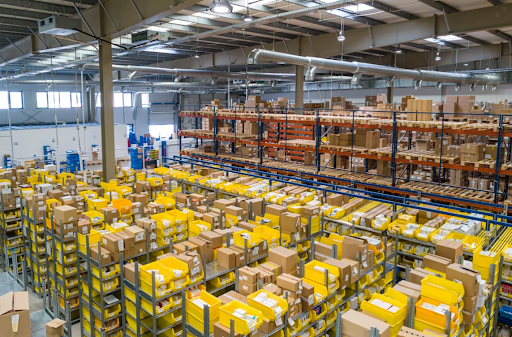

Warehouse labor forecasting helps warehouses determine how many workers and labor hours they need to meet expected demand. It uses workload, productivity, order volume, and operational constraints to prevent overstaffing, understaffing, unnecessary overtime, congestion, and missed shipping targets.
Accurate forecasts connect expected orders directly to labor requirements across receiving, replenishment, picking, packing, and shipping. This helps warehouse teams schedule the right number of workers for each process and adjust staffing as demand changes.
In this blog, we cover the data, forecasting methods, predictive analytics, scheduling practices, and continuous measurement needed to plan warehouse labor demand more accurately.
Why Accurate Warehouse Labor Forecasting Matters
Accurate warehouse labor forecasting helps warehouses match staffing levels directly with expected workload. Accurate forecasting reduces labor costs while also preventing understaffing, unnecessary overtime, operational delays, and missed shipping targets.
The financial impact can be substantial. McKinsey reports that travel and logistics companies face frequent labor shortages, rising labor costs, and declining productivity. These pressures make labor-planning errors harder to absorb. The forecast therefore needs to answer more than “How many orders are coming?” It should determine:
- Expected units, lines, pallets, cartons, and orders by time interval
- Labor hours required for each warehouse activity
- Skills and equipment required to complete that work
- Expected productivity by process or zone
- Likely workload peaks within each shift
- Available regular, temporary, and overtime capacity
Build Labor Forecasts Around Operational Demand, Not Historical Data Alone
Accurate warehouse labor demand forecasting should use operational demand alongside historical data because past volume alone cannot predict how much labor future orders will require. Combining historical trends with current order volume, SKU mix, workload, and productivity data gives warehouses a more accurate estimate of upcoming labor needs.
- Same Volume, Different Labor Needs: For example, 10,000 units today may require a different number of labor hours than 10,000 units last month. The difference may come from more each-picks, longer travel paths, a different SKU mix, larger orders, or additional replenishment work.
- More Data Improves Forecast Accuracy: Recent forecasting research supports using richer inputs. A 2024 warehouse-demand forecasting study available through ResearchGate found that adding explanatory variables improved forecasting performance. Compared with univariate forecasting, the study reported reductions of 14% in mean squared error, 26% in SMAPE, and 10% in mean absolute percentage error.
A practical forecast can translate workload into labor like this:
Forecast labor hours = forecast workload × standard minutes per unit of work ÷ 60
The calculation should happen separately for major processes. Receiving might use pallets or cases as its workload driver, while picking may use lines, units, or orders. Packing may depend more heavily on cartons and order complexity.
This is one of the most important warehouse labor forecasting methods because it links staffing to the work employees will actually perform instead of assuming that total volume and labor always move at the same rate.
Identify the Operational Factors That Influence Labor Demand
The key operational factors that influence warehouse labor forecasting include order volume, SKU mix, task complexity, travel distance, worker skills, productivity rates, equipment availability, and absenteeism. Identifying these factors helps warehouses estimate how many labor hours are actually needed to complete the expected workload.
Consider Order and Task Complexity
Two shifts processing 8,000 order lines may require different labor hours because of SKU velocity, multi-line orders, replenishment, or longer travel paths. A 2023 study found that task allocation played a dominant role in warehouse worker productivity.
Use Process-Specific Productivity Rates
Avoid applying one productivity rate across the warehouse. Receiving, picking, packing, and loading require different amounts of labor. Factoring in absenteeism, congestion, equipment, and worker qualifications makes warehouse labor demand forecasting more accurate.
Improve Labor Forecast Accuracy with Real-Time Warehouse Data
Real-time data improves labor forecasts by showing when actual warehouse conditions are moving away from the assumptions used in the original plan.
- Track Real-Time Warehouse Signals: Useful live signals include order releases, open tasks, inbound arrivals, queue depth, completed units, pick rates, replenishment backlog, available employees, equipment status, and remaining work before carrier cut-offs.
- Connect Data for Better Decisions: The value comes from connecting these signals. A 2023 study of warehouse workforce-management practices found that forecasting, employee qualifications, individual productivity, simulation-optimization, automated planning, and bottleneck reduction were among the capabilities practitioners wanted from workforce-management systems.
- Use Multiple Planning Horizons: One of the most practical warehouse labor forecasting best practices is to use multiple planning horizons. Longer-range forecasts support hiring and temporary labor decisions, weekly forecasts guide shift planning, and intraday forecasts help supervisors reallocate labor as conditions change.
Use Predictive Analytics to Plan Labor Before Bottlenecks Occur
Predictive analytics helps warehouses prevent labor bottlenecks by forecasting where, when, and how much labor will be needed before workload increases. It uses historical patterns and current operational data to identify potential capacity gaps early, giving teams time to adjust staffing before delays occur.
This is how to improve warehouse labor forecasting beyond basic averages –
Use models that account for weekday patterns, seasonality, promotions, order mix, inbound schedules, SKU velocity, absenteeism, and recent productivity to build forecasts that better reflect actual labor demand. The output should remain practical.
A supervisor needs answers such as –
| Forecast Question | Operational Decision |
| Where will workload peak? | Move labor before the queue forms |
| When will picking exceed capacity? | Add pickers or change task allocation |
| Will replenishment constrain picking? | Advance replenishment work |
| Will regular hours cover demand? | Evaluate flex labor or overtime |
| What happens if demand rises 15%? | Test the higher-volume scenario |
Align Labor Forecasts with Workforce Scheduling and Capacity Planning
A labor forecast becomes actionable when required hours are translated into warehouse scheduling by shift, process, zone, and skill. Capacity planning then checks whether available warehouse staffing can handle the forecast workload within operational deadlines, helping improve warehouse labor planning and optimization. A stronger process connects four levels:
Demand forecast → workload forecast → labor requirement → employee schedule
- Skill constraints belong in the same calculation. Ten available employees do not equal ten usable employees if only four are trained to operate equipment required for the forecast work.
- Research into warehouse scheduling illustrates why this connection matters. A 2023 study on distribution-center overtime examined a facility with 11.3% overtime and connected warehouse layout and employee shift scheduling to the overtime problem.
Monitor Forecast Accuracy and Refine Future Labor Plans
To improve warehouse labor forecasting accuracy, compare forecasted workload and labor hours with actual results after each planning period. Regularly tracking these differences helps identify inaccurate demand inputs, outdated productivity rates, and staffing assumptions that need adjustment for future labor plans.
Start with forecast versus actual volume. Then examine forecast labor hours versus actual labor hours, planned versus actual productivity, overtime, idle hours, backlog, and SLA performance. Track errors by:
- Process or function
- Shift and hour
- Day of week
- Order or customer type
- SKU or product group
- Forecast horizon
If demand was accurate but labor hours were 12% above plan, investigate travel, congestion, equipment downtime, replenishment delays, training, or outdated engineered standards.
This creates a closed loop: forecast → schedule → execute → measure → diagnose → recalibrate.
How Synkrato Improves Warehouse Labor Forecasting
Synkrato improves labor forecasting by connecting warehouse data with AI-driven modeling, simulation, and operational decision support.
Synkrato Digital Twin models warehouse operations to evaluate labor needs before making physical changes, while Synkrato Simulation & Optimization lets teams test staffing, layout, and workflow scenarios.
Synkrato AI Slotting Recommendations identifies slotting changes that can reduce travel and labor requirements. Together, these capabilities help turn labor forecasting into an ongoing decision process. Forecasts can reflect what is happening in the warehouse, what is likely to happen next, and how proposed changes could affect labor before resources are committed.
Turn Labor Forecasts Into Better Warehouse Decisions with Synkrato
Better forecasting should tell you more than how many people worked last week. Synkrato helps you model your warehouse, test labor decisions, identify constraints, and understand the likely operational impact before committing people, time, or money.
Synkrato can help you build a more responsive labor-planning process and make staffing decisions around real warehouse demand. Book a demo with Synkrato to plan labor demand with greater accuracy.
FAQs
What is warehouse labor forecasting?
Warehouse labor forecasting estimates the employees and labor hours needed to complete expected warehouse work within a defined period. It converts demand drivers such as orders, units, lines, pallets, and cartons into process-level workload so managers can plan staffing for receiving, replenishment, picking, packing, and shipping.
How does Synkrato improve warehouse labor forecasting?
Synkrato’s Digital Twin gives warehouse teams a virtual environment for analyzing operations and testing labor scenarios before implementation. Managers can model changes in workload, allocation, processes, and facility conditions, then compare likely outcomes instead of relying entirely on historical staffing assumptions or spreadsheet-based estimates.
What factors affect warehouse labor forecasting?
Forecast accuracy depends on order volume, SKU mix, units and lines per order, productivity, travel distance, layout, replenishment workload, equipment availability, worker skills, absenteeism, seasonality, promotions, and shipping deadlines. Each factor can change the labor hours required even when total order volume remains relatively stable.
Can Synkrato forecast warehouse labor demand in real time?
Synkrato’s Simulation & Optimization capabilities use real warehouse context and data integration to support scenario analysis and operational forecasting. Teams can test labor shifts and other adjustments as warehouse conditions change, helping them respond to emerging workload or capacity constraints before those constraints disrupt live operations.
How can warehouse labor forecasting improve operational efficiency?
Accurate forecasting helps warehouses schedule labor closer to actual workload, reduce unnecessary idle hours, limit avoidable overtime, and identify capacity gaps earlier. Synkrato’s AI Slotting Recommendations can complement that process by identifying slotting improvements that reduce travel and change the labor required to process warehouse demand.
Why choose Synkrato for warehouse labor forecasting?
Synkrato combines warehouse data with AI Agents that help teams research operational information and turn it into usable insights. Along with simulation and digital modeling capabilities, this gives managers a way to investigate demand, labor constraints, and potential operational changes before making expensive staffing decisions.