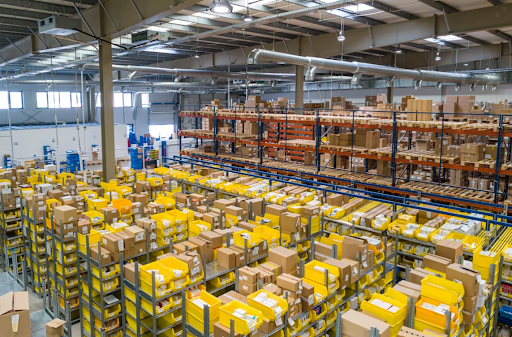

The best warehouse automation software helps businesses coordinate inventory, labor, robots, equipment, and order priorities to improve overall warehouse performance.
As warehouses become more automated, choosing the right software is becoming more important. The global sales of professional service robots reached nearly 200,000 units in 2024, up 9% year over year, which reflects the rapid growth of automation across logistics operations.
In this blog, we compare the leading warehouse automation software platforms, the key capabilities that differentiate them, the common challenges businesses face during selection, and why Synkrato stands out for enterprise warehouse optimization.
Top Warehouse Automation Software at a Glance
The table compares each warehouse automation platform by practical enterprise fit.
| Software | Ideal Warehouse Type | AI Optimization | Warehouse Simulation | Digital Twin | Robotics Integration | Ease of Integration |
| Synkrato | High-volume, 3PL, e-commerce, digital-first | Decision intelligence & prescriptive AI agents | Native 3D scenario testing (Unity engine) | Live 3D spatial digital twin | Cross-system visibility & orchestration layer | High (API-first overlay on existing WMS/ERP) |
| Manhattan | Enterprise Tier-1 & Level 4–5 complex DCs | Embedded AI & microservice WMS/WES orchestration | Slotting & labor workflow scenarios | Operational 2D/3D layout map | Native, vendor-neutral embedded WES | Moderate–High (Cloud-native microservices) |
| Blue Yonder | Global automated networks & omnichannel | Luminate predictive execution & dynamic tasking | Operational & network-level modeling | Warehouse & network-wide digital view | Vendor-neutral Robotics Hub | High (Suite-led across WMS/TMS/Supply Chain) |
| SAP EWM | SAP-centric manufacturing & distribution | ML slotting, AI labor forecasting & workload balancing | Wave, planning & throughput analysis | Adjacent SAP IoT / Digital Twin capabilities | SAP Warehouse Robotics (ROS-based) | Highest in SAP landscape; Moderate externally |
| Körber | Mixed automation, mid-to-large 3PLs | AI optimization suite (slotting & dynamic routing) | Design-led modeling (K.Sight CLASS engine) | Simulation-driven operational views | Broad turnkey AMR & MHE portfolio | High (Flexible, integrator-led platform) |
| Oracle WMS | Oracle Cloud ERP ecosystem networks | Embedded AI agents across Oracle Fusion | Standard scenario testing & batch analysis | Basic operational mapping | MHE/AMR interfaces via open REST APIs | Highest in Oracle Cloud; Moderate externally |
| Softeon | 3PLs, omnichannel retail, complex fulfillment | SAIL (Softeon AI Layer) for deployment & execution | Labor & flow simulation | Real-time execution tracking | Vendor-neutral embedded WES | High (Flexible APIs & low-code overlays) |
Each platform excels in different operational environments, so the best choice depends on your warehouse requirements rather than the longest feature list.
- Manhattan Associates: Best for enterprises that want WMS and WES in a single cloud-native execution platform.
- Blue Yonder: Strong for coordinating labor, inventory, and multiple robotics vendors across complex operations.
- SAP EWM: Ideal for manufacturers and businesses already running SAP S/4HANA.
- Körber: Combines warehouse software with automation engineering for highly automated facilities.
- Oracle WMS: Well-suited for organizations operating within the Oracle Cloud ecosystem.
- Softeon: A good choice when configurable WMS, WES, and distributed order management must work together.
- Synkrato: Best for enterprises looking to optimize existing warehouse operations using AI, digital twin, simulation, and real-time decision intelligence without replacing their current WMS.
When comparing warehouse automation software, evaluate every platform using the same operational data and test scenarios.
- Use 12 months of historical data, including order lines, receipts, inventory snapshots, labor activity, equipment events, carrier cut-off times, and exception logs.
- Preserve transaction-level timestamps instead of daily averages to uncover short periods of congestion.
- Test multiple operating scenarios, including:
- Normal business volumes
- Peak season demand
- Equipment downtime
- Delayed inbound shipments
- Labor shortages
- Compare every solution against the same performance baseline and success criteria.
- Ask vendors to explain:
- The data behind each recommendation
- The operational constraint being solved
- The expected confidence level of projected improvements
- This creates a repeatable warehouse audit checklist that supports software selection, implementation validation, and continuous improvement across multiple warehouse sites.
Key Capabilities That Differentiate Warehouse Automation Software
The following capabilities separate enterprise-ready warehouse management automation software from traditional warehouse management solutions.
AI-Powered Warehouse Intelligence
Warehouse AI continuously evaluates live operational conditions instead of simply reporting performance. It analyzes inventory, labor, robots, equipment, congestion, and order priorities to predict bottlenecks, reprioritize work, and recommend or execute the next best action within predefined business rules.
Leading warehouse platforms apply AI differently. SAP uses machine learning for slotting and labor planning, and Oracle embeds AI agents for inventory and wave management.
Core capabilities of AI warehouse automation software include:
- Dynamic Slotting: Optimizes storage locations using demand, product affinity, congestion, and replenishment effort.
- Demand Forecasting: Predicts inventory, labor, and replenishment needs from demand trends, promotions, and seasonal patterns.
- Computer Vision: Detects damaged products, verifies shipments, and identifies quality issues automatically.
- Autonomous Routing: Directs AMRs and AGVs around people, equipment, and temporary obstacles while optimizing traffic flow.
- Task Orchestration: Dynamically balances work between employees, robots, and automation to reduce bottlenecks.
- Predictive Maintenance: Identifies equipment issues early to minimize unplanned downtime and maintenance costs.
Digital Twin and Warehouse Simulation
Warehouse simulation tests proposed layouts, staffing plans, automation concepts, and demand scenarios using historical or assumed data. A digital twin remains connected to live systems, mirrors current operations, and supports continuous monitoring and optimization.
BMW’s Virtual Factory covers more than 30 production sites and is projected to reduce planning costs by up to 30%. A collision test that previously required almost four weeks can now be simulated in three days. Synkrato combines a live 3D Digital Twin with Simulation & Optimization and AI Agents, allowing warehouses to test decisions before placing capital, labor, or inventory at risk.
Modern warehouse digital twins support capabilities such as:
- Layout validation: Tests aisles, storage zones, routes, docks, and workstations.
- Capacity planning: Identifies queues under different volume and resource levels.
- Labor modeling: Compares shifts, staffing levels, and task distribution.
- Automation testing: Evaluates robots, conveyors, AS/RS, and workstation capacity.
- Failure simulation: Models equipment loss, late inventory, and labor shortages.
- Live synchronization: Updates inventory, equipment, and process status continuously.
Warehouse Optimization and Predictive Analytics
Warehouse optimization determines how space, inventory, labor, and automation should be configured. Predictive analytics identifies future demand, bottlenecks, capacity shortages, and equipment risks so the operation can respond before service levels are affected.
Key capabilities include:
- Layout optimization: Reduces travel without shifting congestion elsewhere.
- Smart slotting: Balances velocity, affinity, cube, and replenishment effort.
- Labor forecasting: Estimates hourly staffing by process and skill.
- Workload balancing: Prevents picking from overwhelming packing or sortation.
- Bottleneck prediction: Identifies future queues and capacity violations.
- Scenario comparison: Measures throughput, travel, utilization, service risk, and cost.
Walmart demonstrates this at network scale. By November 2025, more than 60% of Walmart US stores received at least some freight from automated distribution centers, while more than 50% of its US ecommerce fulfillment-center volume was automated. This expansion improved unit productivity and reduced its cost to serve.
Seamless WMS, ERP, and Robotics Integration
Warehouse inventory automation software must connect enterprise planning with physical execution. The ERP supplies commercial demand, the WMS manages orders and inventory, the WES coordinates resources, and equipment controllers direct machine-level movements. Integration keeps these layers synchronized without creating conflicting task or inventory records.
Key capabilities include:
- Real-time synchronization: Updates orders, inventory, tasks, and equipment status.
- Bidirectional communication: Exchanges work instructions, completion data, and faults.
- Vendor-neutral connectivity: Connects automation from multiple manufacturers.
- Dynamic task allocation: Reassigns work when resources become unavailable.
- Unified visibility: Combines order, inventory, robot, and system health.
- Exception management: Prevents duplicate tasks, lost inventory, and unclear ownership.
Amazon’s next-generation fulfillment center in Shreveport, Louisiana, integrates automation across every major production area. Its Sequoia inventory system can hold more than 30 million items, while the Sparrow robotic arm can handle over 200 million different product types. These facilities have reduced fulfillment processing time by up to 25% while improving shipping accuracy.
Common Challenges When Choosing Warehouse Automation Software
Beyond functionality, organizations must evaluate how well the software integrates, scales, and adapts to changing warehouse operations.
- Legacy system integration: Old WMS customizations, proprietary PLC messages, local label rules, and inconsistent master data often create more risk than the new software. Build an interface inventory covering transactions, frequency, ownership, latency, failure handling, and recovery. A cloud platform is not truly easy to integrate if every site requires bespoke mappings.
- Scalability: Measure more than annual order volume. Test peak fifteen-minute releases, concurrent users, robotic task messages, inventory events, label requests, and exception bursts. For multi-warehouse coordination, confirm whether configurations can be standardized while preserving customer, country, facility, and automation differences.
- Implementation complexity: Enterprise warehouse software often requires long deployment cycles, custom integrations, and extensive testing across multiple facilities, increasing project risk and delaying business value. Synkrato overlays existing WMS, ERP, and MES platforms with a cloud-native, API-first architecture and built-in middleware, eliminating the need for a rip-and-replace implementation.
- ROI expectations: Separate software value from automation value. Model avoided labor, additional throughput, space deferral, error reduction, downtime, maintenance, integration support, and changeover losses. Include the cost of running old and new processes in parallel. Simulation should test the same assumptions used in the financial case.
- Change management: Warehouse technology changes decision rights. Supervisors may move from releasing work manually to managing exceptions. Engineers may lose local control over robot interfaces. Operators may receive dynamic tasks instead of fixed zones. Therefore, training must cover why priorities change, how recommendations are challenged, and how work continues during degraded operations.
Why Synkrato Stands Out Among Enterprise Warehouse Automation Software
Synkrato is positioned differently from a traditional WMS. It lies above existing WMS, ERP, robotics, vision, and labor systems to create a decision layer. That makes it relevant when an enterprise wants stronger planning and optimization without replacing its execution backbone. Its cloud-native, API-first architecture is designed for no-rip-and-replace deployment.
Some of its main advantages include:
- AI-Powered Warehouse Operating System
Synkrato combines a Digital Twin, Simulation & Optimization, AI Slotting, AI Agents, Enterprise Mobility, and Enterprise Labeling into a single platform. AI Agents analyze WMS, ERP, scans, images, and documents to recommend operational actions. It reported over 25% productivity improvement and up to 50% less worker travel in customer deployments.
- Digital Twin for Smarter Warehouse Planning
The 3D Digital Twin allows teams to simulate layouts, labor plans, slotting strategies, and automation investments before making changes in the warehouse. This reduces implementation risk and helps validate decisions without disrupting live operations.
- Enterprise-Ready Integration with Existing WMS & ERP
Built with an API-first architecture, Synkrato integrates with existing WMS, ERP, MES, robotics, and automation systems without requiring a rip-and-replace deployment. This allows enterprises to add AI-driven planning and optimization while preserving their current technology investments.
Ready to optimize your warehouse without replacing your existing systems? Book an appointment with Synkrato to see how AI-powered decision intelligence can improve warehouse performance.
FAQ
What features should businesses look for in warehouse automation software?
Businesses should look for automation features like inventory visibility, workflow automation, real-time analytics, integrations, scalability, and user-friendly controls. These features help reduce manual work, improve accuracy, optimize processes, and support warehouse growth efficiently.
How does Synkrato help businesses optimize warehouse operations with automation software?
Synkrato helps businesses optimize warehouse operations by automating workflows, improving inventory visibility, connecting systems, and providing actionable operational insights. This enables teams to reduce manual processes, improve accuracy, and make faster, data-driven decisions.
How does warehouse automation software improve warehouse efficiency?
Warehouse automation software improves efficiency by automating repetitive tasks, streamlining workflows, reducing errors, and providing real-time operational visibility. It helps warehouse teams complete processes faster while using labor and resources more effectively. Synkrato improves efficiency by reducing travel, queues, idle time, manual reconciliation, unnecessary replenishment, and late exception handling while protecting service commitments.
What makes Synkrato different from traditional warehouse automation software?
Synkrato differs from traditional warehouse automation software by focusing on connected, intelligent, and flexible warehouse operations. It focuses on modeling, predicting, and validating decisions across the whole facility. It complements the WMS rather than requiring the enterprise to replace it.
How do you choose the best warehouse automation software?
Choose warehouse automation software based on integration capabilities, automation features, scalability, usability, analytics, implementation requirements, and total value. The best solution should align with current warehouse processes while supporting future operational growth.
Can Synkrato integrate with existing warehouse management systems?
Yes, Synkrato can integrate with existing warehouse management systems and other business technologies, helping organizations connect operational workflows without replacing their entire technology environment. This supports smoother automation, better data flow, and improved visibility.
How does Synkrato help businesses optimize warehouse operations with automation software?
Synkrato helps optimize warehouse operations through workflow automation, connected systems, improved visibility, and operational insights. By reducing manual processes and streamlining activities, businesses can improve productivity, accuracy, responsiveness, and overall warehouse performance.