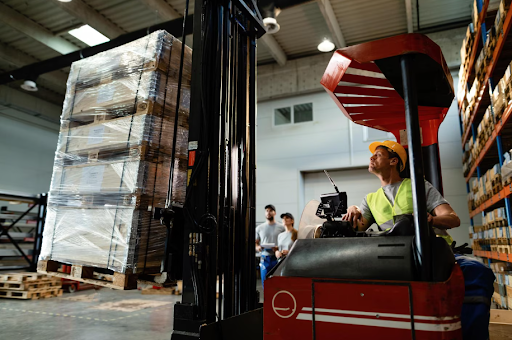
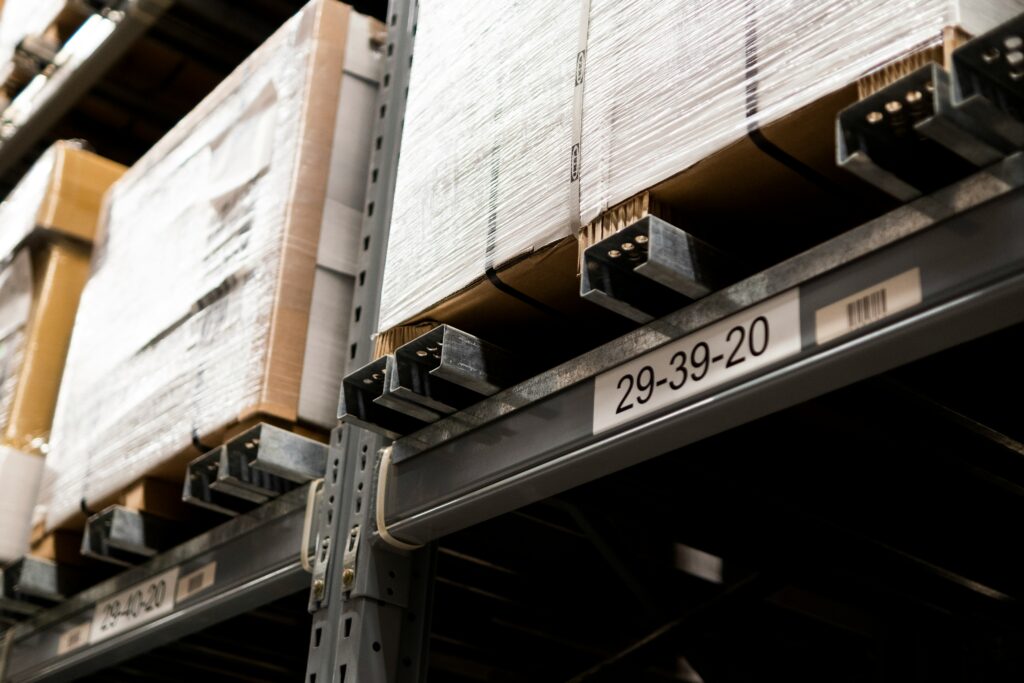
Warehouse performance today is defined by how effectively operations convert complexity into consistent execution. As supply chains become more dynamic, advanced forecasting models reduce supply chain errors by 20-50%, directly improving inventory flow and fulfillment reliability.
As a result, this shift fundamentally changes the role of warehouse KPIs. Metrics are no longer static reports. Instead, they act as real-time control points that influence throughput, accuracy, and responsiveness on the floor.
This blog represents the core warehouse performance metrics used by high-performing warehouses to measure, manage, and continuously optimize their operations.
1. Inventory Accuracy
Inventory accuracy is a dependency layer for almost every warehouse decision, from order allocation to replenishment triggers. When accuracy drops, systems start compensating with buffers, overrides, and manual checks, increasing cost and slowing execution.
Why it Matters:
Even a 1–2% inaccuracy can disrupt operations, especially in multi-channel fulfillment. It leads to split shipments, backorders, and added handling effort. Over time, inaccurate data feeds planning systems, weakening forecasting and slotting decisions.
Inventory accuracy directly impacts:
- Safety stock levels and buffer strategies
- Reliance on manual overrides in order allocation
- Reconciliation effort between WMS, ERP, and finance
- Labor productivity due to search and correction time
With Synkrato, inventory accuracy is enforced at execution through real-time validation and mobile workflows, ensuring every transaction updates instantly and eliminates delays between physical movements and system records.
How to Measure:
Periodic cycle counts provide a snapshot but often miss where errors originate. Strong operations focus on continuous validation at the transaction level.
To make accuracy measurable and actionable:
- Track accuracy across receiving, putaway, picking, and returns
- Monitor adjustment frequency and magnitude, not just % accuracy
- Segment discrepancies by root cause (location, quantity, scan errors, system lag)
- Measure the time lag between physical movement and system updates
Suggested Read: Warehouse Layout Optimization
2. Inventory Turnover Rate
Inventory turnover reflects how efficiently inventory aligns with actual demand. Low turnover does not always mean excess stock; it often points to issues like demand misalignment, poor replenishment policies, or ineffective slotting.
Why it Matters:
Turnover is a diagnostic metric, not just a financial ratio. It helps identify:
- Gaps between procurement and actual consumption
- Storage space used by slow-moving or low-priority SKUs
- Inefficient replenishment frequency or batch sizing
- Slotting issues that reduce picking efficiency
It should also be interpreted in context; seasonality, promotions, and demand shifts can temporarily distort turnover.
How to Measure:
Inventory turnover is calculated using the standard formula:
Inventory Turnover = Cost of Goods Sold / Average Inventory
However, this aggregated view often hides operational inefficiencies. To make turnover actionable, it should be analyzed at multiple levels:
- Track turnover at SKU, category, and location levels
- Measure dwell time alongside turnover
- Compare forecasted vs actual movement
- Analyze trends across seasons and demand spikes
- Link turnover with slotting and pick activity to uncover flow issues
Suggested Read: Warehouse Putaway Process
3. Order Fulfillment Time
Order fulfillment time is a core performance metric that reflects how efficiently the warehouse converts demand into shipped orders. It directly influences service reliability, throughput, and the ability to handle volume without increasing operational strain.
Why it Matters:
As order complexity increases, consistent fulfillment time becomes critical for meeting customer expectations and SLAs. Delays are rarely isolated. They usually reflect coordination gaps between order release, picking, packing, and dispatch.
At scale, fulfillment time highlights system-level performance:
- Gaps between planned workflows and actual execution
- Queue build-ups and idle time between process stages
- Misalignment between labor allocation and order inflow
- Impact of demand spikes on process synchronization
How to Measure:
Fulfillment time is typically measured from order receipt to shipment, but this end-to-end view is not enough for optimization. To make it actionable, break it into execution-level components:
- Measure queue time between stages (release → pick, pick → pack)
- Track active vs idle time within each stage
- Monitor order aging before processing begins
- Compare planned vs actual cycle time
- Segment by order type (single-line, multi-line, bulk)
Suggested Read: How to Reduce Warehouse Costs
4. On-Time Delivery Rate
On-time delivery rate measures how reliably the warehouse meets customer delivery commitments, not just internal timelines. It directly links warehouse execution to customer experience, revenue protection, and SLA compliance. Even small inconsistencies in picking, packing, or dispatch can cascade through carrier handoffs and impact final delivery.
Why it Matters:
On-time delivery is a direct indicator of execution discipline and coordination across the fulfillment process.
At an operational level, it helps identify:
- Exposure to SLA penalties and service failures
- Misalignment between warehouse readiness and carrier schedules
- Weaknesses in order prioritization during peak or constrained capacity
- Inefficiencies in network positioning relative to demand
How to Measure:
On-time delivery is typically calculated as:
On-Time Delivery % = (Orders delivered on time / Total orders shipped) × 100
However, the final metric alone doesn’t explain delays. It must be linked to internal execution and external dependencies. To make it actionable:
- Track ready-to-ship vs actual dispatch time
- Measure dock-to-dispatch latency
- Align execution timelines with carrier cutoff schedules
- Segment performance by lane, priority, and service level
Suggested Read: How to Reduce Downtime in Warehouses
5. Units Picked Per Hour
Units picked per hour is a key performance metric that measures picking efficiency: how effectively labor is converted into output. It reflects not just individual performance, but how well layout, slotting, and process design support execution.
Why it Matters:
As volume and SKU complexity increase, consistent pick rates are critical to maintaining throughput without adding labor. Variations in this metric usually point to structural inefficiencies rather than workforce issues.
At an operational level, it impacts:
- Ability to absorb volume without increasing headcount
- Cost per order in multi-line, high-SKU environments
- Workforce planning and shift structuring
- Effectiveness of system guidance and automation
How to Measure:
The basic formula for calculating units picked per hour:
Units Picked Per Hour = Total units picked / Total picking hours
This provides a baseline but doesn’t explain lost time. To make it actionable:
- Track pick rates by zone, shift, and order profile
- Separate active pick time vs travel and idle time
- Measure distance per pick or per order
- Compare batch vs discrete picking performance
Suggested Read: Warehouse Picking Challenges
6. Space Utilization
Space utilization measures how effectively warehouse capacity supports both storage and movement. It’s not just about how much space is filled, but whether that space enables fast, accessible, and uninterrupted operations.
Why it Matters:
Poor utilization often creates hidden inefficiencies such as congestion, longer travel paths, and reduced picking speed, all of which impact overall throughput.
Optimizing space is a key lever for scalability and cost control:
- Delays or avoids the need for expansion or additional facilities
- Impacts capital allocation between infrastructure and process improvements
- Determines flexibility to handle new SKUs and seasonal spikes
- Affects safety and operational risk in high-density environments
How to Measure:
The basic formula:
Space Utilization % = (Used storage space / Total available space) × 100
This gives a static view but doesn’t reflect flow efficiency. High utilization can still reduce performance if it limits accessibility.
To make it actionable:
- Measure utilization across storage types and zones
- Track cube utilization for vertical space efficiency
- Map storage locations vs pick frequency
- Monitor congestion in high-density areas
Suggested Read: Common Warehouse Challenges
7. Customer Satisfaction Rate
The customer satisfaction rate reflects how consistently warehouse operations meet expectations for accuracy, speed, and reliability. It is the cumulative outcome of execution across inventory, fulfillment, and delivery processes.
Why it Matters:
Customer satisfaction is a direct reflection of operational performance experienced externally. Breakdowns in inventory accuracy, fulfillment time, or delivery reliability quickly translate into customer friction.
Unlike internal KPIs, it validates whether operational improvements are actually improving service quality and supporting business outcomes.
For instance, this metric influences long-term business impact:
- Repeat purchase behavior and customer lifetime value
- Brand perception in competitive and omnichannel markets
- Support costs driven by complaints and escalations
- Ability to scale operations without degrading service quality
How to Measure:
Customer satisfaction is typically captured through surveys, ratings, and Net Promoter Score (NPS). However, feedback alone is delayed and does not explain root causes.
To make it more actionable:
- Customer Satisfaction Rate = (Positive feedback / Total responses) × 100
- Track NPS alongside operational KPIs to identify drivers
- Map complaints to execution failures (such as accuracy, delay, damage)
- Analyze sentiment trends from feedback data
- Segment by order type, region, and fulfillment channel
Suggested Read: Common Warehouse Layout Mistakes
8. Return Rate
Return rate reflects how effectively warehouse execution meets order accuracy and quality expectations. While often treated as a post-fulfillment metric, it is frequently driven by upstream operational issues such as picking errors, packing mistakes, labeling issues, or product damage.
Why it Matters:
Returns add cost and complexity beyond reverse logistics. They increase handling effort, disrupt forward inventory flow, and delay revenue realization by reintroducing items into processing cycles.
More importantly, return patterns highlight execution weaknesses that may otherwise go unnoticed.
At an operational level, return rate:
- Increases cost per order due to additional handling and restocking
- Reduces available sellable inventory and delays revenue recognition
- Signals issues in picking, packing, labeling, or handling processes
- Creates workload variability that disrupts normal warehouse flow
How to Measure:
Return rate is typically calculated as:
Return Rate = (Returned orders or units / Total shipped orders or units) × 100
However, the metric is only useful when paired with root-cause breakdowns. A structured measurement approach includes:
- Categorizing returns by reason codes (damage, wrong item, quality, customer preference)
- Linking return data to pick, pack, and ship records to isolate execution errors
- Tracking time to process returns and reintegrate inventory
- Segmenting by SKU, category, and fulfillment channel
Suggested Read: Hidden Cost of Warehouse Turnover
How to Easily Measure Warehouse Key Performance Indicators
Effectively measuring warehouse KPIs requires a structured approach that ensures data is captured accurately, interpreted in context, and continuously used to guide operational decisions.
Automate Data Collection
Accurate KPI measurement starts with removing manual data entry. In most warehouses, inconsistencies come from delayed or fragmented updates across systems and processes.
Automating data capture ensures every transaction: picks, scans, movements, and dispatches, is recorded at the point of activity, creating a continuous and reliable data stream. This reduces reporting delays and improves visibility into real-time operations.
Provide Real-Time Insights
Collecting data is not enough; it must be usable in real time. Static reports often fail to reflect fast-changing operational conditions. Real-time insights allow teams to identify issues as they emerge, such as bottlenecks, delays, or capacity constraints, and take corrective action before they affect output or service levels..
Generate Custom Reports
Standard reports provide a general overview but rarely answer specific operational questions. Custom reporting allows teams to tailor KPI views based on role, workflow, or business priority. This enables deeper analysis across dimensions such as SKU groups, order types, customer segments, or warehouse zones.
Enable Forecasting
Effective KPI measurement should not be limited to current performance. Forecasting extends measurement into future conditions, helping warehouses anticipate demand shifts and capacity constraints.
Simulation-driven environments, including digital representations of warehouse operations, allow teams to test different scenarios before implementing them in reality. By modeling changes in demand, layout, or resource allocation, warehouses evaluate how these factors will influence warehouse efficiency metrics. It reduces the risk associated with operational changes and enables more informed decision-making.
So, take control of your warehouse performance metrics in real time. Book a demo with Synkrato and measure, predict, and optimize warehouse KPIs and metrics with AI-driven insights and simulation-backed precision.
Suggested Read: Theory of Constraints for Warehouses
FAQs
What are warehouse performance metrics?
Warehouse performance metrics are measurable indicators that track how effectively operations execute across inventory, fulfillment, and resource utilization. Synkrato enhances these metrics by capturing real-time execution data and converting it into actionable insights across the warehouse.
How does Synkrato help track warehouse performance metrics?
Synkrato tracks KPIs by capturing data at the point of execution through mobility apps and integrating it across systems. Its AI Agents and analytics layer allow teams to monitor performance, identify deviations, and act on insights without relying on delayed reports.
Can Synkrato improve warehouse productivity and efficiency?
Yes, Synkrato improves productivity by optimizing workflows using AI-driven recommendations, digital twin simulations, and real-time execution visibility. This reduces inefficiencies such as excess travel, manual errors, and process delays across operations.
Does Synkrato integrate with existing systems to measure KPIs?
Synkrato integrates with existing systems like WMS, ERP, and logistics platforms, consolidating structured and unstructured data into a unified view. This ensures KPI measurement reflects actual operations rather than siloed system outputs.
Why are warehouse performance metrics important?
Warehouse performance metrics provide visibility into how operations impact cost, service levels, and scalability. With Synkrato, these metrics become real-time control points that help teams respond quickly to changes and maintain consistent execution.
What are the most important warehouse KPIs?
The most important KPIs include inventory accuracy, fulfillment time, on-time delivery, picking productivity, and space utilization. Synkrato strengthens these metrics by linking them directly to execution data and enabling continuous optimization through AI and simulation.
How do you measure warehouse productivity?
Warehouse productivity metrics include units picked per hour, order cycle time, and labor efficiency. Synkrato enhances this by breaking down productivity into execution-level insights, helping teams identify where time and effort are actually spent.