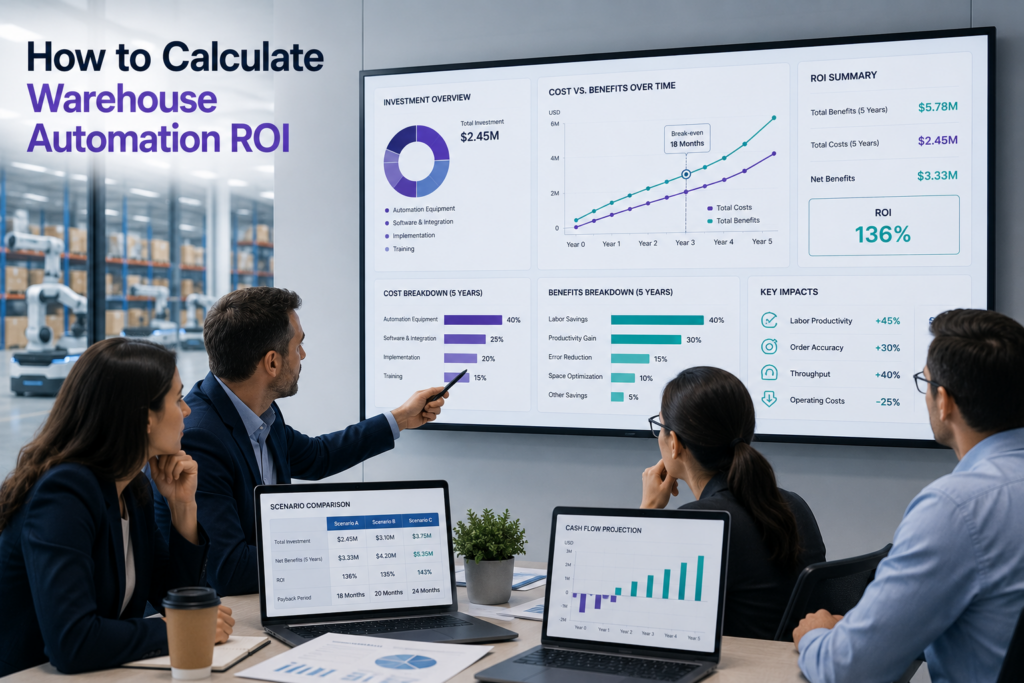
To calculate warehouse automation ROI before investing, review upfront costs, ongoing expenses, expected productivity gains, labor savings, demand changes, and financial risks.
A reliable warehouse automation business case measures these factors instead of relying only on projected labor savings, helping organizations make informed investment decisions and improve long-term returns from warehouse automation investments.
In this blog, we’ll cover the key operational variables, investment scenarios, ROI metrics, and evaluation strategies that help organizations make informed warehouse automation investment decisions.
Why Warehouse Automation Business Cases Often Overestimate ROI
Most warehouse automation business cases overestimate ROI because they depend on simplified assumptions instead of operational reality. Financial models frequently ignore execution variability, hidden costs, and process dependencies that determine how automation performs after deployment.
Hidden Operating Costs That Distort ROI Projections
Many warehouse automation cost vs benefit evaluations emphasize equipment acquisition while underestimating the operational expenses required to sustain long-term performance. Commonly overlooked costs include:
- Software integration
- Warehouse layout modifications
- Employee training
- Preventive maintenance
- Spare parts inventory
- Cybersecurity measures
- System upgrades
- Production downtime during implementation
These costs often accumulate gradually, making early financial projections appear stronger than actual performance. Research published in 2023 found that investment decisions ignoring these operational factors consistently produced weaker long-term returns than those based on comprehensive operational analysis.
Why Labor Savings Alone Rarely Justify Automation Investments
Labor savings alone rarely justify warehouse automation investments because long-term ROI also depends on inventory costs, throughput, asset utilization, and overall operational performance.
- Labor Challenges: As warehouse automation adoption grows by more than 10% annually, according to McKinsey, many organizations still face persistent labor shortages and operational complexity. This is because labor performance depends on order profiles, SKU velocity, congestion, replenishment frequency, and workstation balance.
- Payroll-Only ROI: The challenges often expose weaknesses in a warehouse automation business case that focuses only on payroll savings instead of conducting a comprehensive warehouse automation financial analysis that accounts for inventory, throughput, and capacity.
Labor savings can also fluctuate with seasonal demand. During peak periods, overtime, temporary staffing, and workload imbalances reduce the financial impact originally forecast in many warehouse automation business cases.
How Unrealistic Performance Assumptions Lead to Poor Investment Decisions
Warehouse automation investment decisions often rely on stable operating assumptions that rarely reflect real-world distribution networks. Financial models typically expect consistent order volumes, predictable SKU demand, and uninterrupted equipment utilization, even though seasonal peaks, supplier disruptions, and changing product mixes continually affect warehouse performance.
Despite rapid warehouse automation investment, many businesses still rely on static financial assumptions that overlook demand variability and operational complexity. Gartner predicts that 50% of new warehouses in developed markets will be robot-centric by 2030, highlighting the need for more realistic warehouse automation ROI evaluations before capital is committed.
The Operational Variables That Actually Determine Automation ROI
The operational variables that determine warehouse automation ROI include demand variability, process bottlenecks, asset utilization, and warehouse flow.
Order Volume Stability and Demand Variability
Seasonal peaks, promotional campaigns, product launches, and SKU expansion continuously change warehouse workloads, making demand variability one of the biggest influences on warehouse automation ROI.
Facilities designed around average daily volumes often experience congestion when order volumes spike. During slower periods, the same assets may remain underutilized, extending the payback period and reducing capital efficiency. Instead of evaluating average throughput, organizations should measure:
- Peak-to-average order ratios
- SKU velocity changes
- Seasonal demand fluctuations
- Order profile complexity
- Inventory turnover trends
A simulation-based optimization study found that improving worker allocation increased outbound service levels by over 30% while keeping workforce levels constant, demonstrating how dynamic operational modeling supports more reliable warehouse automation investment decisions before capital is committed.
Process Bottlenecks Limiting Automation Impact
Process bottlenecks limit warehouse automation ROI because constrained upstream or downstream workflows prevent system-wide performance improvements. Typical operational constraints include receiving delays, replenishment inefficiencies, inventory inaccuracies, packing station congestion, and shipping capacity limitations.
Each dependency influences overall throughput regardless of how efficient individual automation systems become. This is why warehouse automation cost analysis should evaluate entire operational workflows instead of isolated technologies.
Asset Utilization and Existing Warehouse Constraints
High asset utilization supports positive warehouse automation ROI by maximizing equipment productivity and reducing idle capacity. Existing warehouse constraints frequently reduce utilization, including:
| Existing Constraint | Impact on ROI |
| Limited storage density | Lower automation productivity |
| Poor aisle configuration | Increased travel distance |
| Unbalanced picking zones | Uneven workload distribution |
| Aging facility infrastructure | Higher retrofit costs |
| Inflexible inventory allocation | Reduced equipment efficiency |
Studies on robotic warehouse systems continue to demonstrate that system efficiency depends on balanced resource utilization rather than maximum automation deployment. Equipment, labor, inventory flow, and workstation capacity must operate as an integrated system to maximize financial performance.
Evaluating Automation Scenarios Before Capital Commitment
Organizations should evaluate multiple warehouse automation investment scenarios before approving capital to improve ROI accuracy, reduce investment risk, and build a stronger warehouse automation business case.
Comparing Multiple Investment Scenarios Using Operational Data
Organizations should compare multiple warehouse automation investment scenarios using operational data to identify the option with the strongest long-term ROI.
| Scenario | Best Use Case | ROI Confidence |
| Process optimization | Existing assets underutilized | High |
| Partial automation | Moderate growth | Medium-High |
| Full automation | High-volume operations | Depends on operational maturity |
| Phased rollout | Long-term expansion | High |
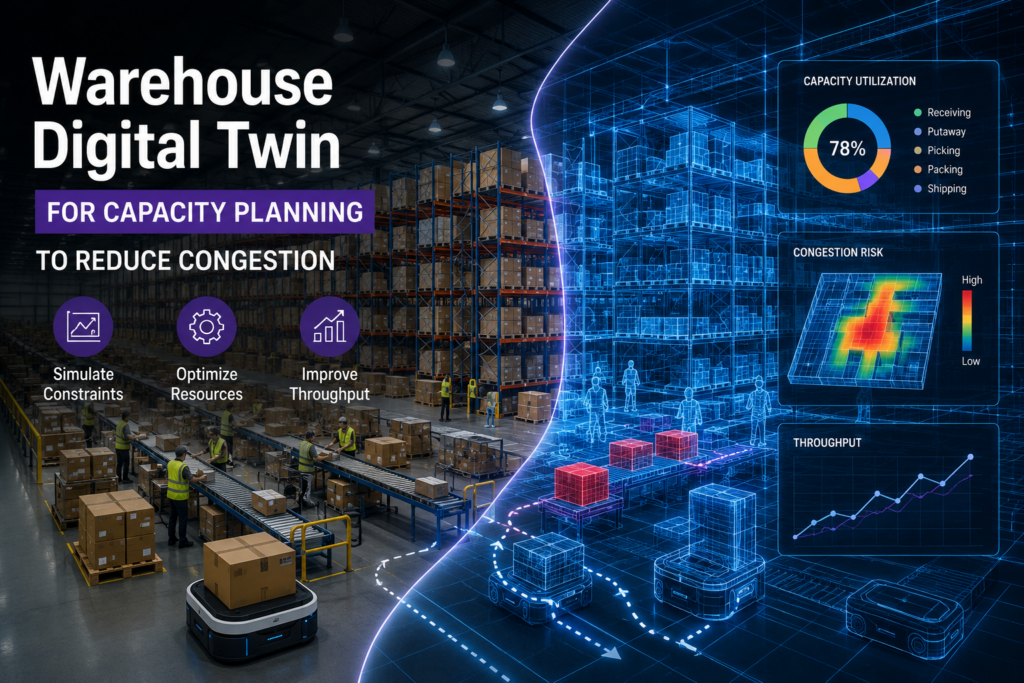
Synkrato’s Digital Twin enables leaders to evaluate warehouse performance under real-world operating conditions before capital is deployed. According to research, digital twins support decision-making by combining real-time data, simulation, and dynamic model updates throughout the product lifecycle, enabling organizations to monitor, optimize, and forecast system performance.
Identifying Break-Even Conditions Across Different Growth Rates
Warehouse automation break-even should be evaluated across multiple growth scenarios to identify when projected ROI begins to decline. Before approving a warehouse automation investment, executives should validate:
- Growth assumptions
- SKU expansion
- Seasonal demand peaks
- Labor availability
- Capacity utilization
This creates a more realistic warehouse automation cost analysis by identifying when projected returns begin to decline.
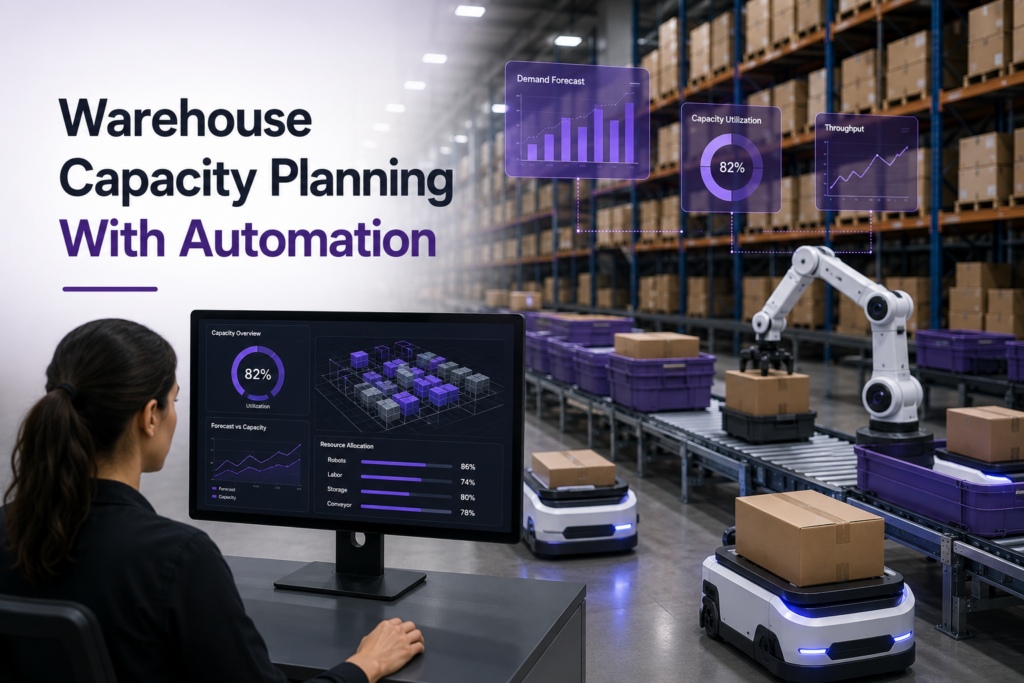
Synkrato’s Simulation & Optimization models hundreds of operating scenarios before deployment, helping organizations compare financial outcomes under changing business conditions.
Measuring Operational Risk Alongside Financial Return
Warehouse automation investment decisions should measure both financial returns and operational risk to improve long-term ROI.
Financial Metrics
- ROI
- Payback period
- Cost per order
Operational Metrics
- Throughput stability
- Equipment utilization
- Recovery from disruptions
Organizations combining both perspectives consistently make better automation decisions during periods of demand volatility.
Synkrato’s AI Agents, together with Enterprise Mobility, continuously analyze warehouse execution data to identify operational risks that conventional ROI models cannot detect. This enables leaders to validate warehouse automation investments using live operational intelligence rather than historical assumptions alone.
Why ROI Depends on System-Wide Performance Instead of Individual Technologies
Warehouse automation ROI depends on system-wide performance because every warehouse process is interconnected. Improving one technology while adjacent workflows remain constrained will only shift bottlenecks instead of increasing overall operational efficiency.
Interactions Between Labor, Inventory, and Warehouse Flow
Labor, inventory, and warehouse flow directly influence warehouse automation ROI because each process affects overall throughput and operational efficiency. Warehouse ROI follows a simple chain:
Inventory Accuracy → Labor Productivity → Warehouse Flow → Throughput → ROI
When one link weakens, overall performance declines. Many warehouse automation investments fail because organizations underestimate integration complexity, workforce skill gaps, cybersecurity risks, and uncertain returns on investment. A 2025 review of warehouse digitalization identified these as five major challenges, highlighting the need for system-wide operational evaluation before committing capital.
Upstream and Downstream Effects on Automation Performance
Upstream and downstream processes directly affect warehouse automation performance because delays in one workflow reduce efficiency across the entire operation.
Upstream Issues
- Receiving delays → Lower equipment utilization
- Inventory errors → Picking interruptions
Downstream Issues
- Packing bottlenecks → Slower order completion
- Shipping delays → Reduced throughput and delayed dispatch
This is why organizations increasingly use Synkrato Enterprise Labeling to standardize warehouse execution and reduce downstream errors that affect automation ROI.
How Local Improvements Can Reduce Overall ROI
Local improvements can reduce overall warehouse automation ROI when they create new bottlenecks elsewhere in the operation. Faster picking, for example, may overload packing stations and increase order cycle time.
A warehouse optimization study using real operational data achieved a 21% reduction in total retrieval time through system-wide storage optimization, demonstrating that coordinated process improvements generate greater overall ROI than optimizing individual warehouse activities in isolation.
Investment Signals That Indicate Automation Will Deliver Sustainable Returns
Stable operations, consistent demand patterns, high inventory accuracy, and standardized workflows are strong indicators that warehouse automation can deliver sustainable long-term ROI. Organizations should validate these operational signals before approving capital investments.
Operational Conditions Supporting Positive ROI
The operational conditions supporting positive ROI include:
- Stable order volumes
- High inventory accuracy
- Consistent labor productivity
- Standardized warehouse processes
Facilities demonstrating these characteristics generally achieve faster payback and better warehouse automation ROI.
Indicators That Existing Processes Should Be Optimized Before Automation
Signs that warehouse processes require optimization before automation include recurring bottlenecks, inventory inaccuracies, and inefficient workflows. Consider these questions before approving capital:
- Are travel distances increasing every quarter?
- Does replenishment frequently delay picking?
- Is inventory accuracy below target?
- Are packing stations consistently creating queues?
If the answer is “yes” to several of these questions, process optimization should come before automation. This produces a more reliable warehouse automation cost analysis and strengthens the long-term business case.
Business Metrics That Validate Long-Term Investment Success
Long-term warehouse automation investment success is validated by measuring actual ROI, throughput, cost per order, and asset utilization against the original business case.
- Projected ROI vs. Actual ROI: Compare expected returns with actual business results.
- Planned Throughput vs. Actual Throughput: Verify whether real processing volumes meet projected capacity.
- Estimated Cost per Order vs. Measured Cost per Order: Check if actual operating costs align with initial forecasts.
- Expected Asset Utilization vs. Real Asset Utilization: Evaluate how efficiently warehouse assets perform compared with planned capacity.
Synkrato AI Slotting Recommendations continuously optimize SKU placement using operational data, helping organizations improve warehouse automation ROI through smarter inventory positioning and workflow efficiency.
Transform Warehouse Automation Decisions with Synkrato
Warehouse automation investments should be validated with operational data, not assumptions. Scenario testing and system-wide analysis help organizations reduce risk and improve long-term ROI. You can build a stronger warehouse automation business case with Synkrato.
Book a demo with Synkrato to continuously monitor performance to support better decisions throughout the automation lifecycle.
FAQs
Why do warehouse automation ROI projections often differ from actual business outcomes?
Warehouse automation ROI projections often rely on fixed assumptions about labor, order volumes, and demand. Real operations change continuously, making actual performance different from forecasts. Scenario-based planning produces more accurate investment decisions than relying on a single financial model.
Which operational costs are most commonly underestimated when calculating warehouse automation ROI?
Businesses frequently underestimate software integration, implementation downtime, maintenance, employee training, system upgrades, and ongoing support costs. Including these expenses in a warehouse automation cost analysis creates a more realistic financial projection and reduces unexpected post-deployment costs.
How does Synkrato help businesses calculate warehouse automation ROI before investing?
Synkrato Digital Twin enables organizations to simulate warehouse operations before investing. By evaluating layouts, labor allocation, inventory flow, and throughput under different scenarios, businesses can validate ROI, compare investment options, and reduce financial risk before capital is committed.
Can warehouse automation deliver positive ROI without increasing order throughput?
Yes. Warehouse automation can improve ROI by reducing travel distance, improving inventory accuracy, increasing asset utilization, and lowering operating costs, even without increasing order throughput. Synkrato AI Slotting Recommendations optimize SKU placement to maximize these efficiencies and improve warehouse automation ROI.
Can Synkrato evaluate multiple warehouse automation scenarios before capital investment decisions are made?
Yes. Synkrato Simulation & Optimization compares multiple automation strategies using operational data and growth assumptions. It helps organizations identify break-even points, evaluate financial trade-offs, and select the investment scenario that delivers the most sustainable long-term returns.
How can organizations reduce investment risk before committing to warehouse automation projects?
Organizations should validate operational readiness, compare multiple investment scenarios, and monitor both financial and operational KPIs. Synkrato AI Agents continuously identify execution risks and operational dependencies, enabling leaders to make more confident, data-driven warehouse automation investment decisions.