

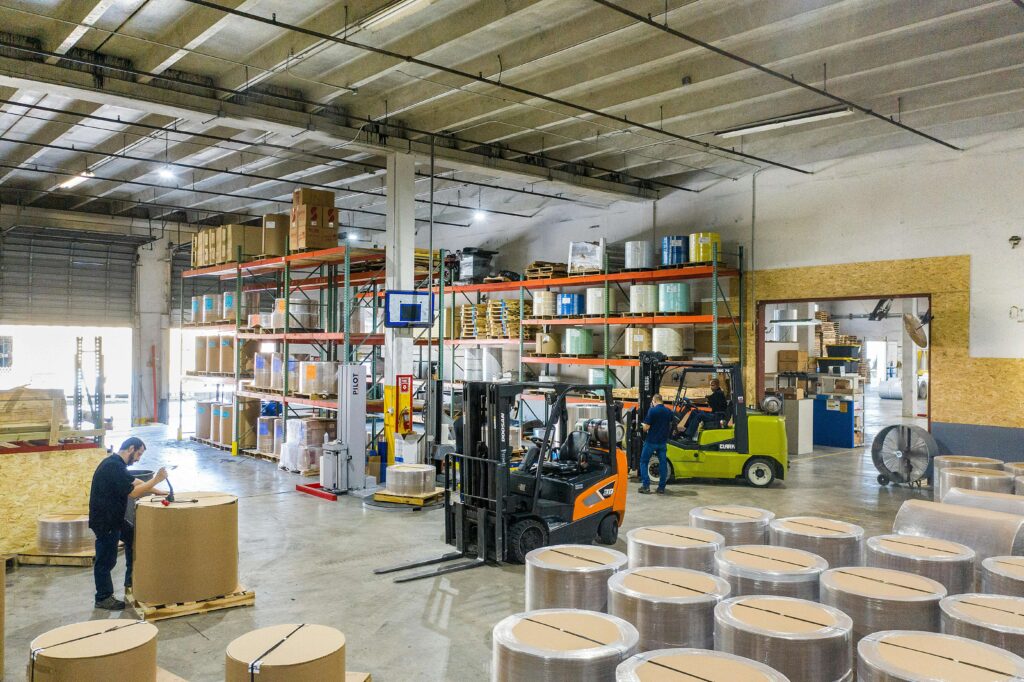
Warehouses process thousands of orders every day. A single delay can cascade fast: misplaced inventory becomes a shipment backlog, a slow pick becomes a missed delivery promise, and a missed delivery promise becomes a customer who doesn’t come back. A few minutes of inefficiency here, a few there. Multiply that across a full shift, and you’re bleeding time and money across the entire supply chain.
And yet, most warehouses still operate this way.
Reacting instead of predicting. Guessing instead of simulating. Making million-dollar layout and labor decisions on spreadsheets and tribal knowledge.
That gap between how warehouses operate and how they should operate is exactly why optimization matters. Organizations that close it reduce operational costs, improve order accuracy, and fulfill faster.
This article breaks down advanced warehouse optimization strategies that drive measurable productivity, scalability, and long-term supply chain performance. It covers 11 fundamental approaches, each grounded in real-world rollouts, and examines the AI and simulation technologies that separate incremental gains from sustained improvement.
Why Traditional Optimization Approaches Break at Scale
Conventional warehouse optimization strategies were built for stable environments with predictable demand, consistent SKU profiles, and manageable order volumes. At scale, that stability disappears. Demand shifts constantly, labor availability fluctuates, and inventory flows grow more complex with every new channel. Traditional approaches cannot adapt to this level of variability, and the cracks show quickly.
Static Slotting Architectures Collapse Under Demand Volatility
Most facilities rely on fixed slotting and layout configurations, typically optimized using historical velocity data or periodic ABC classification. The problem: demand volatility invalidates those assumptions faster than most teams can respond.
SKU velocity distributions shift frequently, especially in eCommerce and omnichannel networks. When slotting stays static, the consequences compound:
- High-velocity SKUs end up in suboptimal locations, increasing travel distance
- Pick paths become inefficient, and zones fall out of balance
- Prime storage locations sit underutilized while pickers walk further for the items they need most
Fixing this requires dynamic slotting algorithms that use real-time demand signals, order profiles, and replenishment constraints to continuously reposition inventory. AI-driven slotting engines take this further by incorporating predictive demand modeling, constraint-based optimization, and scenario simulation.
Synkrato’s AI slotting layer applies machine learning models to continuously evaluate slotting decisions against system-wide KPIs such as travel time, congestion, and pick density. Unlike periodic re-slotting, this operates continuously, adapting to demand shifts without disrupting ongoing operations.
Rule-Based WMS Limitations in Complex Fulfillment
Traditional WMS platforms run on deterministic, rule-based logic designed for predictable workflows. At scale, variability introduces edge cases that rigid rules cannot handle efficiently:
- Order batching rules break under uneven order profiles
- Wave planning creates bottlenecks during demand spikes
- Fixed replenishment triggers lead to stockouts or overstocking
The result is a system that becomes reactive. Manual overrides and operational firefighting replace planned execution. Warehouse productivity degrades not because the technology failed, but because it was never designed for this level of complexity.
Modern warehouse optimization requires adaptive decision models that incorporate probabilistic forecasting, constraint-based optimization, and machine learning. The shift is fundamental: from rule execution to outcome optimization.
Spreadsheet Planning Cannot Model System-Wide Interactions
Many high-level planning decisions still live in spreadsheets. For isolated calculations, spreadsheets work fine. For modeling the system-wide interactions that define warehouse performance, they fall short.
Warehouse operations are inherently non-linear systems where variables are deeply interdependent:
- Labor allocation affects congestion patterns
- Slotting decisions drive replenishment cycles
- Picking strategies influence dock throughput
Spreadsheets cannot simulate these interactions at scale. They produce localized optimizations that often degrade overall performance because they cannot account for downstream effects. Complex operational systems require simulation-based modeling to evaluate behavior under real-world variability. Without it, decisions remain assumption-driven rather than evidence-based.
Optimization Efforts Deliver Diminishing Returns
Most warehouses achieve early gains through conventional strategies: layout redesign, rule tuning, and labor standardization. These improvements work because they address obvious inefficiencies.
But performance gains plateau. The reason is structural: optimizations applied in isolation often create new problems elsewhere in the system.
- Slotting improvements may increase pick speed but create replenishment bottlenecks
- Labor optimization may improve utilization, but increase congestion
- Batch logic changes may reduce travel but extend order cycle time
Breaking through this plateau requires simulation-driven approaches. Digital twins and AI-driven simulations evaluate multiple variables simultaneously before changes go live. This keeps optimization efforts compounding rather than plateauing, delivering sustained productivity improvement over time.
The Missing Layer in Warehouse Optimization: Decision Intelligence
Most warehouse technology stacks are built around two layers: execution and visibility. Execution tools manage tasks. Visibility tools report on what happened. What’s absent is a layer that evaluates whether a decision is optimal before it gets executed.
Execution Without Foresight
WMS platforms execute tasks efficiently. They manage inventory movements, order processing, and labor workflows. But they do not evaluate whether a decision is optimal before carrying it out. They answer how to execute, not what to execute.
Visibility Without Actionability
Analytics and BI tools provide retrospective insights. They surface problems like increased pick times, labor underutilization, and zone-level bottlenecks. These are valuable, but they are lagging indicators. They explain what happened, not what will happen.
As a result, most optimization efforts remain reactive, addressing problems after they’ve already affected throughput and cost.
The Decision Simulation Gap
Between execution and analytics sits a critical gap: decision intelligence. This is the layer that enables operators to simulate operational scenarios before deploying them.
It combines digital twins for warehouse modeling, discrete-event simulation for flow analysis, optimization algorithms for constraint-based decisions, and AI/ML for demand and pattern prediction. Together, these enable system-level evaluation of decisions before they reach the floor.
This layer is what turns warehouse optimization from a series of educated guesses into an engineering discipline. It forms the foundation of advanced warehouse optimization strategies.
From Reactive Operations to Predictive Warehousing
Traditional warehouse operations run on a correction loop. Problems are identified after they impact throughput, and teams intervene to contain the damage. This pattern is familiar to every warehouse operator, and it is also the single biggest constraint on sustained improvement.
The Reactive Operating Model
In a reactive model, bottlenecks, labor imbalances, and inventory issues are addressed after they hit performance. The consequences are predictable:
- Delayed response to demand variability
- Inefficient labor utilization across shifts
- Rising operational costs from constant firefighting
Reactive systems optimize after failure, not before it. Every correction costs more than prevention would have.
The Predictive, Simulation-Led Model
Predictive warehousing shifts decision-making upstream. Instead of reacting to problems, operators simulate and validate decisions before execution.
This approach relies on forecast-driven demand modeling, scenario-based simulation of workflows, and constraint-aware optimization engines. Decisions like slotting changes, labor allocation, and picking strategies are tested against expected outcomes before they go live.
Operational Impact
Predictive models enable proactive adjustments that reduce variability and improve consistency:
- Faster fulfillment cycles through pre-validated workflows
- Improved resource utilization by matching capacity to forecasted demand
- Scalable efficiency improvement that compounds over time
Moving from reactive to predictive operations is not optional for warehouses operating at scale. It is the prerequisite for sustained productivity improvement in complex environments.
The Trade-Offs No One Talks About in Warehouse Optimization
Warehouse optimization is not about maximizing a single metric. It requires balancing competing objectives across the entire system. Ignoring these trade-offs leads to localized gains that create new problems downstream.
When Space Optimization Conflicts with Picking Efficiency
Increasing storage density improves space utilization but reduces accessibility. High-density configurations increase replenishment complexity, slow down picking operations, and create dependency on batch movements. Lower-density layouts improve speed but increase real estate costs.
The right balance depends on the facility’s specific order profile and throughput requirements. Effective warehouse layout optimization requires evaluating both configurations through simulation, not static design assumptions.
When Workforce Optimization Creates Throughput Bottlenecks
Maximizing labor utilization looks good on a spreadsheet. In practice, it often increases congestion. High labor concentration in specific zones leads to travel interference, queue buildup at pick locations, and reduced throughput despite higher staffing levels.
Balancing labor distribution across zones and shifts is critical for sustainable productivity improvement. The goal is not maximum utilization but optimal throughput per labor hour.
When Automation Limits Adaptability
Automation improves consistency and throughput but reduces operational flexibility. Highly automated systems require significant capital investment, are optimized for specific workflows, and struggle when SKU profiles or demand patterns shift.
Flexible systems adapt better to variability but may sacrifice peak efficiency. Modern warehouse optimization requires hybrid models that combine automation with the operational flexibility to handle changing conditions without system-wide redesign.
From Isolated Improvements to System-Level Performance Engineering
True optimization requires a system-level perspective. Every decision has to be evaluated against its impact on throughput, cost, service levels, and operational resilience simultaneously.
This is where warehouse optimization evolves from a collection of isolated improvements into integrated performance engineering. The tools exist to do this. The question is whether organizations are willing to move beyond point-level fixes and design their operations as a unified system.
11 Proven Strategies to Optimize Warehouse Operations
Organizations that genuinely optimize warehouse management combine operational improvements, technology adoption, and workforce development in one cohesive rollout that compounds over time.
Here are some of the best fundamental practices for warehouse operations that work, derived from real rollouts, not theory.
1. Optimize Warehouse Layout and Storage Design
Think of your warehouse layout as the operating system for everything that happens inside. A bad layout increases worker travel distance, slows picking operations, and creates congestion across zones. Layout is the one decision that touches every other metric.
The numbers back this up. Travel time accounts for 40-60% of a picker’s working time in poorly organized facilities (Georgia Tech Supply Chain & Logistics Institute).
An optimized warehouse layout focuses on logical product zoning, efficient aisle design, strategic storage placement, and optimized material flow.
How to Optimize Warehouse Layout and Storage Design
An optimized layout drives efficient material flow from receiving to storage and finally to shipping. Proven techniques include:
i. Design logical warehouse zones
Divide the warehouse into operational zones: receiving, bulk storage, forward picking, packing, and shipping. Clear zoning prevents workflow overlap and improves material flow. Fast-moving inventory should sit closest to picking and packing areas to reduce travel distance.
ii. Implement ABC inventory slotting
ABC slotting organizes inventory based on demand frequency:
- A-items: Placing high-demand products near dispatch zones.
- B-items: Storing moderate-demand products in mid-range locations.
- C-items: Placing slow-moving items in distant or higher storage areas.
This method improves picking efficiency and supports warehouse productivity.
iii. Use golden-zone storage
Golden-zone storage places high-demand items between waist and shoulder height. Less bending. Less climbing. More picks per hour. It significantly improves worker productivity and reduces fatigue in high-volume warehouses.
iv. Optimize aisle design and traffic flow
Aisle width and layout affect forklift movement, picking speed, and congestion levels. Best practices include:
- Dedicated pedestrian and forklift lanes
- One-way traffic flow in narrow aisles
- Cross aisles to shorten travel paths
These changes improve operational safety and support warehouse layout optimization.
v. Create dedicated picking areas
Separate fast-moving SKUs into forward picking zones. Bulk inventory stays in reserve storage. This reduces congestion in high-traffic zones and speeds up order fulfillment.
vi. Maximize vertical storage capacity
Warehouses often underutilize vertical space. Installing high-density racking systems or automated storage systems increases storage capacity without expanding floor space. Vertical storage improves space utilization and inventory accessibility.
By using Synkrato’s Digital Twin simulations, warehouses can visualize, test, and refine layouts and workflows in a virtual environment before redesigning the physical floor, potentially improving efficiency by 25% and reducing travel time by 50%.
Example: IKEA’s Flow-Oriented Warehouse Design
Challenge: IKEA warehouses manage a large number of SKUs with varying demand patterns. High inventory turnover and large product volumes increase the risk of congestion and inefficient picking routes.
Solution: IKEA designed warehouses using a flow-oriented layout where inventory moves sequentially from bulk storage to picking and then to shipping. Pallet flow racks improve product accessibility, while high-demand SKUs are stored closer to loading docks and picking zones.
Results:
- Around 20% faster picking times
- Consistent order fulfillment performance during peak demand periods
2. Enhance Your Warehouse Management System (WMS)
If layout is the operating system of your warehouse, a WMS is the brain.
93% of warehouses already run a WMS. It enables real-time control over inventory, storage locations, order processing, and labor tasks.
Without proper configuration, warehouses fall back on manual overrides, spreadsheets, and disconnected workflows. That’s not a strategy. That’s a liability. The result: inaccurate inventory records, inefficient picking routes, and delayed order fulfillment.
A modern WMS improves warehouse management optimization through:
- Real-time inventory tracking through barcode or RFID scanning
- Automated task assignment for receiving, picking, and replenishment
- Optimized picking routes to reduce travel time
- Location-based inventory management for faster product retrieval
- Labor management tools to monitor workforce productivity
- Operational reporting and analytics for tracking warehouse performance metrics
These capabilities allow organizations to improve warehouse efficiency, reduce errors, and increase fulfillment speed.
How to Enhance a WMS for Optimizing Warehouse Operations
- Assess warehouse processes and constraints: Analyze current workflows, order volumes, inventory complexity, and operational challenges to identify where the WMS underperforms.
- Continuously refine slotting and routing rules: Update slotting logic and picking paths based on real demand patterns rather than static configurations.
- Integrate barcode or RFID tracking: Implement scanning technologies to capture real-time inventory movements and eliminate manual data entry errors.
- Configure automated workflows: Adjust automated rules for receiving, put-away, picking, and replenishment logic as demand and operations evolve.
- Align WMS with upstream and downstream systems: Integrate with ERP, TMS, and analytics platforms to maintain consistent data flow and operational visibility.
- Monitor performance and iterate: Use warehouse performance metrics to identify inefficiencies and continuously improve system configurations.
Example: DeltaLogix WMS Implementation
Challenge: DeltaLogix faced inaccurate inventory records, delayed order fulfillment, and high labor costs due to manual coordination. Limited visibility across receiving, picking, and shipping processes compounded the problem.
Solution: DeltaLogix implemented a cloud-based WMS integrated with barcode scanning and real-time inventory tracking. The system automated inventory updates, improved task coordination, and provided operational visibility.
Results:
- Inventory accuracy: 99.3%
- Order picking error rate: 0.9% (down from 3.8%)
- Order cycle time: 2.3 hours (reduced from 4.1 hours)
- Labor hours per order: 0.34 (down from 0.56)
- Customer satisfaction score: 94/100 (up from 82)
3. Improve Inventory Execution and Control
Inventory is the warehouse’s single biggest asset, and it’s also the single biggest source of chaos when managed poorly.
Stock discrepancies disrupt picking. Poor placement increases travel time. Inefficient storage utilization means space is consumed without improving throughput. All of it eats into margins and slows fulfillment.
Modern warehouses adopt structured inventory control techniques to improve accuracy and operational flow. Common execution-focused practices include:
- ABC classification: Prioritizing high-value or fast-moving products for optimal placement.
- Cycle counting: Regularly verifying inventory without full shutdowns.
- Demand-driven replenishment: Aligning stock levels with demand forecasts instead of gut instinct.
- Real-time tracking: Using a barcode, RFID, or IoT sensors for continuous visibility.
Order picking alone accounts for about 55% of total warehouse operating costs (Warehousing Education and Research Council). That makes accurate inventory placement and slotting critical for operational efficiency. Better inventory control improves picking speed, reduces errors, and supports warehouse cost reduction while maintaining consistent service levels.
Example: Walmart’s Inventory Management Optimization
Challenge: Walmart manages millions of products across stores and distribution centers. The company faced inventory inaccuracies, frequent out-of-stock items, overstocking of slow-moving products, and limited visibility across its supply chain.
Solution: Walmart deployed RFID tracking, integrated barcode and POS systems, and used data analytics to align inventory levels with demand patterns.
Implementation:
- Required major suppliers to attach RFID tags to shipments.
- Integrated supply chain tracking from suppliers to distribution centers and retail stores.
- Installed RFID readers and barcode scanners to monitor real-time product movement.
Results:
- 16% reduction in out-of-stock items in RFID-enabled stores
- Improved inventory accuracy and real-time stock visibility
- Reduced manual counting and lower labor costs
4. Streamline Order Picking Processes
Order picking is the most labor-intensive activity in warehouse operations.
It directly affects order accuracy, fulfillment speed, and operational costs. If your picking process is slow, everything downstream is slower – and this chain reaction is predictable.
Common picking optimization methods include:
- Zone picking: Workers are assigned specific warehouse zones, reducing travel time and congestion.
- Batch picking: Multiple orders are picked simultaneously, reducing repetitive movement across storage aisles.
- Wave picking: Orders are grouped by shipping schedules or delivery routes to improve processing efficiency.
- Pick-to-light and voice-picking systems: Technology-guided picking improves accuracy and reduces training time for workers.
These improvements contribute directly to better warehouse performance metrics, including order cycle time and picking accuracy.
Example: Amazon Streamlines Order Picking with Robotics
Challenge: As order volumes grew rapidly, Amazon faced inefficiencies in manual order picking. Workers spent a large portion of their time walking through aisles, slowing fulfillment speed and increasing costs.
Solution: Amazon introduced Kiva robots (now Amazon Robotics) to implement a goods-to-person picking system. These automated guided vehicles (AGVs) bring entire shelving units directly to workers instead of having workers walk through the warehouse.
Results:
- Robotics reduced worker travel time by 50-60%.
- Productivity increased 2–3× compared to traditional pick-to-conveyor systems.
- Order fulfillment time dropped from approximately 75 minutes to around 15 minutes.
5. Automate Warehouse Operations
Manual processes hit a ceiling.
At some point, you can’t hire your way to faster fulfillment. Automation breaks through that ceiling by reducing manual labor, improving speed, and enhancing accuracy. As order volumes grow, automation lets warehouses scale without proportional headcount increases.
Common automation technologies include:
- Robotics: Warehouse robots assist with picking, sorting, and transporting inventory across facilities.
- Automated Storage and Retrieval Systems (AS/RS): Robotic cranes or shuttles store and retrieve items automatically.
- Barcode and RFID tracking: Scanners and RFID tags improve inventory visibility and reduce manual tracking errors.
- Conveyor systems: Conveyors transport products between warehouse zones, improving throughput and reducing worker fatigue.
The trend is accelerating. According to McKinsey, warehouse automation adoption could accelerate at 23% CAGR through 2030. Automation also enables warehouses to operate continuously with minimal human intervention, improving throughput and reducing operational bottlenecks.
Example: Nike Automates Warehouse Picking with GTP Robots
Challenge: Nike’s growing e-commerce demand in Japan required faster order fulfillment and higher picking productivity. Traditional manual picking created long travel distances and limited throughput.
Solution: Nike implemented a goods-to-person automated picking system in its Chiba distribution center using over 200 autonomous mobile robots from Geek+. Robots transport shelves and pallets directly to workers for picking.
Results:
- Significant increase in picking efficiency
- Reduced labor travel time and operational costs
- Enabled same-day delivery for customers in Japan
6. Use Data Analytics for Decision Making
A warehouse that doesn’t measure doesn’t improve.
Every warehouse generates massive volumes of operational data: order processing times, labor productivity, inventory turnover rates, and equipment utilization. The difference between a good warehouse and a great one is whether anyone is actually using that data to make decisions.
Warehouse analytics platforms evaluate key operational signals:
- Order processing times
- Labor productivity
- Equipment utilization
Analytics enables continuous optimization, allowing managers to make informed decisions about staffing, layout adjustments, and technology investments.
Important analytics tools include:
- Operational dashboards: Real-time insights into warehouse performance, order status, and productivity.
- Demand forecasting: Predictive analytics improves demand planning and inventory positioning.
- Predictive inventory planning: AI-powered analytics anticipate demand changes and optimize stock levels before shortages or surpluses appear.
Advanced decision intelligence platforms such as Synkrato extend analytics further by combining AI with digital twin simulation, allowing operators to test operational changes before implementing them on the warehouse floor.
Example: CJ Logistics Uses Big Data Analytics for Supply Chain Decisions
Challenge: CJ Logistics manages millions of parcels daily. The company needed better visibility and faster decision-making to optimize routing, sorting, and warehouse operations.
Solution: CJ Logistics implemented big data analytics and business intelligence systems to analyze parcel flows, hub performance, and delivery routes.
Results:
- Improved operational decision-making across logistics hubs
- Enhanced parcel sorting efficiency and resource utilization
- Better visibility into supply chain operations and customer requirements
7. Improve Receiving and Put-Away Processes
Receiving and put-away are the first steps in the warehouse workflow. Get them wrong, and inefficiencies ripple through every downstream operation.
A delay at the dock backs up order fulfillment. A wrong put-away location adds minutes to every pick that touches that SKU. These aren’t minor issues; they’re the kind of upstream errors that create downstream chaos.
Key strategies for optimization include:
- Pre-scheduled inbound shipments to reduce dock congestion
- Barcode or RFID scanning for real-time tracking at receiving
- Directed put-away using WMS to assign optimal storage locations
- Cross-docking for fast-moving goods to bypass storage entirely
Warehouses with structured receiving and put-away workflows reduce processing time and improve overall operational throughput. Efficient put-away also supports warehouse layout optimization, as products land in locations that minimize travel distance during picking.
Example: Walmart Improves Receiving Efficiency with Cross-Docking
Challenge: Walmart manages massive product volumes across hundreds of distribution centers. Traditional warehousing created delays in receiving, increased storage handling, and slowed store replenishment.
Solution: Walmart implemented a cross-docking system where incoming goods from suppliers are immediately sorted and transferred to outbound trucks instead of being stored.
Results:
- Faster receiving and store replenishment
- Reduced inventory holding and handling costs
- Improved supply chain efficiency and product availability
8. Reduce Warehouse Travel Time
If you could see a heatmap of your pickers’ movement over a single shift, you’d probably be very worried.
Pickers spend up to 50% of their working time walking between storage locations (Georgia Tech Supply Chain & Logistics Institute). That’s half your labor cost going to footsteps, not picks.
Strategies to reduce travel time include:
- Optimized slotting and product placement based on pick frequency
- Dynamic pick routing via WMS or mobile apps
- Zone and batch picking to minimize unnecessary movement
- Automation, such as AMRs and conveyors for goods transport
Reducing travel time accelerates order fulfillment, reduces labor fatigue, and improves accuracy, leading to significant productivity gains and better warehouse performance metrics.
Example: DHL Reduces Warehouse Travel Time with Autonomous Mobile Robots
Challenge: DHL operates large fulfillment centers where workers traditionally walk long distances to transport items between picking, packing, and staging areas.
Solution: DHL deployed autonomous mobile robots (AMRs) in several warehouses to transport items and assist with picking tasks. The robots navigate independently using sensors and AI while collaborating with human workers.
Results:
- Significant reduction in worker travel distance and manual transport tasks
- Faster picking and order processing
- Over 500 million robot-assisted picks completed across DHL warehouses worldwide
9. Train and Upskill Warehouse Staff
You can install the best WMS on the market and the most advanced robotics on the floor, and still underperform if your people don’t know how to use them.
Technology amplifies human capability, but only when the humans are capable. Employee training directly impacts accuracy, productivity, and safety.
Key areas for workforce development include:
- WMS and technology usage for digital operations
- Safe handling of equipment and inventory
- Optimized picking and packing techniques
- Continuous learning on lean processes and workflow optimization
Well-trained employees are up to 30% more productive and less likely to make errors (Association for Talent Development). Training areas that matter most:
- Equipment training: Employees must understand how to operate forklifts, conveyors, and automated equipment safely.
- Process training: Workers should follow standardized workflows for receiving, picking, packing, and shipping.
- Safety training: Workplace safety training reduces accidents and operational disruptions.
Regular training aligns with effective warehouse operation practices and supports long-term warehouse efficiency improvement.
Example: UPS Enhances Warehouse Workforce Skills Through Training
Challenge: UPS operates thousands of logistics hubs and warehouses worldwide. Maintaining consistent productivity and safety requires continuous workforce training.
Solution: UPS developed structured workforce training programs, including the UPS Integrad training centers, which combine classroom instruction, simulations, and hands-on operational training.
Results:
- Over 5 million hours of safety training delivered in 2022
- Improved workforce productivity and operational consistency across facilities
- Reduced operational errors and improved workplace safety
10. Standardize Warehouse Processes
Without standardization, you’re running a different warehouse every shift. The morning crew does it one way, the night crew does it another, and nobody’s sure which way is better. That variability is invisible until you measure it, and once you do, you’ll find it’s eating into speed, accuracy, and customer satisfaction.
Key areas for process standardization include:
- Receiving, inspection, and put-away workflows
- Picking and packing procedures
- Inventory audits and cycle counting
- Safety and equipment protocols
Documented standard operating procedures (SOPs) ensure employees follow consistent workflows. Standardization supports warehouse management optimization by reducing operational variability and improving process visibility.
Example: Atlanta Bonded Warehouse Standardizes Operations with Blue Yonder WMS
Challenge: Atlanta Bonded Warehouse operated 12 facilities with 3.8 million sq. ft. of storage space but relied on paper-based systems, making it difficult to standardize workflows and track performance.
Solution: The company implemented the Blue Yonder (JDA) Warehouse Management System with labor management capabilities to digitize workflows and standardize processes.
Results:
- Standardized operations across 12 warehouse facilities
- Improved warehouse efficiency through directed task management
- Enabled measurement of individual employee performance metrics
11. Use Lean Warehouse Principles
Lean thinking started on the factory floor, but it belongs in the warehouse just as much. The core idea is simple: identify waste, eliminate it, then repeat.
The Lean Enterprise Institute identifies seven major types of operational waste:
- Excess motion
- Transportation inefficiencies
- Waiting time
- Overproduction
- Excess inventory
- Unnecessary processing
- Defects and errors
By identifying and eliminating these waste areas, warehouses streamline workflows and reduce operational costs. Key lean warehouse optimization strategies include:
- Process mapping: Mapping workflows to identify inefficiencies in receiving, storage, picking, and shipping processes.
- Continuous improvement (Kaizen): Small, incremental improvements that compound over time.
- Visual management systems: Clear labeling, signage, and storage organization that reduce errors.
- Standardized workflows: Documented procedures for consistent execution of warehouse tasks.
Organizations that adopt lean logistics practices can reduce warehousing waste by 20-50% (Lean Enterprise Institute). That’s not incremental. That’s transformational – and it’s achievable without buying a single robot.
Example: Toyota Applies Lean Principles to Warehouse and Distribution Operations
Challenge: Toyota operates a global manufacturing and distribution network where inefficient inventory handling and excess storage increase operational costs and delays.
Solution: Toyota applied lean principles and the Toyota Production System (TPS) to its warehouse and distribution operations, focusing on eliminating waste, improving workflow efficiency, and maintaining just-in-time inventory.
Results:
- Reduced inventory holding levels across distribution operations
- Faster material flow between suppliers, warehouses, and production lines
- Improved operational efficiency and reduced supply chain waste
Advanced Warehouse Optimization Using AI and Digital Twins
The strategies above improve what exists. AI and digital twins go a step further: they let you test what doesn’t exist yet. Instead of implementing a layout change and hoping it works, you simulate it first, measure the projected impact, and only commit when the data says it’s worth it.
Digital Twin Warehouse
Think of a digital twin as a flight simulator for your warehouse. It creates a virtual model of your warehouse environment that replicates layouts, processes, equipment, and inventory flows, allowing managers to test optimization strategies before committing to real-world changes. For example, a digital twin can simulate:
- New warehouse layouts
- Different picking strategies
- Automation deployments
- Staffing models and shift scenarios
Benefits of Digital Twin Warehouse
- Real-time operational visibility
- Simulation of layout changes before implementation
- Improved capacity planning
- Identification of hidden bottlenecks
- Predictive operational insights
Common Use Cases
- Testing new warehouse layouts before deployment
- Predicting order volume fluctuations
- Simulating workforce allocation strategies
- Identifying bottlenecks in picking or shipping processes
Managing Reverse Logistics and Returns
Returns aren’t an edge case. They’re a cost center hiding in plain sight. For e-commerce, they’re a fact of life, with return rates averaging 20% (National Retail Federation, 2024).
Yet most warehouses treat reverse logistics as an afterthought, processing returns through the same receiving docks and workflows designed for inbound inventory. The result is congestion, inventory contamination, and margin erosion that nobody budgeted for.
Efficient reverse logistics requires dedicated workflows for receiving returns, inspecting products, restocking viable inventory, and disposing of damaged goods. Without a structured approach, returns clog receiving docks, contaminate forward-pick inventory, and eat into margins.
Key reverse logistics optimization strategies include:
- Dedicated returns processing zones: Separating returns from inbound receiving prevents congestion and workflow overlap.
- Automated disposition workflows: Using WMS rules to route returned items to restock, refurbish, or dispose of based on condition and product category.
- Real-time returns tracking: Integrating returns data with inventory systems to maintain accurate stock counts.
- Root cause analysis: Tracking return reasons to identify and fix upstream issues in packaging, picking, or product quality before they compound.
Organizations that treat reverse logistics as a strategic function rather than an afterthought recover more value from returned inventory and maintain higher warehouse throughput.
Workforce Planning and Labor Optimization
Training your team is step one. Deploying them intelligently is step two.
Labor typically accounts for 50-65% of total warehouse operating costs (Logistics Management, 2024), making workforce planning one of the highest-leverage optimization opportunities available.
Yet, many warehouses still build shift schedules in spreadsheets and based on historical guesswork. Effective workforce planning goes beyond headcount. Key optimization areas include:
- Demand-aligned shift scheduling: Using order volume forecasts to match staffing levels to actual workload, reducing both idle labor and overtime.
- Cross-training programs: Training workers across multiple functions (picking, packing, receiving) creates flexibility to reallocate labor in real time as demand shifts.
- Seasonal and surge planning: Establishing scalable labor models, including temporary staffing partnerships and pre-trained labor pools, for peak periods.
- Labor management systems (LMS): Tracking individual and team productivity against engineered labor standards to identify coaching opportunities and reward top performers.
The goal is precision deployment: the right number of people, in the right roles, at the right time. Organizations that master this consistently achieve lower cost-per-order without sacrificing throughput or burning out their workforce.
Sustainability and Energy Optimization
An efficient warehouse is, almost by definition, a greener warehouse.
With warehouses consuming approximately 6.1 kWh per square foot annually (U.S. Energy Information Administration), energy optimization is both a cost lever and an ESG imperative.
Key sustainability strategies for warehouse operations include:
- LED lighting and motion sensors: Warehouse lighting accounts for up to 15-30% of energy consumption. Switching to LED with motion-activated zones can cut lighting costs by 50-75%.
- Energy-efficient equipment: Modern electric forklifts, HVAC optimization, and smart building controls reduce energy spend without affecting throughput.
- Route and load optimization: Reducing empty miles and improving truck fill rates decreases fuel consumption and carbon emissions for outbound logistics.
- Sustainable packaging: Right-sizing packaging and reducing void fill lowers material and shipping costs and reduces waste.
Sustainability isn’t separate from efficiency. In most cases, the greener option is also the cheaper one.
How AI Platforms Like Synkrato Help Optimize Warehouse Operations
Most optimization advice ends with “implement a WMS and hope for the best.” Synkrato starts where that advice runs out.
Synkrato is an AI-powered Warehouse Operating System that gives operators something legacy tools never could: the ability to simulate, test, and prove every decision before making it.
Instead of guessing whether a new layout will work or hoping a slotting change will improve pick times, Synkrato runs millions of AI simulations within a living digital twin of your facility.
Think of it as the difference between driving with a windshield and driving with a blindfold. One lets you see what’s ahead. The other forces you to react after you’ve already hit the wall.
Here’s what Synkrato can help you unlock:
- Digital Twin modeling: Build a virtual replica of your warehouse to test layout changes, automation scenarios, and staffing models before deploying them.
- AI-powered Micro-Slotting: Daily, AI-driven slotting recommendations that adapt to changing demand patterns, not static rules set once a quarter.
- Scenario-based planning (The Logistics Multiverse): Run what-if simulations across hundreds of variables to find the optimal operational configuration.
- Operational bottleneck identification: Pinpoint congestion, travel inefficiencies, and capacity constraints before they become costly problems.
- Inventory optimization algorithms: Balance stock levels, placement, and replenishment to reduce waste and improve fill rates.
The results speak for themselves: 25%+ productivity gains, 50% less travel time, zero additional CapEx. Proven across 150+ rollouts by operators who spent 25 years on the warehouse floor before building the tool they always wished existed.
Warehouse Optimization Metrics You Should Track
You can’t optimize what you don’t measure. Tracking the right performance indicators is essential for evaluating warehouse optimization strategies. Key metrics include:
- Inventory accuracy: Measures how closely system records match physical inventory. High accuracy reduces stock discrepancies and supports efficient inventory control.
- Order cycle time: Tracks the time from order receipt to shipment. Shorter cycle times indicate faster, more efficient fulfillment.
- Labor productivity: Measures warehouse output per employee, picks or orders processed per hour. Higher productivity reflects efficient workforce utilization.
- Storage utilization: Shows how effectively warehouse storage space is used. High utilization indicates efficient layout optimization and inventory placement.
- Order picking efficiency: Measures the speed and accuracy of the picking process. Improved efficiency reduces fulfillment time and costs.
- Return rate: Indicates the percentage of orders returned due to errors or damage. Lower return rates reflect accurate warehouse processes.
- Warehouse operating cost per order: Calculates the cost to process each order. Lower costs signal effective warehouse cost reduction strategies.
Monitoring these warehouse performance metrics provides visibility into operational efficiency and surfaces opportunities for improvement.
Conclusion
Optimizing warehouse operations isn’t a one-time project. It’s an ongoing discipline.
Organizations that combine operational improvements, automation, and data-driven decision-making achieve stronger efficiency, lower costs, and the ability to meet growing customer expectations.
As AI, digital twins, and advanced analytics mature, the gap between warehouses that optimize and those that don’t will widen. The ones that invest in seeing what’s ahead instead of reacting to what already went wrong are the ones that will scale.
FAQs
What is warehouse operations optimization?
Warehouse operations optimization is the process of improving warehouse processes, technologies, and workflows to increase efficiency, reduce operational costs, and improve order fulfillment accuracy. It involves strategies such as warehouse layout optimization, inventory management, automation, and data-driven decision-making.
What are the most important warehouse optimization strategies?
The most important strategies include improving warehouse layout, implementing automation, optimizing order picking methods, using accurate inventory forecasting, training warehouse staff, and leveraging data analytics. These strategies reduce operational costs, improve order accuracy, increase productivity, and enable faster fulfillment.
How does automation improve warehouse operations?
Automation reduces manual tasks, increases processing speed, and improves order accuracy. Technologies such as warehouse robotics, conveyor systems, barcode scanning, and automated storage systems streamline inventory handling, minimize human errors, and enable warehouses to process higher order volumes with greater efficiency.
What technologies are used in modern warehouse optimization?
Modern warehouse optimization technologies include warehouse management systems (WMS), robotics, RFID tracking, AI-powered analytics, digital twins, and predictive forecasting tools. These technologies improve inventory visibility, automate workflows, optimize storage and picking processes, and support data-driven decisions.
What KPIs should warehouses track for optimization?
Key warehouse optimization KPIs include order accuracy, inventory turnover, picking rate, dock-to-stock time, storage utilization, and operational cost per order. Tracking these metrics helps managers monitor performance, identify inefficiencies, and optimize operations for faster, more accurate fulfillment.
How do digital twins improve warehouse operations?
A digital twin creates a virtual replica of your warehouse, allowing you to simulate layout changes, test picking strategies, model staffing scenarios, and identify bottlenecks – all before committing to real-world changes.
This reduces risk, accelerates decision-making, and enables continuous improvement without trial-and-error disruptions on the live floor.
