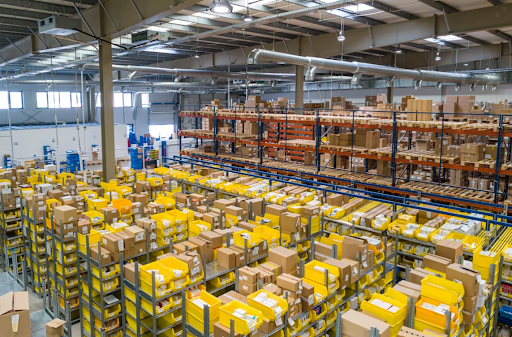

Warehouse performance management is the process of measuring, analyzing, and improving how efficiently a warehouse uses labor, inventory, space, equipment, and time. It connects operational data with clear performance targets so managers can identify gaps and make better decisions.
Effective management requires more than reviewing monthly KPIs. It depends on continuous warehouse performance tracking, accurate benchmarks, and action when results change.
This gives warehouse teams a clearer view of what is working, where performance is falling behind, and what needs attention. In this blog, we cover how warehouse performance works, what to measure, and how to improve it.
What Is Warehouse Performance Management?
Warehouse performance management is a structured approach to measuring warehouse results against defined operational goals. It shows whether receiving, putaway, storage, picking, packing, and shipping are meeting expected levels for productivity, cost, quality, and speed.
- A 2023 warehouse KPI study reviewed 203 scientific articles to identify 70 warehouse KPIs. Researchers then analyzed 585 papers and gathered input from 15 industrial experts, ultimately identifying 17 validated KPIs across five key dimensions: cost, productivity, quality, time, and utilization.
- Warehouse performance management connects individual warehouse activities to measurable outcomes. Instead of treating throughput, labor, accuracy, and utilization as separate numbers, managers evaluate how one affects another.
Why Is Warehouse Performance Management Important?
Warehouse performance management is important because operational problems often appear in individual processes before they affect overall service levels. Consistent measurement helps managers detect those changes before they become larger cost, capacity, or customer-service problems.
Performance management gives teams a common baseline. Managers can compare actual results against targets, historical periods, shifts, zones, or facilities. That makes it easier to distinguish a one-time issue from a recurring operational constraint.
What Are the Benefits of Warehouse Performance Management?
The main benefits are better operational visibility, earlier problem detection, more controlled costs, and more reliable customer service. Performance management also helps teams understand whether operational changes are producing measurable results.
A strong system can improve decision-making across several areas:
- Labor: Compare hours worked with units, lines, or orders completed.
- Inventory: Monitor accuracy, turnover, shortages, and replenishment performance.
- Space: Identify underused or congested storage areas.
- Quality: Track picking, packing, shipping, and inventory errors.
- Service: Measure cycle times and on-time order completion.
- Cost: Connect operating expenses with the workload being processed.
Performance measurement can also influence employee behavior. A 2022 order-picking study involving 212 participants found that providing quantity feedback improved picking productivity without reducing quality in the main experiment. A second experiment found that quantity feedback could improve both productivity and quality. So, the important point is to make metrics actionable.
How to Measure Warehouse Performance
To understand how to measure warehouse performance, start with operational goals and select KPIs that directly show progress toward them. Establish a baseline, measure actual performance consistently, compare results with targets, and investigate meaningful variances. A practical measurement cycle looks like this –
Define objective → Select KPI → Establish baseline → Track actual results → Compare variance → Diagnose cause → Take action → Measure again
A 2023 study on warehouse performance indicators identified 17 validated indicators across five dimensions: 4 cost, 4 productivity, 3 quality, 4 time, and 2 utilization indicators. This provides a useful reminder that warehouse performance cannot be represented by one metric alone.
Key Warehouse Performance Metrics to Track
The most useful warehouse metrics measure productivity, accuracy, time, cost, utilization, and service. The exact KPI set should reflect the warehouse’s operating model and business priorities rather than relying on a generic scorecard.
| Performance Area | Useful Metrics | What It Shows |
| Receiving | Dock-to-stock time, units received per labor hour | Inbound processing efficiency |
| Putaway | Putaway cycle time, units put away per hour | Speed of inventory placement |
| Inventory | Inventory accuracy, turnover, stock discrepancies | Reliability of inventory records |
| Storage | Cube utilization, location utilization | Effectiveness of available space |
| Picking | Picks per hour, pick accuracy, travel distance | Picking productivity and quality |
| Packing | Orders packed per hour, packing errors | Packing capacity and accuracy |
| Shipping | On-time shipment %, dock dwell time | Outbound reliability |
| Labor | Units per labor hour, overtime %, utilization | Workforce productivity and cost |
| Orders | Order cycle time, perfect order rate | End-to-end fulfillment performance |
Common Warehouse Performance Challenges
Common performance challenges include disconnected data, inefficient travel, labor imbalance, congestion, poor slotting, inaccurate inventory, and delayed problem detection. These conditions make it difficult to determine why actual performance differs from the plan.
Inefficient Picking Routes
A 2024 simulation study of traditional warehouses examined picker travel distance under different routing policies and demand conditions. The research demonstrates why performance can depend on the interaction between routing, layout, technology configuration, and demand rather than one isolated factor.
Hidden Performance Gaps
Another challenge is aggregation. Daily averages can hide a two-hour bottleneck. Facility-wide labor utilization can hide one overloaded zone beside another with idle capacity. This is why managers need enough detail to locate the source of the variance, not just confirm that a variance exists.
Ways to Improve Warehouse Performance
To achieve warehouse performance improvement, managers should first identify the constraint limiting the desired outcome and then make targeted changes.
When deciding how to improve warehouse performance, start by separating symptoms from causes. Low picking productivity, for example, could result from poor slotting, long travel routes, replenishment delays, congestion, equipment availability, or an unsuitable picking method. Then prioritize changes based on measurable impact.
- For process performance: Standardize repeatable tasks and examine handoffs between receiving, putaway, replenishment, picking, packing, and shipping.
- For labor performance: Match staffing to workload by zone and time period rather than relying only on fixed headcount.
- For inventory performance: Review fast-moving SKU locations regularly as demand patterns change.
- For layout performance: Measure travel and congestion before moving racks, pick faces, or staging areas.
How Technology Can Improve Warehouse Performance
Technology improves warehouse performance by collecting more detailed operational data, identifying patterns faster, and allowing teams to evaluate changes before implementation. The greatest value comes when technology supports decisions rather than simply producing more dashboards.
Simulation for Operational Changes
Simulation is particularly useful because warehouse processes interact. Changing a picking route may reduce travel but increase congestion near packing. Moving fast sellers closer together may shorten individual routes while creating traffic around popular locations.
Recent research supports this approach. A 2025 systematic review of warehouse simulation studies examined academic literature from 2011 through 2023 and found that simulation is being applied across different picking systems and warehouse operational problems.
Validating Warehouse Automation
Automation also needs performance validation. McKinsey reported in 2023 that some forecasts expected robot shipments to increase by as much as 50% annually through 2030, while warehouse automation was projected to grow by more than 10% per year. Yet automation projects do not automatically deliver their intended results.
Performance technology should therefore help managers answer three questions:
- What is happening?
- Why is it happening?
- What is likely to happen if we change it?
How Synkrato Helps Improve Warehouse Performance
Synkrato supports Warehouse performance management by helping teams analyze operations, test changes, and improve decision-making.
- Synkrato Digital Twin creates a 3D warehouse model for evaluating layouts and workflows.
- Synkrato Simulation & Optimization lets teams test operational adjustments before implementation.
- Synkrato AI Slotting Recommendations supports warehouse performance improvement by optimizing inventory placement.
- Synkrato AI Agents turn operational data into useful insights for warehouse performance tracking.
Together, these products help teams measure, analyze, and improve warehouse operations.
Build a Better-Performing Warehouse with Synkrato
Measuring performance tells you where the warehouse stands. Synkrato helps you go further by showing how labor, inventory, layouts, workflows, and operational decisions interact, so you can identify constraints and evaluate changes before committing resources on the floor.
Move from reactive reporting to measurable warehouse performance improvement. Book a demo with Synkrato to improve warehouse performance analysis, test operational changes, and make better decisions with greater confidence.
FAQs
What are the key components of warehouse performance management?
Warehouse performance management combines clear operational goals, relevant KPIs, accurate data, benchmarking, regular analysis, root-cause identification, and continuous improvement. Managers typically evaluate labor, productivity, inventory, quality, space, cost, equipment, and service metrics together so improvements in one area do not create problems elsewhere.
How does Synkrato improve warehouse performance management?
Synkrato improves performance management by connecting warehouse data with virtual modeling and operational analysis. Its Digital Twin lets teams visualize warehouse conditions and examine how processes interact, helping managers move beyond historical reporting and evaluate performance within the physical and operational context of their facility.
How do you measure warehouse performance effectively?
Measure warehouse performance by selecting KPIs tied to specific business goals, establishing baselines, and comparing actual results against targets over consistent periods. Break results down by process, shift, zone, and workload where possible. This makes warehouse performance analysis more useful for locating the actual cause of performance changes.
Can Synkrato identify operational bottlenecks before they impact warehouse performance?
Yes. Synkrato can use Simulation & Optimization to test operational scenarios before changes reach the live warehouse. Managers can examine potential effects of labor shifts, layouts, routes, and other adjustments, helping them identify where congestion, capacity limits, or workflow conflicts could emerge before implementation.
What are the common challenges in warehouse performance management?
Common challenges include disconnected data, inconsistent KPI definitions, excessive travel, poor slotting, inventory inaccuracies, congestion, labor imbalances, and reliance on facility-wide averages. Synkrato AI Agents can support managers by making warehouse information easier to query and analyze when investigating changing performance conditions.
Why should warehouse leaders choose Synkrato for performance management?
Synkrato brings analysis, simulation, and operational decision support into one warehouse-focused environment. AI Slotting Recommendations can evaluate inventory placement using demand and order data, while other platform capabilities support execution and measurement. This helps leaders connect performance findings with specific operational changes instead of stopping at reporting.