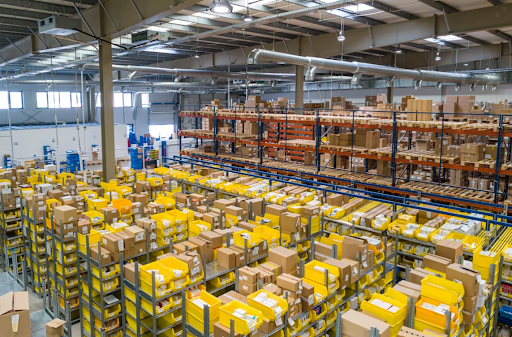

Managing inventory across multiple warehouses, fulfillment centers, retail stores, and 3PL providers is becoming increasingly complex as supply chains grow. Virtual warehousing solves this challenge by creating a unified, real-time view of inventory across every location without physically consolidating stock.
This approach improves inventory visibility, enables faster order fulfillment, and supports smarter virtual warehouse management decisions while reducing logistics costs.
In this guide, we’ll explain what virtual warehousing is, how it works, its benefits, challenges, implementation process, and how to choose the right virtual warehouse system for your business.
What Is Virtual Warehousing?
Virtual warehousing is a warehouse management approach that connects inventory across multiple warehouses, fulfillment centers, retail stores, and 3PL facilities into a single, real-time view. Instead of physically storing inventory in one location, a virtual warehouse system enables businesses to manage stock as one unified inventory pool while products remain in their existing locations.
Using virtual warehouse management software, businesses can track inventory, allocate orders, and coordinate fulfillment across their entire network. This improves inventory visibility, reduces stock discrepancies, supports faster order fulfillment, and helps organizations optimize existing warehouse capacity without expanding their physical infrastructure.
How Virtual Warehousing Works
Virtual warehousing connects inventory, orders, and logistics through a centralized digital platform that keeps every location synchronized in real time. Instead of managing each warehouse independently, businesses gain a network-wide view of inventory, allowing them to make faster and more informed fulfillment decisions.
Centralized Inventory Visibility
A virtual warehouse provides a single, real-time view of inventory across warehouses, retail stores, suppliers, and 3PL facilities. Instead of switching between multiple systems, teams can monitor inventory from one centralized dashboard, making it easier to plan replenishment, allocate stock, and respond to demand changes.
This unified visibility reduces inventory silos, improves decision-making, and helps businesses maintain accurate inventory records across their entire network.
Inventory Synchronization Across Locations
As inventory moves through the supply chain, the virtual warehouse management platform automatically updates stock information across every connected location. This continuous synchronization helps businesses –
- Prevent overselling and duplicate inventory allocation
- Minimize stockouts caused by outdated inventory data
- Eliminate manual inventory reconciliation between warehouses
- Improve inventory accuracy across all fulfillment locations
- Maintain consistent inventory records in real time
By keeping every location synchronized, businesses can fulfill orders confidently without inventory conflicts or unnecessary delays.
Intelligent Order Routing
Once an order is received, the system evaluates multiple fulfillment options before selecting the best warehouse. Instead of relying solely on proximity, it considers factors such as inventory availability, warehouse capacity, shipping costs, carrier performance, labor availability, and delivery commitments.
This intelligent routing ensures orders are fulfilled from the most efficient location, reducing transportation costs while improving delivery speed and overall customer satisfaction.
Synkrato’s Digital Twin and Simulation & Optimization capabilities can extend this decision process by testing fulfillment scenarios against warehouse capacity, inventory position, labor availability, and operational constraints before routing changes are applied.
The Role of WMS, OMS, ERP, and TMS
Virtual warehousing depends on several business systems working together seamlessly.
- Warehouse Management Systems (WMS) manage inventory storage, receiving, picking, packing, and warehouse execution.
- Order Management Systems (OMS) collect customer orders from ecommerce platforms, marketplaces, and retail channels before determining where each order should be fulfilled.
- Enterprise Resource Planning (ERP) systems maintain business data such as purchasing, finance, supplier information, and inventory planning.
- Transportation Management Systems (TMS) optimize carrier selection, shipment planning, freight costs, and delivery execution.
When these systems exchange information in real time, businesses gain complete visibility across warehouse operations, transportation, and inventory. This connected ecosystem forms the foundation of modern digital warehousing, enabling organizations to make faster, data-driven fulfillment decisions across distributed warehouse networks.
When Does a Business Need Virtual Warehousing?
As businesses grow, managing inventory across multiple locations becomes increasingly difficult. Separate warehouse systems, disconnected inventory data, and manual coordination often create delays, stock discrepancies, and higher fulfillment costs. A virtual warehouse helps overcome these challenges by connecting inventory across the entire distribution network, enabling businesses to make faster and more accurate fulfillment decisions.
Signs Your Warehouse Operations Have Outgrown Traditional Inventory Management
If your business is experiencing any of the following, it may be time to adopt virtual warehousing:
- Inventory is spread across multiple warehouses or retail locations.
- Stock discrepancies frequently lead to overselling or stockouts.
- Order fulfillment takes longer because inventory data is not updated in real time.
- Teams spend significant time manually reconciling inventory between systems.
- Rising fulfillment costs are impacting profit margins.
- Existing warehouse systems struggle to support business growth or new sales channels.
Common Business Challenges Virtual Warehousing Solves
Traditional warehouse operations often struggle to keep pace with modern supply chain demands. Virtual warehouse management addresses several common challenges, including:
- Limited visibility into inventory across multiple locations
- Inefficient inventory utilization that increases carrying costs
- Delays caused by manual order allocation
- Difficulty coordinating inventory between warehouses, stores, and 3PL providers
- Inconsistent customer experiences due to inaccurate inventory availability
- Higher transportation costs from suboptimal fulfillment decisions
By providing a unified view of inventory and automating order allocation, virtual warehousing helps businesses improve operational efficiency while reducing fulfillment complexity.
Industries That Benefit the Most
Virtual warehousing is valuable for any organization managing inventory across multiple locations, but it delivers the greatest impact in industries with complex fulfillment networks. These include:
- Ecommerce businesses managing inventory across fulfillment centers and online marketplaces
- Retail companies supporting omnichannel fulfillment, including Buy Online, Pick Up In Store (BOPIS)
- Third-party logistics (3PL) providers managing inventory for multiple clients
- Manufacturing organizations coordinating raw materials and finished goods across facilities
- Wholesale and distribution businesses serving regional or national customer networks
- Healthcare and pharmaceutical companies that require accurate inventory visibility and rapid order fulfillment
Benefits of Virtual Warehousing
Virtual warehousing enables businesses to use existing inventory more efficiently while improving speed, accuracy, and customer service. By connecting warehouses into a unified network, organizations can optimize fulfillment without investing in additional storage facilities.
Better Inventory Visibility
A centralized inventory view allows teams to monitor stock levels across every warehouse, store, and fulfillment partner in real time. This improves inventory planning, reduces stock discrepancies, and enables faster decision-making.
Faster Order Fulfillment
Orders are automatically assigned to the most suitable fulfillment location based on inventory availability, delivery timelines, and operational capacity. This reduces processing time and helps customers receive their orders faster.
Lower Logistics Costs
Intelligent order routing minimizes unnecessary inventory transfers and selects the most cost-effective fulfillment location. Businesses can lower shipping expenses while making better use of their existing warehouse network.
Higher Inventory Accuracy
Real-time inventory synchronization ensures every connected location works with the same data. This reduces manual updates, prevents duplicate allocations, and improves overall inventory accuracy.
Greater Scalability
As businesses add new warehouses, fulfillment centers, or 3PL partners, they can connect them to the existing virtual warehouse system without disrupting ongoing operations. This flexibility supports business growth while maintaining operational efficiency.
Improved Customer Experience
Accurate inventory visibility and faster fulfillment lead to fewer order delays, fewer stock-related cancellations, and more reliable delivery promises. Together, these improvements strengthen customer satisfaction and build long-term loyalty.
Common Use Cases of Virtual Warehousing
Virtual warehousing supports a wide range of supply chain and fulfillment strategies by enabling businesses to manage inventory as one connected network.
Multi-Warehouse Inventory Management
Businesses operating multiple distribution centers can manage inventory from a centralized platform, allowing stock to be shared across locations and reducing the need for excess safety stock.
Omnichannel Fulfillment
Retailers can fulfill orders from warehouses, physical stores, or fulfillment centers based on inventory availability and customer location. This supports strategies such as Buy Online, Pick Up In Store (BOPIS), ship-from-store, and curbside pickup. Nearly two-thirds of U.S. retailers have adopted BOPIS, reflecting the rapid growth of omnichannel fulfillment.
Ecommerce and Marketplace Fulfillment
Online sellers often distribute inventory across multiple fulfillment centers to serve customers faster. Virtual inventory management enables them to maintain accurate stock visibility while coordinating orders from ecommerce websites and online marketplaces.
Cross-Border Distribution
Companies serving international markets can manage inventory across regional warehouses while routing orders through the most efficient fulfillment location. This reduces shipping times, lowers transportation costs, and improves global customer service.
Seasonal Inventory Balancing
During peak seasons, businesses can rebalance inventory across their warehouse network based on regional demand. This helps prevent stock shortages in high-demand locations while improving inventory utilization across the entire supply chain.
Within individual facilities, Synkrato’s AI Slotting Recommendations can complement network-level inventory balancing by analyzing inventory levels, order history, shipping timelines, and demand patterns to recommend more effective SKU placement. This helps ensure inventory is not only positioned in the right node but also placed efficiently within that warehouse.
Challenges of Virtual Warehousing
Successfully implementing virtual warehousing requires reliable technology, accurate data, and well-defined processes. A gap in any of these creates the following challenges.
Data Consistency
A virtual warehouse relies on accurate, real-time inventory data from every connected location. If inventory records are outdated or inconsistent, businesses may face stock discrepancies, incorrect order allocation, or overselling. Maintaining standardized data across warehouses, stores, suppliers, and 3PL providers is essential for reliable operations.
Integration Complexity
Virtual warehouse management depends on seamless communication between systems such as WMS, OMS, ERP, TMS, ecommerce platforms, and carrier networks. Integrating these platforms can be challenging, especially when businesses rely on legacy software that lacks modern API support.
Technology Dependency
Since warehouse operations rely on real-time data synchronization, any system outage or connectivity issue can disrupt inventory visibility and order fulfillment. Businesses should invest in reliable cloud infrastructure, system redundancy, and disaster recovery plans to minimize operational risks.
Security and Compliance
A virtual warehouse system processes large volumes of operational and customer data across multiple platforms. Strong cybersecurity measures, secure APIs, role-based access controls, and compliance with data protection regulations are essential to safeguard business operations and sensitive information.
Organizational Change Management
Moving from traditional warehouse operations to digital warehousing often requires changes to existing workflows and employee responsibilities. Providing adequate training, establishing new operational processes, and encouraging collaboration across teams help ensure a smoother transition and higher user adoption.
How to Implement Virtual Warehousing
A successful virtual warehousing strategy requires businesses to evaluate their operations, integrate technology, and continuously optimize warehouse performance to maximize long-term value.
Assess Warehouse Operations
Start by reviewing your current warehouse network, inventory flows, fulfillment processes, and operational challenges. Identify areas where inventory visibility is limited, manual processes slow operations, or fulfillment costs are unnecessarily high. This assessment helps define clear implementation goals.
Select the Right Technology Stack
Choose technology that supports real-time inventory visibility, automation, and seamless integration across your warehouse network. Your solution should work effectively with existing warehouse, order, transportation, and business systems while supporting future growth.
Integrate Inventory and Business Systems
Connect your Warehouse Management System (WMS), Order Management System (OMS), Enterprise Resource Planning (ERP), Transportation Management System (TMS), ecommerce platforms, and supplier systems. Real-time integration ensures accurate inventory updates and coordinated fulfillment decisions across every location.
Train Warehouse Teams
Successful implementation depends on user adoption. Train warehouse managers, inventory planners, fulfillment teams, and customer service staff on new workflows, system capabilities, and inventory management processes to ensure consistent execution across the organization.
Launch, Monitor, and Optimize
Begin with a pilot deployment at selected warehouses before expanding across the entire network. Monitor key performance indicators (KPIs) such as inventory accuracy, order fulfillment time, shipping costs, and order accuracy. Use these insights to refine processes and continuously improve warehouse performance.
How to Choose the Right Virtual Warehousing Solution
The ideal warehousing platform should support current business needs while providing the flexibility to adapt as your warehouse network grows.
Essential Software Features
Look for solutions that offer:
- Real-time inventory visibility
- Automated inventory synchronization
- Intelligent order routing
- Multi-warehouse management
- Inventory forecasting
- Mobile accessibility
- Workflow automation
- Role-based user access
Integration Capabilities
The platform should integrate seamlessly with your existing WMS, OMS, ERP, TMS, ecommerce platforms, marketplaces, and third-party logistics providers. Strong API support reduces manual data entry and enables smooth information flow across systems.
Scalability
As your business expands, your software should easily accommodate additional warehouses, fulfillment centers, retail locations, and sales channels without requiring major infrastructure changes. A scalable cloud warehouse management platform helps future-proof your operations.
Reporting and Analytics
Comprehensive reporting provides valuable insights into inventory performance, order fulfillment, warehouse productivity, shipping costs, and customer service metrics. Advanced analytics also support better forecasting and more informed operational decisions.
Security and Compliance
Evaluate the platform’s security capabilities, including data encryption, user authentication, access controls, backup systems, and compliance with industry standards and regional data protection regulations.
Vendor Evaluation Checklist
Before making a final decision, consider whether the vendor offers:
- Proven experience with multi-warehouse operations
- Reliable implementation and onboarding support
- Ongoing technical support and software updates
- Flexible deployment options
- Transparent pricing
- Customer success stories and industry references
- A clear product roadmap for future innovation
Choosing a solution that aligns with your operational goals will help your business maximize the long-term benefits of virtual warehousing while minimizing implementation risks.
Future of Virtual Warehousing
As supply chains become more connected and customer expectations continue to rise, virtual warehousing is evolving beyond centralized inventory visibility. Emerging technologies are enabling businesses to make faster, data-driven decisions, automate warehouse operations, and build more resilient supply chains.
AI-Powered Inventory Optimization
Artificial intelligence (AI) is transforming inventory management by analyzing historical sales, seasonal demand, supplier performance, and operational constraints. AI-powered systems can recommend optimal inventory levels, reduce excess stock, and improve replenishment planning, helping businesses lower carrying costs while maintaining product availability.
Predictive Analytics
Predictive analytics helps businesses anticipate future demand, identify potential disruptions, and optimize inventory allocation before issues occur. By using historical data and real-time insights, companies can make proactive decisions that improve forecasting accuracy, reduce stockouts, and strengthen overall supply chain performance.
Warehouse Digital Twins
Digital twin technology creates a virtual replica of warehouse operations, allowing businesses to simulate layouts, workflows, labor allocation, and inventory movement before making operational changes. This enables warehouse managers to evaluate different scenarios, identify bottlenecks, and optimize processes with minimal operational risk.
Robotics and Automation
Warehouse automation continues to improve operational efficiency through autonomous mobile robots (AMRs), automated storage and retrieval systems (AS/RS), robotic picking solutions, and conveyor automation. When combined with virtual warehousing, these technologies increase throughput, improve accuracy, and reduce manual workloads across fulfillment operations.
Sustainable Supply Chains
Virtual warehousing also supports sustainability initiatives by optimizing inventory placement and fulfillment decisions. Intelligent order routing reduces unnecessary transportation, minimizes fuel consumption, and improves vehicle utilization. Better inventory planning also helps reduce excess stock and product waste, contributing to more environmentally responsible supply chain operations.
Virtual vs. Traditional Warehousing: Key Aspects
Traditional warehousing treats the four walls as the unit of analysis. The virtual warehouse concept treats the network as the unit of analysis.
| Aspect | Virtual Warehouse | Traditional Warehouse |
| Physical structure | No centralized physical structure. Managed via Distributed Order Management (DOM) and digital twins. | Static, capex-heavy facilities with fixed capacity constraints. Every new product requires a physical bin location. |
| Inventory view | Unified, real-time aggregate across all nodes (stores, 3PLs, DCs, even supplier hubs). Single source of truth. | Siloed. Requires manual login, EDI batch sync, or cross-system reconciliation to view remote stock. Decision latency is often measured in hours. |
| Scalability | Elastic. Add nodes via API integration without operational drag. No construction delays, no lease negotiations. | Linear. Scaling requires construction, leasing, or labor ramp-up. Each new facility takes 12 to 18 months to reach steady-state productivity. |
| Cost structure | Variable (opex). Cost-to-serve shifts to a per-transaction logic. If volume drops, costs drop proportionally. | Fixed (opex + capex). Rent, utilities, and base labor run regardless of volume. Empty space still costs money. |
For decision-makers evaluating transformation risk, the fourth row matters most. Traditional warehouses create a fixed cost floor that becomes dangerous during demand troughs. Virtual warehousing’s variable structure provides network resilience precisely when revenue compresses.
Step-by-Step Guide to Implement Virtual Warehousing
Here is a step-by-step guide to implementing virtual warehousing, covering network assessment, technology selection, integration, data governance, and pilot-to-scale deployment.
Assess Current Warehouse Footprint and Demand Patterns
Map all physical nodes: DCs, dark stores, retail locations, 3PL warehouses, and supplier cross-dock points. Identify where you hold the highest inventory turn variance. High-variance nodes (products that turn fast in one location but slow in another) are prime candidates for virtualization.
Also, identify low-volume nodes with high fixed costs; these become candidates for consolidation or elimination. This assessment answers the fundamental question: “Which nodes should stay physical anchors versus become logical satellites?”
Select the Right Technology Platform
You need a Distributed Order Management (DOM) engine capable of throughput stability under load. The platform must ingest real-time labor capacity at the node level, not just inventory counts, to avoid pushing orders to a facility already experiencing queue amplification.
Evaluate platforms on three criteria: API depth, failover behavior, and simulation capability. Synkrato provides this simulation layer, allowing you to validate orchestration logic on a digital twin before exposing it to live orders.
Develop Strategic Partnerships
Virtual warehousing collapses immediately if your 3PL partners refuse system-level API access or charge prohibitive fees for real-time data sync. Contracts must shift from “storage fees” to “transactional node fees” to align incentives. Renegotiate to performance-based terms: lower storage rates, higher pick-and-pack rates, and mandatory API uptime SLAs of 99.9% or higher.
Implement Inventory Tracking and Data Governance
Deploy barcode or RFID workflows with offline-first capability. Also implement master data governance: a single item master record that all nodes must reference, with automated alerts when discrepancies appear.
Pilot and Scale Implementation
Test with a single velocity tier only, typically “A-movers.” Run the pilot for 30–60 days across a subset of nodes. Scale only when order allocation variance remains below 0.5% for 14 consecutive days.
While the risks are critical, platforms like Synkrato help mitigate them through simulation, validation, and continuous optimization.
Supercharge Your Warehouse Management with Synkrato
With Synkrato’s Digital Twin Platform, organizations can model warehouse operations, simulate different fulfillment scenarios, and identify opportunities to improve inventory flow before implementing operational changes. This reduces risk while enabling faster, data-driven decisions.
The Synkrato Simulation & Optimization Engine analyzes warehouse layouts, inventory movement, labor utilization, and order flows to recommend improvements that increase efficiency and reduce operational costs. Businesses can also leverage AI-powered slotting recommendations to optimize product placement and improve picking performance.
Conclusion
Virtual warehousing enables businesses to manage inventory across multiple locations as a single, connected network. By combining real-time inventory visibility, intelligent order routing, and integrated warehouse technologies, organizations can improve fulfillment speed, reduce logistics costs, increase inventory accuracy, and scale operations more efficiently.
As AI, predictive analytics, digital twins, and warehouse automation continue to advance, virtual warehousing will play an even greater role in building resilient and data-driven supply chains.
Book a demo with Synkrato to make virtual warehousing smarter with real-time visibility, intelligent inventory orchestration, and simulation-driven optimization across your warehouse network.
FAQs
What is virtual warehousing?
Virtual warehousing is an operating model where a software layer unifies inventory across locations into a single pool for fulfillment decisions, removing the need for physical consolidation. Synkrato provides the simulation and optimization engine that makes this model operational at scale.
Why do traditional warehousing models struggle in a virtual warehousing setup?
Traditional models rely on static slotting, fixed pick paths, and deterministic labor allocation. In a virtual setup, inventory shifts dynamically, and legacy WMS systems cannot recalculate in real time. The result is execution instability, with orders routed to nodes that cannot meet SLA. Synkrato solves this through continuous simulation and pre-validation of routing decisions.
How does virtual warehousing work?
An order triggers a network-wide ATP query that evaluates proximity, labor cost, carrier rates, congestion, and pick efficiency. The system selects the optimal node and assigns the task via API in milliseconds. Without simulation, decisions rely on stale data. Synkrato provides a continuous intelligence loop that validates network state before execution.
Why is Synkrato useful for managing virtual warehousing operations?
Most software provides dashboards or routing tables. Synkrato provides the intelligence layer that prevents failure. Virtual models introduce decision complexity beyond static rules, such as choosing between higher labor costs and slower delivery. Static rules break under this complexity. Synkrato uses digital twin simulation to test scenarios before deployment, preventing failures that drive cycle time spikes and SLA breaches.
How is virtual warehousing different from traditional warehousing?
Traditional warehousing optimizes storage density and space utilization. Virtual warehousing optimizes fulfillment speed and network resilience across nodes. The former minimizes holding costs, while the latter minimizes delivery time and cost using the entire network, reshaping decisions across operations and technology.
Why will platforms like Synkrato define the future of virtual warehousing?
The future is predictive virtualization with continuous execution. As demand becomes more volatile, the optimal network state shifts by the hour. Synkrato enables this through proactive planning and continuous optimization.
What challenges exist in virtual warehousing?
The challenges are threefold: data integrity, complex routing rules, and commercial alignment. Inconsistent master data leads to wrong decisions, while over-complex rules create brittle systems. Contracting and invoicing also become difficult when inventory moves logically across entities. Synkrato addresses the first two through continuous validation and simulation-based optimization, while the third requires legal and procurement transformation.
Is virtual warehousing suitable for small businesses?
Yes. Small and growing businesses that manage inventory across multiple storage locations or sales channels can benefit from virtual warehousing. Cloud-based solutions allow organizations to improve inventory visibility, automate fulfillment, and scale operations without significant investments in additional warehouse infrastructure.
How much does implementation cost?
Implementation costs typically range from $10,000 to $100,000, depending on warehouse size, integrations, and customization. Long-term savings often offset the investment through improved efficiency and lower logistics costs.
Can virtual warehousing improve supply chain resilience?
Yes. By providing real-time inventory visibility and intelligent order routing, virtual warehousing enables businesses to respond quickly to demand fluctuations, inventory shortages, transportation disruptions, and warehouse capacity constraints. This flexibility helps maintain service levels and strengthens overall supply chain resilience.