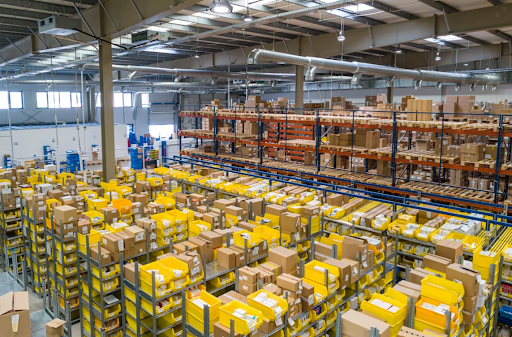
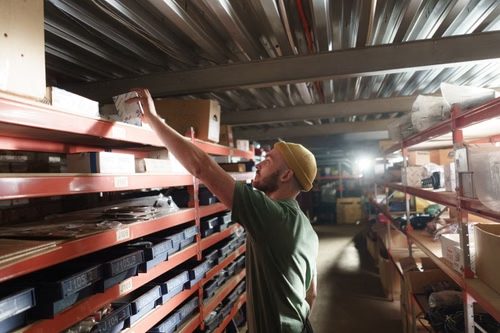
Warehouse picking optimization improves speed, accuracy, and order fulfillment by reducing unnecessary travel, controlling task release, placing inventory around real demand, and keeping replenishment synchronized with picking.
The opportunity is operationally significant. In 2022, Walmart’s next-generation U.S. fulfillment-center design reduced a manual 12-step flow to five steps, doubled storage capacity, and doubled daily order fulfillment. The same design moved inventory to associates who had previously walked up to nine miles per day.
Modern picking improvement depends on layout, slotting, routing, inventory accuracy, workload balance, and execution technology working together. This blog explains how to optimize each layer.
What Is Warehouse Picking Optimization?
Warehouse picking optimization is the continuous adjustment of inventory placement, pick methods, routing, replenishment, labor allocation, and verification to complete orders with fewer touches, delays, and exceptions.
However, faster picking can still worsen congestion, replenishment interference, packing queues, or errors, so optimization must evaluate the complete pick-to-pack path.
Common Warehouse Picking Challenges
Some of the common warehouse picking challenges include long travel paths, poor slotting, inaccurate inventory, congested aisles, manual warehouse picking processes, picking errors, labor constraints, and poor visibility.
These issues increase pressure to improve picking efficiency. About 70% of warehouse decision-makers faced high pressure to modernize operations, while 63% planned to accelerate modernization and labor optimization.
Key challenges include:
- Long travel paths: Poor layouts increase walking and backtracking.
- Poor slotting: Inefficient SKU placement increases travel and handling.
- Congested aisles: Pickers, carts, and equipment create delays.
- Inaccurate inventory: Incorrect data causes searches and short picks.
- Paper-based tasks: Manual lists slow inventory and priority updates.
- Poor visibility: Limited tracking delays responses to exceptions.
- Mispicks: Wrong SKUs or quantities create rework.
- Fatigue and stress: Repetitive work and peaks increase strain.
- High turnover: Frequent onboarding creates productivity variation.
Travel can be especially costly because it uses labor without completing picks. Walmart reported associates could walk up to nine miles per day in its traditional U.S. fulfillment process, leading its automated design to bring inventory directly to picking stations.
Synkrato’s 3D Digital Twin can simulate picking flows to identify travel and congestion constraints.
Warehouse Picking Methods Explained
Warehouse picking methods are systematic strategies to retrieve inventory while balancing speed, travel time, order complexity, and consolidation. The right method depends on order volume, layout and size, SKU overlap, and available technology.
Single Order Picking
Single-order picking, also called discrete picking, completes one order at a time. It offers simple execution and high traceability but can create high travel time, making it better suited to low-volume or complex orders.
Batch Picking
Batch picking collects common SKUs for multiple orders during one trip and sorts them afterward. It reduces walking for high-volume operations, although larger batches can shift the bottleneck to sorting or packing.
Zone Picking
Zone picking divides the warehouse into sections where pickers remain within assigned areas. Orders use pick-and-pass between zones or are consolidated later, reducing long-distance travel in larger facilities.
Wave Picking
Wave picking releases orders in scheduled groups based on shipping carrier cutoffs, shift times, inventory priority, or replenishment readiness. Wave size should remain aligned with packing and shipping capacity.
Cluster Picking
Cluster picking uses a multi-tote cart to fulfill several specific orders simultaneously. It combines batching with order-level separation, reducing transit time while avoiding a separate sorting stage.
How to Optimize Warehouse Picking Operations
Optimizing warehouse picking operations requires combining smart SKU slotting, optimized pick paths, accurate inventory, balanced workloads, standardized workflows, and technology while keeping picking aligned with downstream capacity. The following strategies address the main operational factors that determine picking speed, accuracy, and flow:
Optimize Warehouse Layout
Optimize warehouse layout by designing optimized pathways around travel, traffic flow, replenishment routes, equipment, and packing adjacency. In April 2026, The Home Depot reported that its SIMPL Automation pilot in Georgia achieved faster pick speeds and cycle times with fewer product touches while increasing storage density for high-demand products.
Focus layout decisions on:
- Travel distance and backtracking
- Aisle congestion and equipment movement
- Replenishment and picking conflicts
- Proximity between picking, packing, and staging
Improve Slotting with ABC Analysis
Improve slotting with ABC analysis by combining ABC inventory analysis with dynamic slotting. Place high-demand SKUs in accessible locations, then adjust placement using velocity, seasonal demand, order affinity, cube, ergonomics, and replenishment frequency.
A fast mover can still perform poorly if frequent replenishment or neighboring A-items congest the same aisle. Synkrato’s AI Slotting can analyze demand patterns, while Digital Twin simulation tests placement changes before implementation.
Reduce Picker Travel Time with Pick Path Optimization
Reduce picker travel time with pick path optimization by mapping routes against executable constraints instead of simple distance.
Route logic should consider:
- Optimized Pathways: Reduce backtracking and unnecessary aisle movement.
- Congestion: Account for blocked aisles, equipment, and competing pickers.
- Order Constraints: Include cart capacity, shipping cutoffs, and inventory priority.
- Replenishment: Avoid routes toward locations likely to stock out.
This prevents a mathematically shorter route from becoming slower during actual execution.
Maintain Accurate Inventory Data
Maintain accurate inventory data by validating every location-changing transaction. Mobile scanning with barcode or ring scanners can verify receiving, putaway, replenishment, picking, and shipping, while pick-to-light or voice picking can reduce manual identification and confirmation.
Balance Picking Workloads Across Zones
Balance picking workloads across zones by comparing remaining work with available zone capacity and reallocating labor or tasks as demand changes.
The requirement becomes more important at scale. In May 2025, Ahold Delhaize reported a €53 million investment in Delhaize Belgium’s Forest distribution center, designed to double e-commerce capacity from 25,000 to 50,000 orders per week.
At higher volumes, balance:
- Picking workload;
- Replenishment capacity;
- Packing and staging;
- Shipping deadlines;
- Available labor.
Standardize Picking Workflows & Employee Training
Standardize picking workflows & employee training by defining consistent responses for routine picks and exceptions such as missing stock, damaged products, scan failures, full totes, and blocked locations.
Training should include exception handling so warehouse picking method variations do not become picking delays or get incorrectly attributed to employee productivity.
Monitor Performance and Continuously Improve
Monitor performance and continuously improve by combining warehouse management system (WMS) data with picking KPIs. Segment changes in pick rate by zone, SKU class, route distance, replenishment delays, equipment status, and exception type.
Use the findings to:
- Identify the source of performance loss;
- Compare shifts, zones, and order profiles;
- Prioritize layout, slotting, or routing changes;
- Validate whether changes improve overall flow.
Synkrato’s platform can simulate proposed changes before implementation to assess their effects on travel, congestion, inventory flow, and throughput.
Technologies That Improve Warehouse Picking Optimization
Technologies that improve warehouse picking optimization include software and hardware that reduce travel, improve verification, and direct inventory or workers more efficiently. Key technologies include intelligent WMS, goods-to-person (GTP) robotics, voice-directed systems, pick-to-light displays, mobile barcode scanners, and optimization software.
Warehouse Management System (WMS)
WMS manages inventory and sequences picking tasks using stock availability, order priority, replenishment status, and shipping requirements. It also provides data for dynamic path optimization and slotting optimization software.
Key capabilities include:
- Real-time inventory tracking;
- Task and order sequencing;
- Dynamic route calculation;
- Integration with scanning and automation.
Synkrato can complement WMS execution with slotting, simulation, and optimization capabilities.
Barcode & RFID Scanning
Barcode & RFID scanning provides transaction-level verification throughout picking. Mobile barcode scanners validate individual products and locations, while RFID supports contactless or bulk identification.
Common options include:
- Handheld barcode scanners;
- RFID readers and tags;
- Wearable scanners such as ring scanners.
These technologies reduce manual confirmation while creating accurate transaction data for inventory control.
Voice Picking
Voice picking, or voice-directed picking, provides instructions through wireless headsets, keeping employees’ hands and eyes available for picking.
Honeywell combines voice workflows with throughput and inventory monitoring. This allows picking data to support labor and operational analysis.
Pick-to-Light & Put-to-Light Systems
Pick-to-light & put-to-light systems use digital displays or lights to identify required locations and quantities. These work particularly well in dense picking and sorting areas.
They can:
- Reduce visual search
- Guide quantity selection
- Simplify destination identification
- Support repetitive, high-volume workflows
AI-Powered Picking Optimization
AI-powered picking optimization uses demand and operational data for slotting optimization software, dynamic path optimization, task sequencing, and replenishment decisions.
AI can optimize:
- SKU placement
- task priorities
- picker routes
- replenishment timing
- workload distribution
These recommendations should account for congestion, inventory availability, equipment, and downstream capacity rather than shortest distance alone.
Automated Storage & Retrieval Systems (AS/RS)
AS/RS and autonomous mobile robots (AMRs) support goods-to-person (GTP) robotics by moving inventory toward stationary picking locations instead of sending employees through storage.
In 2026, KNAPP reported that Apotek 1’s Oslo operation handles about 350,000 medicinal products per day. Its two central-belt systems contain 2,176 channels and pick up to 3,000 items per hour, while robotic stations can process 60% of SKUs.
The performance of these systems ultimately depends on synchronizing automated storage with replenishment, picking stations, packing, and shipping capacity.
Warehouse Picking KPIs to Measure Success
Measure success using warehouse picking KPIs such as picking accuracy rate, picks per hour (pph), order picking cycle time, cost per pick or cost per order, travel time per pick, and perfect order percentage. Together, they show whether picking improvements increase speed without sacrificing quality or cost.
Key metrics include:
- Picking Accuracy Rate: Percentage of items picked with the correct SKU, variant, and quantity. Track error types to identify where accuracy breaks down.
- Picks Per Hour (PPH): Items or order lines completed per labor hour, segmented by picking method, zone, and workload.
- Order Picking Cycle Time: Time from receiving a picking task through item retrieval and delivery to the next process.
- Cost Per Pick / Cost Per Order: Labor, equipment, software, and other relevant picking costs divided by completed picks or orders.
- Travel Time per Pick: Time or distance between pick locations, helping expose inefficient slotting, routing, or layout.
- Perfect Order Percentage: Share of orders completed accurately, in full, on time, and without damage.
Warehouse Picking Best Practices
A few of the warehouse picking best practices combine velocity slotting, logical mapping, SKU separation, appropriate warehouse picking strategies, accurate replenishment, and continuous performance monitoring. These order-picking optimization practices should complement the optimization methods and technologies already covered rather than repeat them.
Key practices include:
- Velocity Slotting: Keep high-velocity items in accessible, ergonomic locations near packing areas and review placement as demand changes.
- Logical Mapping: Design clear pick paths with continuous movement and fewer dead ends or traffic conflicts.
- SKU Separation: Clearly separate similar SKUs, variants, and sizes to reduce mispicks.
- Choosing the Right Strategy: Match batch picking, zone picking, wave picking, or discrete picking to order volume, SKU mix, and fulfillment requirements.
- Replenishment Planning: Trigger forward-pick replenishment before locations reach projected depletion.
- Technology and Accuracy: Use barcode or RFID scanning, pick-to-light/voice picking, and warehouse management system (WMS) controls to verify picks and monitor execution.
- Peak Preparedness: Test picking, replenishment, packing, staging, and labor capacity before expected demand increases.
How Synkrato Helps Optimize Warehouse Picking
Synkrato helps optimize warehouse picking by adding decision intelligence around existing warehouse execution so teams can improve slotting, travel paths, inventory visibility, workflow design, and operational scenarios.
The picking workflow can use Synkrato to:
- Apply AI-driven slotting using demand and travel patterns;
- Simulate layout and workflow changes with a Digital Twin before implementation;
- Synchronize inventory information across connected warehouse systems;
- Connect barcode workflows with WMS and ERP processes;
- Analyze congestion, travel, replenishment, and fulfillment constraints.
Book a demo with Synkrato to test picking strategies, optimize travel paths, and identify bottlenecks before making changes on the warehouse floor.
Conclusion
Warehouse picking optimization improves speed and accuracy when layout, slotting, routing, replenishment, inventory data, workload, and technology are managed as one connected flow. Continuous measurement and scenario testing help warehouses adapt as order profiles change.
Evaluate WMS execution together with optimization capabilities such as Synkrato when building a picking model that must scale without adding avoidable travel, touches, congestion, or exceptions.
Frequently Asked Questions
What is warehouse picking optimization?
Warehouse picking optimization is the continuous improvement of inventory placement, routing, task release, replenishment, and verification to reduce travel, waiting, errors, and unnecessary touches. Synkrato can help evaluate slotting, picking paths, congestion, and workflow changes through AI-driven optimization and Digital Twin simulation before implementation.
Which warehouse picking method is the most efficient?
The most efficient warehouse picking method depends on order volume, SKU overlap, warehouse layout, shipping deadlines, and consolidation requirements. Single-order picking suits simpler flows, while batch, zone, wave, and cluster picking can improve warehouse picking efficiency when order density and operating conditions support them.
How can I reduce warehouse picking errors?
Warehouse picking errors can be reduced by maintaining accurate inventory, validating items and locations with barcode scanning, separating similar SKUs, standardizing exception handling, and performing targeted cycle counts. Synkrato can further support accurate execution through AI-driven slotting recommendations and improved inventory visibility.
How does a WMS improve warehouse picking?
A WMS improves warehouse picking by tracking inventory, directing tasks, coordinating replenishment, sequencing orders, and recording warehouse transactions in real time. Synkrato can complement WMS execution with AI slotting, Digital Twin simulation, and optimization capabilities that help evaluate operational changes before implementation.
What KPIs should I track for warehouse picking?
Warehouse picking KPIs should include picking accuracy rate, picks per hour, order picking cycle time, cost per pick or order, travel time per pick, and perfect order percentage. These metrics should be reviewed together to identify whether higher picking speed is improving overall warehouse performance.
What technologies improve warehouse picking efficiency?
Technologies that improve warehouse picking efficiency include WMS, barcode and RFID scanning, voice picking, pick-to-light systems, wearable scanners, AI optimization, AMRs, and AS/RS. Synkrato adds AI-driven slotting and Digital Twin simulation to help evaluate inventory placement, travel, congestion, and workflow changes.