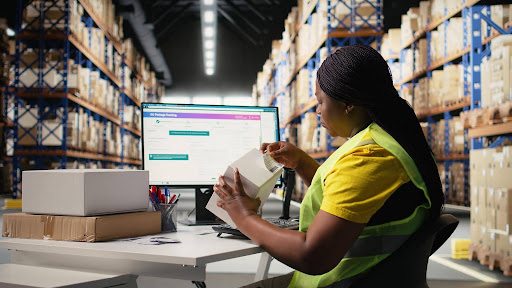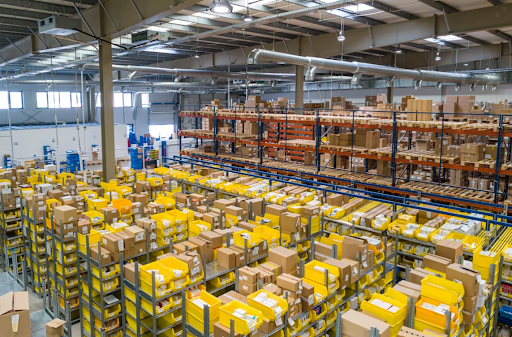
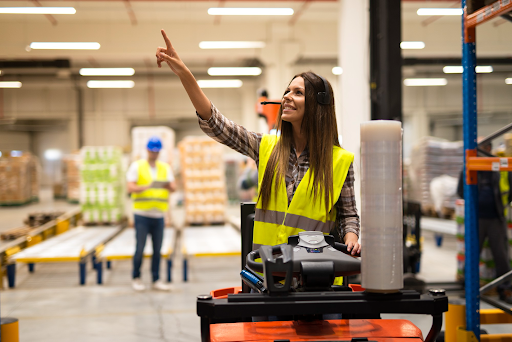
To reduce travel time in warehouse operations, focus on where inventory is stored, how pickers move, how orders are grouped, and when replenishment occurs. Shorter, better-planned routes allow workers to spend more time picking and less time walking between locations. This matters because recent warehouse research estimates that roughly 50% of order-picking time is spent traveling.
Learning how to reduce warehouse travel time requires looking beyond walking speed. Layout, slotting, routing, replenishment, and technology all affect how far people and equipment travel. In this blog, we cover how to reduce warehouse walking distance, improve pick paths, optimize inventory placement, and measure the results.
Optimize Warehouse Layout and Flow
Warehouse layout directly determines how far workers and equipment must travel to complete daily tasks. Reducing long routes, backtracking, and unnecessary transitions between work areas can lower warehouse travel distance without requiring workers to move faster. A 2023 review of 269 order-picking studies highlighted the importance of warehouse layout and cited earlier research showing that layout can affect total picking travel distance by more than 60%.
Improve Warehouse Zoning
Warehouse zoning groups related inventory or activities within defined areas. The goal is to keep workers focused on a smaller physical section instead of repeatedly crossing the entire facility.
- Start by mapping order frequency, SKU relationships, aisle traffic, and workstation locations.
- Fast-moving product groups can occupy zones closer to packing or consolidation points, while slower-moving inventory can use less accessible storage.
Zone boundaries should also reflect workload. A compact zone is not efficient if too many orders continually send workers into the same aisles.
Reduce Unnecessary Movement Between Work Areas
Look for trips that do not directly contribute to receiving, putaway, picking, replenishment, packing, or shipping. Common examples include returning to distant printers, walking to shared terminals, crossing the facility for supplies, or repeatedly moving between picking and staging.
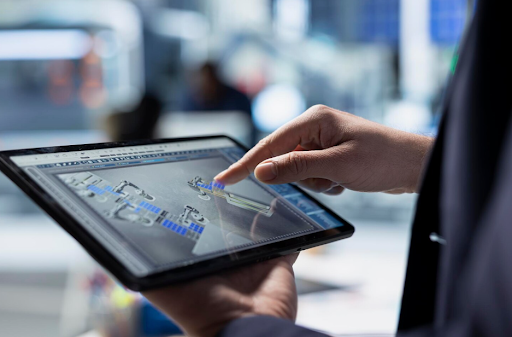
Synkrato’s Digital Twin creates a 3D representation of warehouse operations where teams can visualize inventory, layout, equipment, and operational movement. This makes it easier to examine flow and identify where unnecessary movement may be occurring before physically changing the facility.
Improve Inventory Slotting
Better inventory slotting reduces warehouse travel by placing SKUs based on demand, pick frequency, and order patterns. It also considers replenishment needs to help reduce warehouse walking distance and unnecessary movement.
Position High Velocity SKUs Strategically
High-velocity SKUs usually deserve the most travel-efficient locations. ABC analysis can classify products by movement frequency and help determine which inventory should occupy prime pick positions. The lesson is not simply to put popular SKUs near the front. Position them relative to pick frequency, order combinations, aisle access, replenishment frequency, and downstream destinations.
Use Dynamic Slotting Based on Demand
Static slotting gradually becomes less efficient as demand changes.
- Dynamic slotting uses current inventory levels, order history, SKU velocity, and demand patterns to reconsider where products should be stored.
- Synkrato’s AI Slotting Recommendations provide AI-recommended optimal slotting and let teams evaluate potential impacts in minutes rather than days.
This can help reduce warehouse walking distance by keeping SKU placement aligned with changing order activity instead of relying only on periodic manual re-slotting.
Optimize Picking Processes
Optimized picking processes reduce travel time in warehouse operations by limiting unnecessary trips and repeated aisle visits. Batch picking, zone picking, and efficient routing can shorten travel while helping workers complete more picks per trip.
Use Batch and Zone Picking
Batch picking combines multiple orders into a single picking trip when they share locations or nearby SKUs. Zone picking limits workers to designated warehouse areas, reducing the need for facility-wide travel.
A 2025 study of AI-based warehouse order picking found that batch-picking optimization reduced travel distance by 27.25% compared with baseline single-pick rounds. Travel time fell by 22.82%. Adding another pick tunnel produced a further 13.91% travel-distance reduction. These results show why order grouping and physical layout should be evaluated together rather than treated as separate decisions.
Optimize Pick Sequences and Travel Paths
Warehouse pick path optimization determines the order in which locations should be visited and the route used to reach them. Effective routing reduces backtracking, unnecessary aisle entry, and repeated movement across the same space.
- Research-Backed Travel Reduction: A 2024 study of warehouse picking under route blockages and changing orders found that its optimization approach reduced total travel distance by 20% in the baseline scenario and 31% when picking orders changed.
- Simulate Before Implementation: Synkrato’s Simulation & Optimization allows teams to simulate layout changes, labor shifts, and new pick paths before implementation. Teams can compare scenarios and identify routes with better potential outcomes without first disrupting live warehouse operations.
Improve Replenishment Efficiency
Efficient replenishment keeps pick faces stocked without creating unnecessary trips or interfering with active picking. Replenishment should respond to expected demand, inventory availability, pick-face capacity, and current workload.
Coordinate Replenishment With Picking Demand
Use order forecasts and current inventory levels to determine which locations are likely to require stock before the next picking period. Replenishing too early creates unnecessary handling. Replenishing too late can produce stockouts, waiting, and emergency trips. Priorities can be based on:
- Current pick-face quantity versus expected demand
- SKU velocity and upcoming order volume
- Time remaining before a location reaches its minimum level
- Replenishment travel required
- Current aisle and zone workload
Minimize Travel Between Storage and Pick Locations
Reserve storage and forward pick locations should be positioned with replenishment distance in mind. A fast-moving SKU may generate fewer picker steps after re-slotting but still increase total warehouse movement if replenishment repeatedly travels from the opposite end of the building. Track both sides of the equation:
Total SKU travel = picking travel + replenishment travel
Synkrato Enterprise Mobility supports real-time inventory visibility and mobile warehouse transactions such as picking, putaway, receiving, and cycle counting. Better inventory visibility can help teams execute work from accurate location information and avoid preventable trips caused by outdated or disconnected processes.
Use Technology to Reduce Warehouse Travel
Warehouse technology reduces travel time by optimizing routes, task sequences, and inventory movement. AI, real-time data, and automation can help workers complete tasks with fewer unnecessary trips.
Apply Real-Time Data and AI for Work Optimization
Real-time data allows travel decisions to respond to changing inventory, orders, congestion, and workload instead of yesterday’s conditions. Synkrato AI Agents act as warehouse information researchers and personal data analysts.
They bring structured and unstructured operational data into a conversational interface so teams can investigate warehouse conditions and identify opportunities for better labor, inventory, and workflow decisions. This matters when the goal is to optimize warehouse travel time continuously rather than complete a one-time layout project.
Evaluate Automation for Travel-Intensive Tasks
Automation is especially useful when workers repeatedly cover long distances to retrieve or transport inventory. AMRs, goods-to-person systems, conveyors, and automated storage and retrieval systems can shift part of that movement from people to equipment.
A 2024 study on collaborative robots in warehouse picking found that optimized human-robot picking strategies reduced travel time by up to 27.9% in one-block warehouses and 26.5% in two-block layouts. This shows how automation can reduce movement when it is matched with efficient routing.
Measure Warehouse Travel Time and Performance
Warehouse travel improvement should be measured through distance, time, throughput, and labor productivity. Establishing a baseline makes it possible to determine whether a layout, slotting, routing, or automation change actually produces better performance.
Track Travel Distance and Time per Task
Measure travel separately for picking, putaway, replenishment, cycle counting, and material movement. Breaking the data down by process reveals where the largest reduction opportunities exist. Useful measurements include distance per order, distance per order line, travel time per pick, picks per hour, empty travel, and distance by zone.
For example, reducing a route from 500 meters to 400 meters is a 20% reduction:
Travel reduction = (500 − 400) ÷ 500 × 100 = 20%
Tracking the same metric before and after changes creates a clear performance baseline.
Measure the Impact of Travel Reduction
Travel reduction should eventually improve operational output. Compare travel metrics with picks per hour, order cycle time, labor hours, congestion, replenishment frequency, and throughput.
Research shows how meaningful route optimization can become at scale. A 2025 case study integrating storage and picker routing reduced average travel distance by 43.5% compared with the company’s existing approach.
Cut the Steps, Not the Throughput, With Synkrato
Every unnecessary warehouse trip consumes time that could be used for productive work. Synkrato connects digital modeling, simulation, AI-supported slotting, operational analysis, and real-time warehouse data to help teams identify where movement can be reduced and test improvements before making changes on the floor.
Better travel decisions can mean shorter pick paths, more efficient inventory placement, and better use of labor without simply asking employees to work faster. Book a demo with Synkrato to see how your warehouse can reduce unnecessary travel and improve operational efficiency.
FAQs
What Is the Most Effective Way to Reduce Warehouse Travel Time?
The most effective way to reduce warehouse travel time is to optimize slotting, pick routes, batching, and layout. Synkrato Digital Twin helps teams visualize warehouse movement and identify opportunities to shorten travel distances and improve flow.
How Does Synkrato Help Reduce Warehouse Travel Time?
Synkrato AI Slotting Recommendations helps reduce warehouse travel time by using inventory, demand, and SKU velocity data to recommend better product locations. Smarter slotting can shorten picking distances and help teams evaluate potential improvements before changing inventory placement.
How Does Warehouse Layout Affect Travel Time?
Warehouse layout affects travel time by determining aisle access, travel distances, and movement between work areas. Synkrato Simulation & Optimization helps teams test layouts and pick paths virtually to identify options that can reduce unnecessary warehouse travel.
Can Synkrato Simulate Warehouse Changes to Reduce Travel Time?
Yes. Synkrato Simulation & Optimization simulates pick paths, layouts, labor shifts, and slotting changes in a 3D warehouse. Teams can compare scenarios to identify changes that may reduce travel, congestion, and workflow disruptions before implementation.
How Does Slotting Reduce Warehouse Travel?
Slotting reduces warehouse travel by placing high-demand SKUs closer to where they are picked. Synkrato AI Slotting Recommendations uses demand and inventory data to recommend placements that can shorten picking distances.