
Warehouse mapping is the backbone of any efficient operation, yet it’s often overlooked until problems arise. A poorly organized warehouse can lead to slowdowns, inventory mistakes, and unnecessary expenses. By strategically mapping your warehouse, you create a blueprint for success, making processes faster and more accurate.
In this blog, we’ll reveal why warehouse mapping is essential for smooth operations and how it can streamline your entire workflow. We’ll also cover its key elements and the benefits it brings to your operations.
Suggested Read: Inventory Management Kpis
What is Warehouse Mapping
Warehouse mapping refers to the creation of a structured, digital representation of a warehouse’s physical environment. It defines every zone, aisle, bin location, and movement path within a unified system, enabling precise coordination between inventory, infrastructure, and operations.
In advanced environments, warehouse mapping is not static. It functions as a live operational layer that integrates with WMS, automation systems, and analytics engines. This integration allows for real-time updates and dynamic adjustments based on shifting inventory levels and operational demands.
Suggested Read: What is Virtual Warehousing
Why is Warehouse Mapping Important?
Warehouse mapping plays a critical role in aligning physical operations with system-level intelligence. In complex ecommerce environments, it ensures that every movement, location, and constraint is accurately represented and continuously updated. It offers several key advantages:
- Technical Traceability: With clear mapping, every item and movement in the warehouse can be traced and monitored, providing a detailed record of inventory flow and facilitating quicker audits and error detection. This level of continuous traceability is further strengthened with Synkrato as it ensures real-time synchronization between physical movements and digital records.
- Inventory Segregation: Proper mapping allows for the strategic placement of different types of inventory, ensuring that items are organized by category, size, or frequency of use. This reduces search time and enhances accuracy during order picking.
- Critical Condition Control: Certain items may need to be stored under specific conditions (e.g., temperature-sensitive products). Warehouse mapping ensures these items are placed in the right zones, helping to maintain regulatory compliance and avoid costly errors.
Suggested Read: Warehouse Inventory Management
Elements of Warehouse Mapping
Creating an effective warehouse map involves several key elements that ensure the space is organized and optimized for efficiency. Here are the core components:
- Zones and Functional Areas
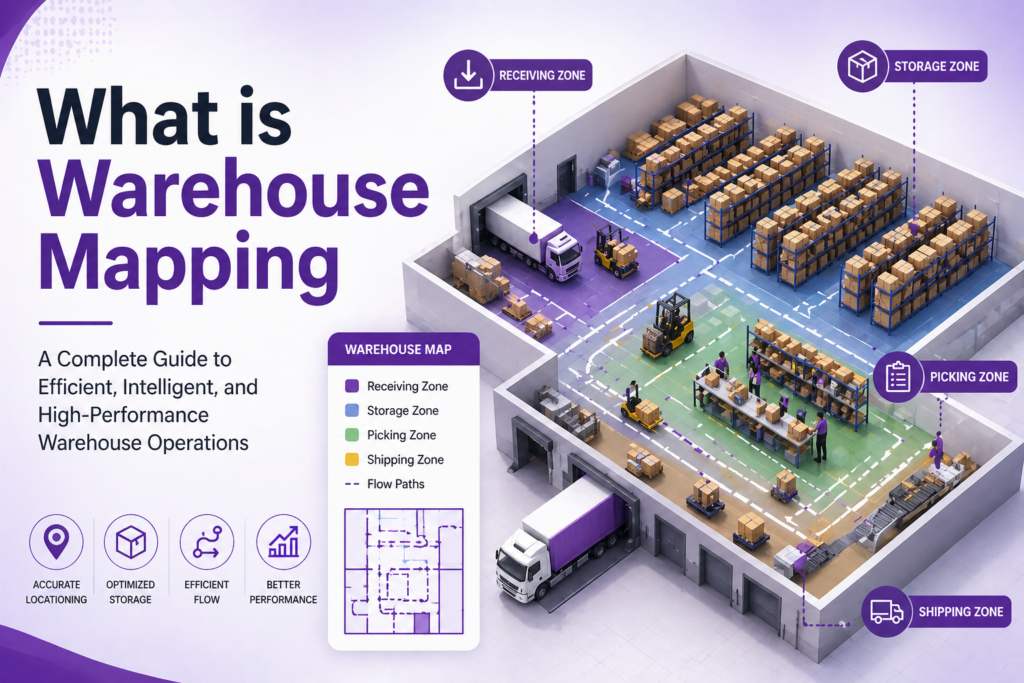
Functional zones segment the warehouse into dedicated areas such as receiving, storage, picking, packing, and dispatch. Mapping these zones ensures clear process boundaries, optimized labor allocation, and minimal operational overlap during high-volume periods.
- Aisles and Pathways
Aisles and pathways define movement across the warehouse and directly influence travel time and congestion. Mapping them enables optimized routing, directional flow control, and improved picking efficiency within a real-time warehouse mapping system.
Synkrato continuously refines these pathways using real-time operational data, helping reduce congestion and improve travel efficiency across the warehouse.
- Storage Locations
Storage locations represent the most granular level of mapping, covering bins, racks, and pallet positions. Each location is uniquely identified to support accurate inventory tracking, efficient retrieval, and alignment with a warehouse mapping and slotting strategy.
When powered by Synkrato, storage locations dynamically adjust to slotting strategies, ensuring alignment with demand shifts and improving picking efficiency.
- Inventory Zones
Inventory zones group SKUs based on operational logic such as velocity, handling requirements, or storage type. Mapping these zones ensures that inventory placement aligns with demand patterns, improving throughput and reducing unnecessary movement.
- Material Flow Paths
Material flow paths define the directional movement of goods across receiving, storage, picking, and dispatch. Mapping these paths enables flow optimization by minimizing cross-traffic, reducing handling steps, and eliminating bottlenecks. In advanced environments, flow paths are continuously refined within a real-time warehouse mapping system to maintain throughput under changing demand conditions.
- Safety and Compliance Areas
Safety and compliance areas are designed to meet regulatory requirements and ensure the safety of employees and goods. These areas may include fire exits, emergency equipment zones, or sections for hazardous materials, which must be clearly mapped and accessible.
- Equipment and Workstations
Equipment and workstations are designated spaces for the tools and machinery used within the warehouse. Proper placement of these resources ensures efficiency and minimizes downtime, as operators can easily access the necessary equipment for their tasks.
Suggested Read: Warehouse Planning
Benefits of a Warehouse Mapping System
A well-implemented real-time warehouse mapping system delivers measurable operational improvements. It transforms static layouts into intelligent, responsive systems. Here are the key benefits:
- Improved Space Utilization: Warehouse mapping allows for a more efficient use of available space by optimizing storage locations and reducing wasted areas. This means more inventory can be stored in a smaller footprint, ultimately boosting storage capacity and reducing overhead.
- Faster Picking and Order Fulfillment: With a well-designed map, items are stored in the most accessible locations, significantly reducing the time spent locating and picking products. This leads to faster order fulfillment, an increase in customer satisfaction, and overall productivity.
- Enhanced Inventory Visibility: A comprehensive mapping system provides real-time data on inventory location and status. This enhances visibility, allowing for better tracking, reduced stockouts, and more accurate inventory management.
- Streamlined Workflow and Material Flow: Mapping the flow of materials ensures that goods move smoothly from receiving to storage and eventually to shipping. This minimizes bottlenecks and ensures that processes are carried out in the most efficient sequence, reducing delays and improving overall productivity.
- Increased Safety and Compliance: Warehouse maps help identify and designate safety zones, such as emergency exits and hazardous material storage. This not only ensures employee safety but also aids in maintaining compliance with safety regulations and industry standards.
- Better Decision-Making: With clear mapping and real-time data integration, warehouse managers can make more informed decisions regarding inventory management, resource allocation, and layout changes. This data-driven approach improves operational effectiveness and supports strategic planning.
- Easier Onboarding and Training: A clear, structured warehouse map simplifies the training process for new employees. With well-defined areas and workflows, workers can quickly understand their roles and navigate the warehouse with ease, reducing training time and improving productivity.
- Supports Automation and Digital Transformation: As warehouses adopt automation technologies like robots and conveyors, a well-mapped layout ensures these systems are integrated seamlessly. Warehouse mapping supports digital transformation by providing the necessary structure for automated processes to function smoothly.
- Reduced Operational Costs: Efficient warehouse mapping reduces unnecessary travel, improves inventory accuracy, and streamlines workflows, all of which contribute to lowering operational costs. Optimizing the use of space and time, it leads to better resource allocation and less wasted effort.
Synkrato connects mapping with automation systems and digital twins, enabling synchronized execution and continuous optimization across warehouse operations.
Suggested Read: Warehouse Management System Cost
How to Create a Warehouse Mapping System
Creating an effective warehouse mapping system requires careful planning and execution. By following a structured process, you can design a layout that maximizes space, enhances workflow, and supports future growth. Here’s a step-by-step guide to help you get started:
1. Assess Your Warehouse Needs
Before you can begin mapping, assess your warehouse’s operational needs. Consider factors such as the types of products you store, the volume of inventory, and the flow of goods. Identifying your goals will help you create a layout that meets both current and future demands.
2. Define Functional Zones
Next, divide your warehouse into functional zones based on activities like receiving, storing, picking, and shipping. Clearly marked zones will streamline warehouse operations by reducing travel time and helping workers focus on specific tasks. Be mindful of accessibility to ensure goods can flow smoothly between areas.
3. Design Aisles and Pathways
Aisles should be designed to accommodate both manual and automated handling equipment. Plan for clear, unobstructed pathways, taking into account the types of vehicles used and the volume of traffic. The more efficiently your aisles are laid out, the quicker goods can be retrieved and moved.
4. Strategically Place Storage Locations
Decide where products will be stored based on their size, weight, and demand frequency. High-demand items should be placed in easily accessible locations, while less frequently picked products can be stored further away. Proper bin and shelf placement ensures a more efficient use of space and minimizes retrieval times.
5. Map Material Flow Paths
Map out the flow of goods through the warehouse from receiving to shipping. A logical flow reduces bottlenecks and minimizes unnecessary movements. The more direct and organized the material flow, the faster and more efficiently goods will move through the system.
6. Integrate Technology
Consider incorporating Warehouse Management Systems (WMS), RFID tracking, or automated systems into your warehouse map. These technologies provide real-time data, helping track inventory and adjust the map dynamically based on changing conditions or demands.
7. Ensure Safety and Compliance
Map safety zones and ensure compliance with regulations such as fire exits, hazardous material storage areas, and emergency equipment locations. This is not only essential for employee safety but also for meeting legal and industry standards.
8. Review and Test Your Layout
Once your map is created, test the system by running simulations or pilots. Gather feedback from warehouse staff and managers to identify any potential issues. Refine your map as necessary to ensure it meets operational needs and enhances workflow.
9. Continuous Improvement
Warehouse mapping is an ongoing process. Regularly review and update your layout to accommodate changes in inventory, business growth, and technological advancements. Continuous improvements will help maintain efficiency as your warehouse evolves.
Suggested Read: Inventory Management vs. Warehouse Management
How Synkrato Optimizes Warehouse Mapping for Ecommerce Fulfillment
Traditional approaches to warehouse mapping rely on static layouts and periodic updates, which quickly become outdated in fast-moving ecommerce environments. This creates gaps between physical operations and system visibility.
Synkrato addresses this by transforming warehouse mapping into a continuously evolving, data-driven system that adapts to real-time operational conditions.
Key capabilities include:
- Dynamic Digital Twin Mapping: Creates a live 3D digital replica of the warehouse, continuously updated with real-time data for accurate spatial visibility and operational alignment.
- Real-Time Data Synchronization: Integrates with WMS, ERP, and IoT systems to ensure every movement, location, and change is instantly reflected across the mapping environment.
- AI-Driven Slotting Optimization: Continuously refines SKU placement using AI-powered simulations, improving picking efficiency and reducing travel time without disrupting existing operations.
- Simulation-Based Decision Intelligence: Runs thousands of operational scenarios to predict outcomes, enabling data-backed decisions before implementing layout, labor, or process changes.
- Continuous Flow Optimization: Analyzes live warehouse activity to dynamically adjust material flow paths, minimizing congestion and maintaining throughput under fluctuating demand conditions.
- Layered Intelligence Over Existing Systems: Sits on top of existing WMS infrastructure, enhancing capabilities without requiring system replacement, making adoption faster and less disruptive.
- Measurable Performance Improvements: Enables significant gains such as increased productivity and reduced travel time through optimized mapping, slotting, and workflow synchronization.
If your warehouse still relies on static mapping, it is time to upgrade. Book a demo with Synkrato and explore how real-time intelligence can transform efficiency and visibility.
Suggested Read: Benefits of Warehouse Management System
FAQs
What is warehouse mapping?
Warehouse mapping is the structured digital representation of a warehouse’s physical layout, including zones, storage locations, and movement paths. It enables precise tracking, optimized workflows, and real-time operational visibility.
Why do warehouses struggle with efficiency when mapping is not digitally optimized?
Without a real-time warehouse mapping system, warehouses rely on static layouts and manual coordination. This leads to inaccurate location data, inefficient travel paths, and poor inventory visibility, ultimately reducing throughput and increasing errors.
Why is warehouse mapping important?
Warehouse mapping is important because it connects physical operations with digital systems. It enables traceability, improves inventory control, optimizes workflows, and supports data-driven decision-making across warehouse operations.
Why is Synkrato’s approach to warehouse mapping more effective than traditional methods?
Synkrato integrates real-time data, dynamic layout updates, and intelligent slotting into warehouse mapping. This eliminates static inefficiencies and ensures continuous alignment between physical operations and digital systems.
How does warehouse mapping improve inventory management?
Warehouse mapping improves inventory management by assigning precise locations to every SKU. This enhances visibility, reduces misplacements, supports faster retrieval, and enables accurate stock tracking across the warehouse.
Why is intelligent warehouse mapping becoming essential for modern warehouse operations like those supported by Synkrato?
Modern warehouses handle high SKU volumes and fluctuating demand. Intelligent mapping adapts to these changes in real time, ensuring efficient space utilization, optimized workflows, and seamless integration with automation systems.
What is the difference between warehouse mapping and warehouse layout design?
Warehouse layout design defines the physical structure of the facility. Warehouse mapping, however, creates a dynamic digital layer over that structure, enabling real-time tracking, optimization, and operational control.