
Dwell time is the total time a transport vehicle, container, trailer, or shipment remains idle at a logistics facility between arrival and departure. It includes check-in, paperwork, waiting, loading or unloading, and release. When dwell time increases, warehouse throughput slows, transportation costs rise, and issues such as poor dock scheduling, manual documentation, labor shortages, or poor inventory visibility become more visible.
The operational impact is significant. ATRI’s 2024 research, based on 2023 U.S. trucking data, found that drivers were detained at 39.3% of all stops, which resulted in more than 135 million hours of detention for the for-hire trucking industry. Monitoring dwell time through scan events, from gate check-in to loading, helps warehouses identify delays early and reduce detention and demurrage risks.
This blog explains the different types of dwell time, the factors that increase it, its impact on logistics performance, and practical strategies to reduce delays across warehouse operations.
Types of Dwell Time in Logistics
Logistics dwell time can occur at trucks, warehouses, ports, rail terminals, and yards, with each type affecting operations differently. The cost of these delays is measurable: in 2023, driver detention alone caused $3.6 billion in direct expenses and $11.5 billion in lost productivity across the U.S. for-hire trucking industry. Understanding the different types of dwell time helps identify where delays originate and how they can be reduced.
Truck Dwell Time
Truck dwell time is the time between a truck’s arrival and departure from a warehouse, distribution center, port, or customer facility. It includes pickup dwell (arrival to completed loading) and drop dwell (arrival to completed unloading).
Synkrato’s 3D digital twin provides a live view of dock occupancy and trailer movement, while AI Agents notify teams when dwell thresholds are exceeded, enabling faster dock and yard decisions.
Warehouse Dwell Time
Warehouse dwell time measures how long inventory remains idle before moving to receiving, inspection, put-away, replenishment, picking, packing, or loading. In cross-docking facilities, it also includes the time freight waits between inbound and outbound trailers without entering storage.
Dock-to-stock cycle time is one of the industry’s most important warehouse KPIs because it measures how quickly received inventory becomes available for operations. Reducing warehouse dwell requires faster receiving and better inventory flow.
Container Dwell Time
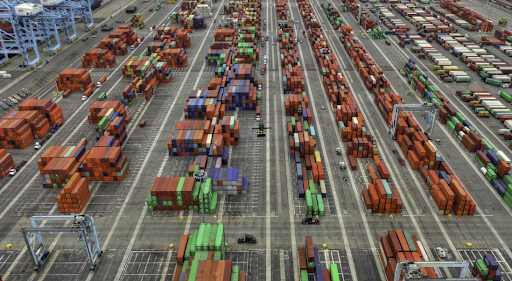
Container dwell time is the time a shipping container remains idle at a port, rail terminal, container yard, or warehouse before moving to the next stage. Terminal dwell measures the time from vessel discharge until the container exits the terminal and is a common indicator of congestion.
Port Dwell Time
Port dwell time measures how long containers remain inside a port after unloading until they leave the terminal. Longer port dwell often indicates congestion and creates uneven inbound freight flows for warehouses.
The 2025 Container Port Performance Index evaluates over 400 ports worldwide, using vessel time in port as a key measure of operational efficiency.
Rail Terminal Dwell Time
Rail terminal dwell time is the time containers or trailers remain at an intermodal rail terminal before pickup or transfer. Longer rail dwell delays receiving schedules and disrupts warehouse labor planning.
Reducing rail dwell starts with better coordination between transportation and warehouse teams so labor, dock doors, and equipment are available before rail containers arrive.
Yard Dwell Time
Yard dwell time measures how long trailers, containers, or chassis remain inside a facility yard before reaching a dock or leaving the site. Dock congestion, security checks, or limited labor availability commonly cause delays.
A Yard Management System (YMS), combined with real-time trailer tracking and mobile task execution, helps prioritize trailer movements, reduce unnecessary yard shunting, and improve dock utilization.
What Causes Excessive Dwell Time?
Different operational bottlenecks increase dwell time at different stages of the logistics process. Identifying the root cause helps optimize logistics dwell time, reduces delays, and improves throughput.
Poor Dock Scheduling
Poor dock scheduling occurs when appointments are not aligned with actual dock capacity.
- Poor Scheduling & Arrival Management: Double-booked docks, delayed arrivals, and limited real-time visibility create queues before unloading begins.
- Capacity Blind Spots: Ignoring labor, equipment, staging space, trailer type, and unload complexity results in idle trucks despite available appointment slots.
- Weak Appointment Control: Comparing planned appointments with actual gate-in, dock start, and release times helps identify scheduling gaps.
Slow Loading and Unloading
Slow loading and unloading usually result from additional handling before freight can move.
- Load Complexity & Sorting: Mixed pallets, floor-loaded trailers, multi-SKU orders, and poor pallet sequencing increase handling time.
- Exception Handling: Damaged cartons, missing labels, ASN mismatches, and quantity errors interrupt normal receiving.
- Rehandling Waste: Freight that is repeatedly moved for inspection, staging, or put-away increases dock dwell.
Manual Documentation
Manual documentation delays freight even after it reaches the facility.
- Manual Check-In Procedures: Paper-based gate entry, security logs, and disconnected appointment records slow inbound processing.
- Document Mismatch: Missing ASNs, incorrect purchase orders, or incomplete bill of lading details delay receiving.
- Digital Gap: Electronic bill of lading represented only 5.7% of global market adoption in January 2025, showing that paper-based documentation remains a major source of delay.
Labor Shortages
Labor shortages reduce a warehouse’s ability to process freight during peak periods.
- Inadequate Resources & Infrastructure: Too few workers, forklifts, dock equipment, or dock doors limit throughput.
- Skill Misalignment: Delays occur when certified forklift operators, inspectors, or receiving staff are unavailable.
- Lower Labor Buffer: U.S. warehousing employment fell 1.8% year over year in May 2026, increasing the need for higher workforce productivity.
Warehouse Congestion
Warehouse congestion occurs when inbound and outbound freight move faster than available capacity.
- Staging Area Overload: Pallets waiting for inspection or put-away block dock doors and delay incoming shipments.
- Flow Imbalance: Unbalanced labor, storage, dock capacity, and equipment create bottlenecks across warehouse operations.
- Capacity Pressure: Dock-to-stock cycle time and warehouse capacity utilization remain key indicators of whether inventory is flowing efficiently or accumulating in the facility.
Poor Inventory Visibility
Poor inventory visibility causes dwell time because workers cannot quickly determine an item’s status.
- Missing Product Attributes: Missing lot numbers, expiry dates, serial numbers, or inspection status delays receiving and put-away.
- Unclear Inventory Status: Freight waits when the system cannot identify whether inventory is available, blocked, or pending inspection.
How High Dwell Time Affects Logistics Performance
High dwell time creates a ripple effect across the supply chain. As trucks, containers, and inventory remain idle, warehouse throughput falls, transportation delays increase, operating costs rise, and customer deliveries become less reliable.
Lower Warehouse Throughput
High dwell time reduces warehouse throughput because dock doors, staging lanes, and trailers remain occupied instead of processing new freight.
- Yard and dock congestion reduces the number of loads a facility can process each day.
- Longer dock-to-stock cycle times delay inventory availability, slowing picking and outbound fulfillment.
Increased Transportation Delays
Delays at one facility often extend across the transportation network rather than affecting a single shipment.
- Missed pickup and delivery appointments create cascading delays across subsequent routes.
- Facilities with consistently high dwell times may become less attractive to carriers, affecting future capacity.
Higher Demurrage and Detention Charges
Longer dwell time increases exposure to detention, demurrage, and other accessorial charges.
- Exceeding carrier-free time limits can trigger additional fees.
- Accurate gate, yard, and dock timestamps make it easier to validate or dispute charges.
- Synkrato‘s AI Agents can monitor dwell thresholds in real time and alert warehouse teams before shipments exceed carrier free-time limits.
Reduced Fleet Utilization
Fleet utilization falls when trucks, trailers, and chassis spend more time waiting than moving.
- Idle equipment completes fewer trips, reducing available freight capacity.
- Longer turnaround times increase fuel consumption and lower driver productivity.
- Fewer completed trips mean carriers need more assets to move the same freight volume.
Delayed Customer Deliveries
Customer delays often begin inside the warehouse before shipments leave the dock.
- Receiving delays slow replenishment, picking, packing, and dispatch.
- Missed delivery windows reduce product availability and customer satisfaction.
Increased Operational Costs
High dwell time increases costs across warehouse and transportation operations.
- Additional overtime, temporary storage, rehandling, and fuel consumption increase operating costs.
- Small delays at receiving or loading often compound into larger supply chain costs downstream.
How to Reduce Dwell Time in Logistics?
Reducing dwell time in warehouse operations requires a combination of better planning, real-time visibility, process automation, and continuous performance monitoring. The following dwell time reduction strategies help warehouses improve freight flow, reduce idle time, and minimize detention and demurrage costs.
Optimize Dock Scheduling
Dock schedules perform best when they reflect actual warehouse capacity rather than fixed time slots. Appointment-based scheduling supported by carrier arrival data, trailer type, labor availability, equipment, and dock capacity helps prevent queues and improve dock utilization.
Improve Loading and Unloading Efficiency
Loading efficiency depends on minimizing unnecessary freight handling. Pre-staged freight, consolidated purchase orders, exception-based receiving, and drop-and-hook operations shorten loading times and reduce driver waiting.
Automate Warehouse Workflows
Warehouse automation is most effective when it triggers operational decisions instead of only recording events. Automated ASN matching, system-directed put-away, inspection routing, and exception workflows keep freight moving with fewer manual interventions.
Increase Real-Time Visibility
Real-time visibility makes it easier to identify delays before they become bottlenecks. Tracking freight across the gate, yard, dock, receiving, staging, put-away, and dispatch provides a complete operational view.
Optimize Labor Allocation
Effective labor allocation is based on dwell patterns rather than order volume alone. Workforce planning aligned with inbound peaks, balanced shift workloads, and mobile task execution improves productivity while reducing unnecessary movement and manual verification.
Monitor Dwell Time KPIs
Dwell time is most useful when measured as a sequence of operational events instead of a single average. Regular KPI tracking helps identify recurring bottlenecks and supports continuous process improvement.
- Gate-to-dock time
- Dock-to-stock cycle time
- Appointment adherence
- Yard dwell by trailer or container
- ASN-to-receipt match rate
- Detention exposure
How Synkrato Helps Reduce Dwell Time
Reducing dwell time requires better operational visibility, faster decision-making, and coordinated warehouse execution. Synkrato helps warehouses identify bottlenecks early and improve freight flow across receiving, storage, and dispatch. It:
- Provides a real-time view of dock activity, trailer movement, and warehouse congestion, helping teams respond before delays affect throughput.
- Identifies shipments approaching detention thresholds and alerts warehouse teams so corrective action can be taken before additional charges occur.
- Optimizes inbound receiving and put-away by recommending efficient inventory movement based on warehouse conditions.
Looking to improve warehouse throughput? Book an appointment with Synkrato to see how AI-driven warehouse intelligence can help optimize your operations.
FAQs
How is dwell time measured in logistics?
Dwell time is measured by tracking the time between key logistics events, such as gate-in, dock assignment, first pallet scan, unloading, put-away, and trailer release. Common KPIs include gate-to-dock time, dock-to-stock cycle time, yard dwell, appointment adherence, and detention exposure to identify where delays occur.
How can Synkrato help businesses reduce dwell time in logistics?
Synkrato helps reduce dwell time by providing real-time warehouse visibility, identifying bottlenecks before they affect operations, and alerting teams when dwell thresholds are exceeded. Its AI-powered capabilities improve dock utilization, inbound flow, inventory movement, and warehouse coordination to reduce delays and detention risks.
How does excessive dwell time affect warehouse performance?
Excessive dwell time reduces warehouse throughput, increases transportation delays, raises detention and demurrage costs, lowers fleet utilization, and delays customer deliveries. As freight remains idle, dock doors, staging lanes, equipment, and labor stay occupied, reducing the number of shipments a warehouse can process.
Why do warehouses continue to experience high dwell times despite implementing WMS solutions without Synkrato?
A WMS manages inventory and warehouse transactions but does not always provide real-time operational visibility or identify bottlenecks as they develop. High dwell time often persists because of poor dock scheduling, manual documentation, labor constraints, and disconnected warehouse processes. Synkrato complements warehouse execution with AI-driven visibility and operational intelligence.
What strategies can reduce dwell time in logistics?
Reducing dwell time requires appointment-based dock scheduling, efficient loading and unloading, workflow automation, real-time operational visibility, labor planning based on demand, and continuous monitoring of dwell KPIs. Together, these strategies improve freight flow, reduce idle time, and minimize detention and demurrage costs.
How can Synkrato improve warehouse performance beyond reducing dwell time?
Beyond reducing dwell time, Synkrato improves warehouse throughput, inventory flow, dock utilization, and labor productivity. Its AI-powered visibility helps identify recurring bottlenecks, optimize warehouse execution, improve operational decision-making, and support more efficient inbound and outbound logistics processes.