Labor management in warehouse operations improves productivity and efficiency when planning, training, workflows, safety, and analytics are managed as one integrated system. The need for this approach is increasing as operational pressure rises from both safety and cost perspectives.
In 2025, 55% of supply chain leaders increased technology and innovation investment and 60% planned to invest more than $1 million.
This blog covers 10 practical warehouse labor planning strategies that help leaders improve productivity, reduce inefficiencies, and scale operations without proportionally increasing labor dependency.
1. Optimize Workforce Planning and Scheduling
Over the past 20 years, employment in transportation and warehousing grew 57.3%, rising from 4.2 million to 6.6 million workers. With this, AI-powered tools can unlock 7-15% additional capacity in warehouse networks.
- Demand-based scheduling
Demand-based scheduling aligns labor to the actual workload instead of fixed plans. In practice, this means planning based on forecasted order lines, units, cube, replenishment needs, and service deadlines.
- Flexible staffing models
Flexible staffing models help warehouses handle demand changes without increasing fixed labor costs. A strong approach combines a stable core team with cross-trained workers, staggered shifts, part-time roles, or interchangeable responsibilities.
- Shift balancing across teams
Shift balancing improves productivity by distributing work more evenly across teams. In many warehouses, one shift handles most of the complex work while another deals with backlog or has unused capacity. This creates instability because performance depends on recovery instead of steady flow.
- Forecast-driven labor planning
Forecast-driven labor planning prepares the operation before work reaches the floor. It uses inputs such as order forecasts, promotion schedules, receiving plans, seasonality, and backlog trends to anticipate labor needs. With Synkrato’s digital twin and AI agents, teams can simulate these demand patterns in advance and optimize labor allocation before execution.
Suggested Read: Warehouse Operations Guide
2. Improve Employee Training and Skill Development
Employee training improves warehouse labor productivity management, flexibility, and retention when it is treated as an ongoing capability.
- Structured onboarding programs
Structured onboarding helps new hires become productive faster by showing them how their role fits into the full warehouse workflow. Employees are introduced to process flow, system usage, safety practices, and role expectations in a step-by-step way during their first few weeks. This reduces early mistakes and builds confidence more quickly.
- Cross-training across roles
Cross-training makes the workforce more flexible by allowing employees to work across different functions when needed. Workers trained in receiving, replenishment, picking, and packing can support multiple areas without creating disruption. This becomes especially important during:
- Absenteeism
- Peak demand
- Sudden workload changes
- On-the-job floor training
On-the-job training ensures that employees learn in the actual environment where work happens. Warehouse operations involve movement, equipment use, and real-time decisions that cannot be fully taught in a classroom.
- Continuous skill upgradation
Continuous skill development becomes more important as warehouses adopt automation, mobile tools, and system-driven workflows. Regular upskilling ensures that workforce capability keeps pace with process changes.
3. Enhance Labor Productivity Tracking
In labor productivity tracking, the most effective approach focuses on a small set of KPIs that directly connect labor to operational flow. A few of them include pick rate, task time, travel time, indirect labor share, dwell, and rework.
- Define clear performance KPIs
Picking, packing, receiving, replenishment, and exception handling each need different warehouse labor performance metrics to reflect how the work is done. When KPIs are set correctly, teams understand expectations better, and managers can compare performance more accurately across shifts, zones, and work types.
- Monitor pick rates and task times
Monitoring pick rates and task times helps identify where productivity is being lost within the workflow. A drop in pick rate does not always mean workers are slower. It can be caused by:
- Longer travel distances
- Congestion
- Poor slotting
- Equipment delays
- Inefficient batching
- Use real-time performance dashboards
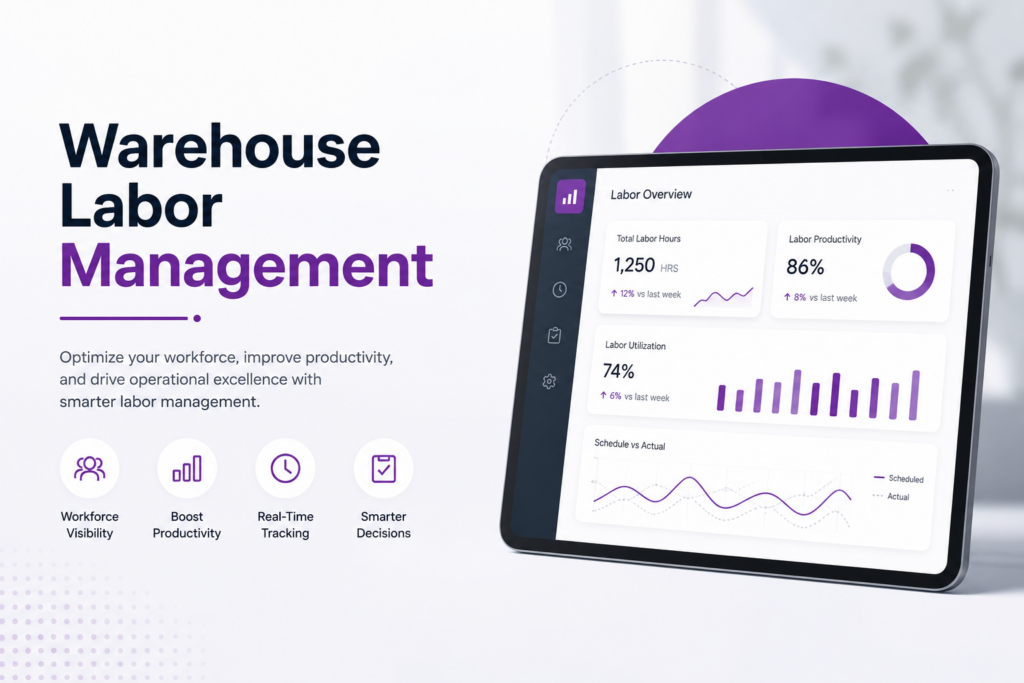
Real-time dashboards allow managers to respond while operations are still running. When dashboards show labor allocation, backlog levels, wave progress, dwell time, and missed commitments, supervisors can adjust tasks before delays grow.
- Identify and fix productivity gaps
Productivity gaps should be treated as signals of deeper operational issues rather than direct signs of poor labor performance. Repeated gaps in certain zones or workflows often point to problems such as inefficient layout, delayed replenishment, frequent exceptions, or poor task sequencing.
Suggested Read: Material Handling in Warehouses
4. Reduce Manual Work with Automation Support
Warehouse automation is growing by more than 10% per year and expects robot shipments to increase by up to 50% annually through 2030. It improves warehouse productivity when it reduces repetitive, low-value, and physically demanding work.
- Use pick-to-light or voice picking
Pick-to-light and voice picking systems improve speed by reducing the time workers spend searching, confirming, and correcting tasks. These systems also reduce the need for paper-based processes or repeated device handling, which helps streamline work.
- Automate repetitive tasks
Repetitive tasks are well-suited for automation because they use labor time without requiring much decision-making. Tasks like sortation, repeated transport, and standard labeling add workload but limited value. Automating these activities removes unnecessary manual effort and allows workers to focus on tasks that directly affect service quality and workflow.
- Introduce conveyor or Autonomous Mobile Robots (AMR) support
Conveyors and AMRs reduce non-productive travel, which is one of the largest hidden inefficiencies in warehouse operations. When workers spend time moving items over long distances, labor is used without adding much value. Automating these movements converts travel time into productive time.
- Minimize manual data entry
Replacing manual data entry with scanning, mobile confirmations, and system-driven workflows improves both speed and accuracy. Reliable data capture supports smoother execution and more accurate performance tracking.
5. Optimize Task Allocation and Workflows
Task allocation improves warehouse productivity when it is based on movement logic, urgency, and worker capability rather than simple availability. Synkrato offers AI agents that strengthen this by continuously analyzing real-time data and dynamically assigning tasks based on changing conditions, improving both speed and decision accuracy.
- Smart task assignment systems
Smart task assignment improves productivity by matching tasks to workers based on proximity, urgency, skill level, and equipment availability. In high-volume environments, even small improvements in assignment logic can:
- reduce travel
- minimize waiting
- improve flow
- Zone-based work allocation
Zone-based allocation reduces unnecessary movement by keeping workers within specific areas of the warehouse. This allows them to become more familiar with SKU locations, storage layouts, and workflow patterns, which improves both speed and accuracy.
- Reduce worker travel time
Reducing travel time turns non-value-added movement into productive work. It can be decreased through better batching, improved task sequencing, optimized AI slotting, and support from conveyors or AMRs.
- Balance workload across teams
Uneven distribution often leads to congestion, delays in downstream processes, and inconsistent shift performance. By aligning workload with demand and capacity, warehouses maintain a steady flow and improve overall efficiency.
Suggested Read: Types of Warehouse Storage
6. Improve Warehouse Layout for Labor Efficiency
Warehouse layout directly impacts labor productivity because it shapes how work flows through the facility. When layouts create long picking routes, congestion, poor slotting, and blocked intersections, labor time per order increases. This is where layout improvements create real impact, as one logistics provider improved warehouse capacity by nearly 10% using an AI-powered digital twin.
- Optimize picking paths
Picking paths determines how much time workers spend moving versus completing tasks. Poor routes can make workers revisit the same areas, cross busy zones, or take longer paths than needed. Optimized picking paths reduce unnecessary movement and improve flow without requiring workers to move faster.
- Place fast-moving SKUs closer
Placing fast-moving SKUs closer to picking and dispatch areas reduces repeat travel and improves efficiency. Regularly reviewing SKU placement ensures that the layout stays aligned with changing demand patterns and continues to support efficient operations.
- Reduce congestion zones
Areas such as cross-aisles, staging zones, and intersections between picking and replenishment often become bottlenecks. Reducing these congestion points improves flow and helps work move more smoothly across the warehouse, even without increasing headcount.
- Improve aisle accessibility
Narrow, poorly designed, or frequently blocked aisles slow down work and create interruptions. Improving accessibility allows smoother movement, reduces delays, and improves coordination between people and equipment.
7. Invest in Ergonomic Equipment and Safety
Performance drops when repetitive stress, fatigue, and injury risks are not addressed through better work design. In 2024, U.S. warehousing and storage recorded 4.8 total recordable cases per 100 full-time workers and 4.1 DART cases, both higher than the private-industry average. Musculoskeletal disorders from overexertion and incidents involving powered industrial trucks are highlighted as common warehouse injuries.
- Powered lifting equipment
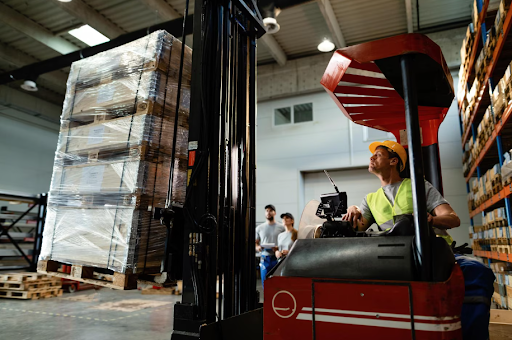
Powered lifting equipment reduces physical strain in tasks such as pallet handling, case movement, and repetitive lifting. By lowering manual effort, it reduces the risk of injuries and helps workers maintain consistent performance across long shifts.
- Anti-fatigue flooring
Anti-fatigue flooring improves conditions in areas where workers stand for long periods, such as packing, inspection, and labeling stations. Reducing strain on the legs and lower body, it helps employees maintain a steady pace throughout the shift.
- Adjustable workstation heights
Adjustable workstations improve efficiency by fitting the task to the worker instead of forcing workers to adjust to fixed setups. In repetitive tasks, small improvements in posture can reduce fatigue and improve accuracy.
- Wearable support technology
Wearable support technology reduces strain in tasks that involve frequent bending, lifting, or reaching. However, it should support good process and layout design, as underlying ergonomic issues should be addressed at the source.
Suggested Read: What is Smart Warehousing
8. Strengthen Safety Culture and Injury Prevention
Safety culture improves warehouse performance when it becomes part of daily operations. Performance declines when teams rely on shortcuts, rush tasks, or fail to report issues. A strong safety culture ensures that safe behavior is built into how work is done, while supporting labor stability and operational continuity.
- Daily stretch programs
Daily stretch programs prepare workers for physically demanding tasks and create a structured start to the shift. In environments with frequent lifting, bending, or repetitive movement, these routines improve readiness and reduce the risk of strain-related injuries.
- Clear reporting protocols
Clear reporting protocols help identify safety issues early instead of after incidents occur. When reporting is simple and easy to follow, employees are more likely to report near misses, unsafe conditions, and minor injuries. This visibility allows managers to act before problems grow into major disruptions.
- Peer safety committees
Peer safety committees strengthen safety culture by sharing responsibility across the workforce. Instead of relying only on management, these groups bring frontline insights into safety discussions and help identify risks that may otherwise go unnoticed.
- Track leading safety indicators
Tracking leading safety indicators improves prevention by focusing on early warning signs. Risks build in metrics, such as:
- near misses
- blocked aisles
- missed equipment checks
- unsafe handling
- repeated congestion patterns
9. Increase Workforce Engagement and Retention
Workforce engagement and retention improve warehouse productivity by stabilizing skills, reducing disruption, and ensuring more consistent execution. In labor-intensive environments, high turnover resets skill levels, weakens cross-functional flexibility, and increases the need for training, especially during peak periods. Walmart is investing $1 billion in skills training to support employee growth.
- Incentive-based performance programs
Incentive-based programs improve engagement when they reward the right mix of behaviors instead of focusing only on speed. This usually means linking incentives to productivity, quality, safety, and attendance.
- Clear career growth paths
Career growth improves retention by giving employees a reason to stay and develop within the organization. Clear pathways into lead, technical, planning, or specialist roles make advancement visible and realistic, strengthening long-term workforce stability.
- Regular feedback and recognition
Regular feedback improves performance by keeping expectations clear and allowing timely corrections. Recognition reinforces positive behavior and acknowledges effort in roles that are often repetitive and physically demanding.
- Improve workplace conditions
Workplace conditions shape the daily experience of employees. Factors such as temperature, break quality, equipment reliability, and supervisor consistency affect how sustainable the job feels over time. While pay and career growth remain important, employees are more likely to stay when working conditions support comfort, safety, and efficiency.
10. Use Data and Analytics for Labor Optimization
Data and analytics improve warehouse labor management when they help leaders predict, diagnose, and improve performance in real time. The most effective setups bring together labor utilization, workflow efficiency, and demand patterns into one view. That is to say, Synkrato’s AI-driven decisions can unlock significant capacity without adding space or equipment.
- Track labor utilization trends
Tracking labor utilization trends shows whether paid hours are being used productively and consistently. By analyzing utilization across shifts, zones, and order types, leaders can see where labor is underused, where it is overloaded, and where workload patterns are becoming harder to manage.
- Identify inefficiency patterns
Inefficiency patterns uncover recurring operational issues. Repeated overtime in certain areas, regular backlogs at specific times, or idle capacity in particular shifts usually point to structural problems rather than one-off performance issues.
- Use predictive labor planning
Predictive labor planning improves decision-making by anticipating demand before it reaches the operation. Using historical data, demand forecasts, and operational trends, leaders can adjust staffing, task sequencing, and support activities in advance.
- Optimize shift performance with data
Optimizing shift performance involves comparing planned output with actual results and understanding why any gaps occurred. Data-driven reviews shift the focus from blame to root cause, whether the issue is related to labor execution, process design, or external factors.
Turn your warehouse labor strategy into measurable productivity gains with real-time, AI-driven decisions. Book a demo with Synkrato to see how you can optimize labor, reduce inefficiencies, and improve operational flow.
FAQs
What is warehouse labor management?
Warehouse labor management is the process of planning, allocating, tracking, and optimizing workforce effort to improve productivity and efficiency. With Synkrato, this goes beyond tracking by turning warehouse data into real-time decisions through AI agents, digital twins, and simulation-driven optimization.
Who can gain the most from using Synkrato to improve warehouse labor management?
Operations leaders, warehouse managers, 3PL providers, and innovation teams benefit the most because they manage complex, high-volume environments where labor efficiency directly impacts cost and service levels. Synkrato helps these teams make faster, data-driven decisions by simulating workflows and optimizing labor allocation in real time.
Why is labor management important in warehouse operations?
Labor management directly impacts cost, throughput, accuracy, and service levels in warehouse operations. Synkrato improves this by turning workforce data into real-time, AI-driven decisions, while helping teams reduce inefficiencies and improve execution.
What workforce inefficiencies can Synkrato help uncover in warehouse labor performance?
Synkrato identifies inefficiencies such as excessive travel time, poor task allocation, slotting gaps, and workflow bottlenecks. Using digital twins and AI agents, it simulates operations and shows where labor effort is lost before changes are made on the floor.
What are common challenges in warehouse labor management?
Common challenges include demand variability, high turnover, inefficient task allocation, limited visibility, and reactive decision-making. Synkrato addresses these with simulation, predictive insights, and AI-driven recommendations that improve planning and execution.
Why might traditional labor planning fall short without intelligence platforms like Synkrato?
Traditional labor planning relies on static forecasts and limited visibility, making it difficult to respond to real-time operational changes. Synkrato improves this by using AI agents and digital twins to test scenarios and optimize labor decisions before execution.
Can technology improve warehouse labor management?
Technology improves labor management by increasing visibility, automation, and decision accuracy. Synkrato extends this by converting WMS data into a warehouse operating system, using AI agents and simulation to continuously optimize labor performance and workflow.