Warehouse operations are the silent engine behind every on-time delivery, stocked shelf, and seamless customer experience. But when workflows break down, even small inefficiencies can snowball into delays, rising costs, and frustrated teams, turning the warehouse floor into controlled chaos.
This ultimate warehouse operations management guide explains how advanced warehouse teams structure labor, streamline workflows, orchestrate WMS/WES/WCS ecosystems, and improve operational resilience at scale.
Warehouse Operations Jobs & Responsibilities
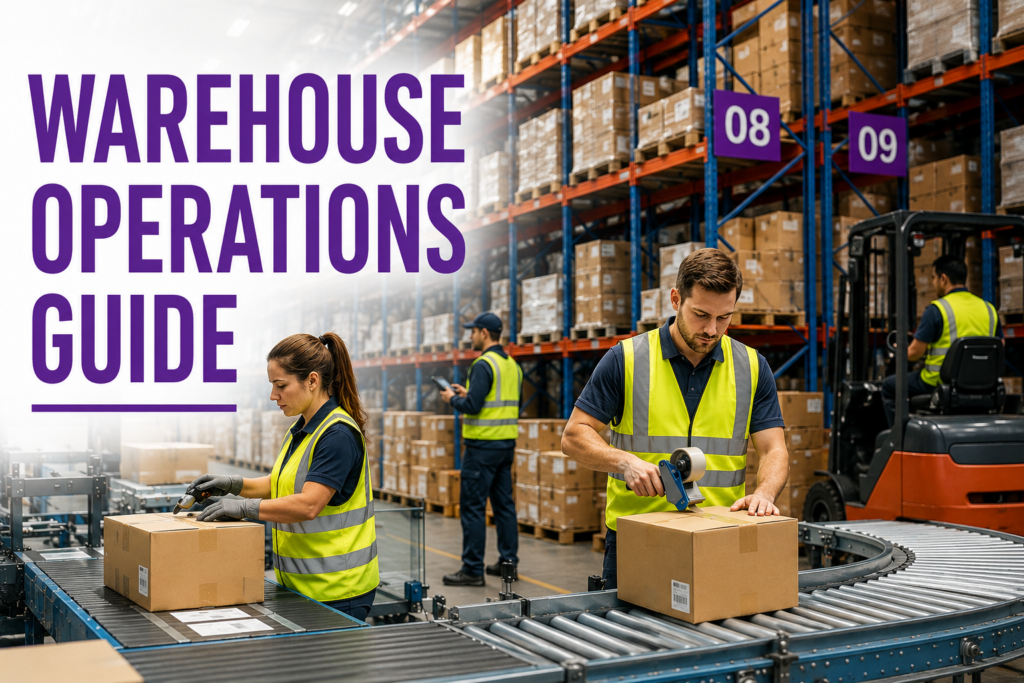
A warehouse runs efficiently when every role, from frontline workers to operations managers, works in sync. Each position plays a critical part in maintaining inventory accuracy, meeting shipping deadlines, ensuring workplace safety, and keeping daily workflows moving without disruption.
| Warehouse Role | Primary Responsibility | Key KPI | Technology Commonly Used |
| Warehouse Associate | Inventory handling & packing | Order throughput | Barcode scanners, WMS |
| Order Picker | Picking customer orders | Pick accuracy | RF scanners, pick-to-light |
| Receiver / Loader | Inbound & outbound handling | Dock turnaround time | Forklifts, dock scheduling tools |
| Warehouse Supervisor | Workforce coordination | Labor productivity | Labor management systems |
| Operations Manager | Overall operational oversight | OTIF, cost efficiency | WMS, WES, analytics dashboards |
| Inventory Control Specialist | Inventory accuracy | Cycle count accuracy | Inventory management systems |
| Automation Technician | Robotics & automation support | System uptime | AMRs, WES, automation controls |
Direct Labor Roles: Hands-On Workfloor Execution
Direct labor roles are responsible for the physical movement, handling, storage, and fulfillment of goods inside the warehouse. These employees form the operational backbone of day-to-day warehouse activities.
Warehouse Associate / Worker / Operative
Warehouse associates handle a wide range of daily warehouse tasks, including stocking inventory, organizing storage areas, labeling products, packing orders, and preparing shipments. They help maintain operational flow while ensuring safety procedures and warehouse standards are followed at all times.
Key responsibilities include:
- Sorting and storing incoming inventory
- Packing and labeling customer orders
- Maintaining clean and organized workspaces
- Operating basic warehouse equipment
- Following safety and compliance guidelines
Order Picker / Filler
Order pickers focus on locating and retrieving products from warehouse shelves to fulfill customer orders accurately and efficiently. Speed and precision are essential in this role, especially in high-volume fulfillment centers.
Key responsibilities include:
- Picking items based on order lists or barcode systems
- Verifying product quantities and accuracy
- Preparing items for packing and shipping
- Using handheld scanners and warehouse management systems
- Meeting daily productivity targets
Receiver / Unloader / Hauler / Loader
These roles manage the movement of goods entering and leaving the warehouse. They ensure shipments are properly unloaded, inspected, staged, and loaded for transportation while minimizing delays and handling errors.
Key responsibilities include:
- Unloading incoming trucks and containers
- Inspecting shipments for damage or discrepancies
- Moving inventory using forklifts or pallet jacks
- Loading outbound shipments safely and efficiently
- Coordinating dock activities and shipment schedules
Indirect Labor & Management Roles: Oversight, Support & Optimization
Indirect labor and management teams oversee warehouse performance, workforce coordination, inventory accuracy, and process optimization. Their focus is on improving operational efficiency while supporting frontline execution.
Warehouse Operations Supervisor / Team Lead
Warehouse supervisors manage daily operations and ensure that operational targets are achieved. They monitor employee performance, coordinate workflows, resolve operational issues, and maintain safety compliance across shifts.
Key responsibilities include:
- Supervising warehouse staff and schedules
- Monitoring productivity and workflow efficiency
- Conducting safety checks and team training
- Resolving operational bottlenecks
- Reporting performance metrics to management
Warehouse Operations Manager
Warehouse operations managers oversee the entire warehouse operation, including labor planning, inventory management, logistics coordination, budgeting, and process improvement initiatives. They play a strategic role in maximizing efficiency and controlling operational costs.
Key responsibilities include:
- Managing warehouse operations and KPIs
- Implementing workflow and process improvements
- Coordinating with suppliers, carriers, and logistics teams
- Managing labor costs and operational budgets
- Ensuring compliance with safety and regulatory standards
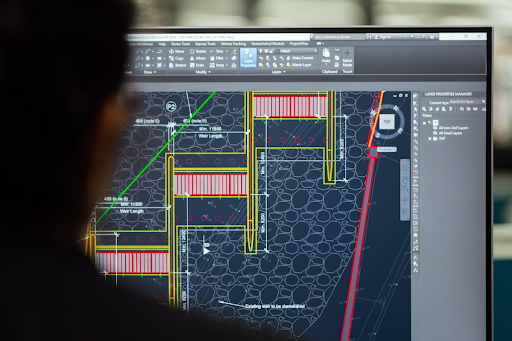
Modern warehouse operations managers increasingly rely on Synkrato’s digital simulation and warehouse modeling to evaluate workflows, optimize labor allocation, test automation strategies, and identify operational bottlenecks before implementing physical changes on the warehouse floor.
Inventory Control Specialist / Quality Control Inspector
Inventory control specialists and quality control inspectors help maintain inventory accuracy and product quality throughout warehouse operations. Their work reduces stock discrepancies, returns, and fulfillment errors.
Key responsibilities include:
- Performing inventory audits and cycle counts
- Tracking stock discrepancies and adjustments
- Inspecting products for damage or quality issues
- Monitoring inventory accuracy within warehouse systems
- Supporting compliance and quality assurance processes
Support Functions
Support teams help maintain smooth warehouse operations behind the scenes. These functions often include administrative staff, maintenance teams, IT support, human resources, procurement, transportation coordinators, and safety personnel.
Key responsibilities include:
- Managing warehouse systems and documentation
- Supporting equipment maintenance and repairs
- Coordinating staffing and workforce administration
- Handling transportation scheduling and communication
- Supporting safety programs and compliance initiatives
Automation and Emerging Roles: Bridging Tech & Talent
Warehouse labor models are rapidly evolving due to the growth of automation. Modern facilities increasingly require hybrid operational roles that combine systems knowledge with execution oversight.
The shift toward warehouse automation continues to accelerate globally. Recent market research estimates the warehouse automation market will exceed $34 billion in 2026, driven by labor shortages, rising fulfillment expectations, and demand for operational scalability.
Emerging warehouse roles include:
- Warehouse Automation technicians
- Robotics Coordinator
- WES analysts
- Warehouse data analysts
- Systems integration specialists
- Digital twin engineers
- AMR fleet managers
As warehouse technology continues to advance, these emerging roles are becoming increasingly important in building agile, scalable, and future-ready warehouse operations.
Gartner predicts that by 2030, over 50% of all new warehouses in developed markets will be designed as robot-centric facilities, increasing demand for roles such as robotics coordinators, WES analysts, and automation technicians.
Suggested Read: Material Handling in Warehouses
Warehouse Operations Processes & Workflows
Every successful warehouse follows a carefully coordinated workflow that keeps inventory moving efficiently from arrival to delivery. From inbound receiving to outbound shipping, each process is interconnected, meaning even small inefficiencies in one stage can disrupt the entire operation.
Inbound Flow: Receiving, Inspection & Put-Away
Inbound operations set the foundation for warehouse accuracy and efficiency. The process begins when shipments arrive at the warehouse and continues until products are stored in their designated locations.
Receiving & Inspection
Receiving teams verify incoming shipments against purchase orders, inspect product conditions, and update inventory records within warehouse systems. This stage helps prevent inventory discrepancies, damaged goods, and fulfillment issues later in the workflow.
Warehouses typically use barcode scanners, RFID systems, and digital receiving tools to improve visibility and speed during inbound processing.
Inspection & Exception Handling
Not every shipment arrives perfectly. Damaged products, missing items, incorrect SKUs, or labeling issues are common challenges that require structured exception handling processes.
Effective exception management helps warehouses:
- Isolate damaged or non-compliant inventory
- Document discrepancies quickly
- Coordinate resolutions with suppliers and carriers
- Prevent inaccurate inventory from entering active storage
Put-Away
Once inventory is approved, products are moved into assigned storage locations. Efficient put-away processes improve accessibility, reduce congestion, and optimize warehouse space utilization.
Many warehouses prioritize high-demand SKUs in easily accessible zones to minimize travel time during order picking.
Storage & Inventory Management
Storage and inventory management focus on maintaining inventory accuracy while ensuring products remain easy to locate, track, and replenish.
Storage Organization
Warehouse layouts are designed to maximize both space efficiency and operational productivity. Inventory may be organized by:
- Product category
- SKU velocity
- Size or weight
- Order frequency
- Temperature or handling requirements
A well-structured storage system improves picking speed, reduces worker travel time, and minimizes operational errors.
Inventory Control
Inventory control ensures stock levels remain accurate across both physical inventory and digital warehouse systems. Warehouses often rely on cycle counting, real-time tracking, and automated inventory monitoring to reduce discrepancies. Strong inventory control processes help businesses avoid:
- Overstocking
- Stockouts
- Lost inventory
- Fulfillment delays
- Inaccurate reporting
Picking Strategies
Order picking is one of the most labor-intensive warehouse activities, making efficiency critical. Warehouses use different picking methods depending on operational complexity and order volume.
Popular picking strategies include:
| Picking Strategy | Best Use Case | Main Advantage | Operational Limitation |
| Single-Order Picking | Small warehouses | Simple execution | Lower productivity at scale |
| Batch Picking | High-volume similar orders | Reduces travel time | Requires order grouping |
| Zone Picking | Large fulfillment centers | Improves worker specialization | Coordination complexity |
| Wave Picking | Scheduled fulfillment operations | Supports shipping deadlines | Requires advanced planning |
| Cluster Picking | Multi-order fulfillment | Faster multi-order processing | Higher scanning dependency |
Choosing the right picking strategy can significantly improve fulfillment speed and labor productivity.
Warehouse operators use Synkrato’s digital simulation platforms to test picking strategies, optimize travel paths, evaluate labor allocation, and identify operational bottlenecks before making physical workflow changes.
Suggested Read: Types of Warehouse Storage
Execution & Scanning
Modern warehouse workflows rely heavily on scanning technologies and real-time execution systems. Barcode scanners, wearable devices, and RFID tracking help warehouse teams maintain visibility throughout the fulfillment process.
These technologies improve:
- Order accuracy
- Inventory tracking
- Workflow visibility
- Labor efficiency
- Real-time reporting
Packing, Sorting & Pre-Consolidation
After products are picked, they move into packing and sorting workflows where orders are prepared for shipment.
Packing & Sorting
Packing teams verify order accuracy, select suitable packaging materials, and prepare shipments for carrier requirements. Sorting processes then organize packages by shipping route, destination, carrier, or delivery priority. Efficient packing workflows help reduce:
- Shipping damage
- Packaging waste
- Fulfillment delays
- Incorrect shipments
Shipping & Load Staging
Before outbound trucks depart, shipments are staged and organized for efficient loading. Load staging helps reduce dock congestion while improving carrier coordination and departure schedules.
Many warehouses use digital dock scheduling systems to streamline outbound staging and transportation planning.
Outbound Flow & Reverse Logistics
Outbound workflows focus on delivering products accurately and efficiently, while reverse logistics handles returns and inventory recovery processes.
Outbound Shipping
Outbound shipping includes final order verification, carrier coordination, shipment documentation, and transportation management. Since this stage directly impacts delivery performance, speed and accuracy are critical. A streamlined outbound process improves:
- On-time delivery rates
- Customer satisfaction
- Shipment visibility
- Transportation efficiency
Reverse Logistics / Returns Handling
Returns management has become increasingly important as eCommerce volumes continue to grow. Reverse logistics processes help warehouses inspect, restock, repair, recycle, or dispose of returned products efficiently. Well-managed returns workflows can help businesses recover inventory value while improving the customer experience.
Warehouses can use Synkrato’s simulation & optimization to evaluate reverse logistics workflows, dock utilization, and return-processing capacity under peak operational conditions.
Workflow Orchestration with WMS, WES & WCS
Today’s warehouses depend on advanced software systems to coordinate operations, labor, inventory, and automation technologies in real time.
- Warehouse Management Systems (WMS) handle inventory tracking, order management, and warehouse workflows.
- Warehouse Execution Systems (WES) optimize task coordination between workers and automation systems.
- Warehouse Control Systems (WCS) manage material handling equipment such as conveyors, robotics, and sortation systems.
| System | Primary Function | Focus Area | Typical Responsibilities |
| WMS | Inventory & workflow management | Warehouse operations | Inventory tracking, order management |
| WES | Workflow execution optimization | Labor + automation coordination | Task prioritization, resource balancing |
| WCS | Equipment control | Material handling systems | Conveyor, robotics, sortation control |
Together, these systems create a connected warehouse environment that improves operational visibility, increases fulfillment speed, and supports scalable warehouse growth.
Digital twin simulation has become increasingly important in warehouse orchestration. Synkrato enables operations teams to simulate warehouse flows, optimize inventory movement, evaluate picking strategies, and improve visibility into throughput across warehouse systems.
Suggested Read: Warehouse Labor Management
Common Challenges & Solutions in Warehouse Operations
Warehouse operations are under constant pressure to move faster, reduce costs, improve accuracy, and handle increasing fulfillment complexity. However, operational bottlenecks, outdated processes, labor shortages, and disconnected systems can quickly disrupt productivity and impact customer satisfaction. Here are some common challenges along with practical solutions:
Inventory Inaccuracies & Shrinkage
Inventory inaccuracies can create a ripple effect across the entire warehouse workflow. Miscounts, misplaced stock, damaged goods, and manual tracking errors often lead to delayed orders, stockouts, overstocking, and revenue loss.
Common causes include:
- Manual inventory updates
- Inconsistent cycle counting
- Poor product labeling
- Lack of real-time inventory visibility
- Theft and damaged inventory
How to address it:
- Implement barcode scanning or RFID tracking across all inventory movements
- Use a WMS for real-time inventory synchronization
- Standardize SKU labeling, bin locations, and storage rules
- Increase cycle counting frequency (daily/weekly instead of periodic audits)
- Strengthen receiving checks with digital verification against purchase orders
- Train staff on consistent scanning and handling procedures
- Track shrinkage patterns to identify recurring weak points
Labor Shortages & High Operational Costs
Warehouses continue to face staffing challenges, rising wages, and increasing operational expenses. Seasonal demand spikes and high employee turnover further increase labor pressure.
This often results in:
- Reduced productivity
- Delayed fulfillment
- Overtime costs
- Employee burnout
- Training inefficiencies
How to address it:
- Automate repetitive tasks such as sorting, labeling, and basic picking
- Use workforce management systems for smarter shift planning and forecasting
- Cross-train employees across multiple roles to improve flexibility
- Improve onboarding processes to reduce ramp-up time for new hires
- Introduce performance analytics to balance workloads across teams
- Enhance workplace ergonomics to reduce fatigue and injury risk
Poor Layout & Space Utilization
An inefficient warehouse layout can significantly slow down operations. Poor storage organization increases worker travel time, creates congestion, and limits warehouse capacity.
Signs of layout inefficiencies include:
| Problem | Operational Impact |
| Congested picking zones | Slower order fulfillment |
| Poor slotting strategy | Increased travel time |
| Overstocked aisles | Safety and accessibility issues |
| Underused vertical space | Reduced storage efficiency |
| Disorganized inventory locations | Higher picking errors |
How to address it:
- Redesign layout based on SKU velocity and order frequency
- Separate inbound, storage, picking, and outbound zones clearly
- Implement slotting optimization for fast-moving products
- Expand vertical storage to maximize unused space
- Reduce travel distance by repositioning high-demand SKUs
- Regularly review layout performance as demand patterns shift
Suggested Read: What is Smart Warehousing
Order Fulfillment Errors & Delays
Fulfillment errors are costly because they directly affect customer experience, return rates, and operational efficiency. Mistakes often occur during picking, packing, or labeling when processes are not standardized or verified in real time. Delays usually happen when workflow handoffs between stages are poorly coordinated or manually managed.
How to address it:
- Use scan-based verification for picking and packing accuracy
- Implement pick-to-light or voice-guided picking systems
- Standardize packing procedures across all shifts and teams
- Automate shipping label creation and validation
- Improve real-time order tracking across all fulfillment stages
- Introduce quality checkpoints before dispatch
Poor Technology Integration & System Fragmentation
When warehouse systems operate in isolation, operational visibility breaks down. Inventory systems, labor tools, and transportation platforms that don’t communicate create delays, duplicate work, and inaccurate reporting. This fragmentation limits scalability and makes real-time decision-making difficult.
How to address it:
- Integrate WMS, ERP, and TMS into a unified ecosystem
- Use APIs to enable seamless data flow between systems
- Centralize dashboards for real-time operational monitoring
- Adopt a cloud-based infrastructure for scalability and flexibility
- Standardize data formats across all warehouse systems
- Regularly audit system performance and integration gaps
Sustainability & Environmental Pressures
Warehouses are increasingly expected to reduce environmental impact while maintaining operational efficiency and cost control. Common challenges include:
- High energy consumption
- Excess packaging waste
- Inefficient transportation routing
- Limited recycling infrastructure
How to address it:
- Transition to energy-efficient lighting and equipment systems
- Use recyclable, reusable, or minimal packaging materials
- Optimize transport routes to reduce fuel consumption
- Implement waste segregation and recycling programs
- Improve load planning to reduce empty shipment space
- Introduce reverse logistics for product reuse and recovery
- Monitor sustainability KPIs alongside operational metrics
Rising Complexity in Supply Chains
Supply chains have become more dynamic, global, and unpredictable. Warehouses now operate in multi-channel environments with fluctuating demand, variable supplier performance, and tighter delivery expectations.
This complexity increases the risk of delays, stock imbalances, and planning inefficiencies.
How to address it:
- Use predictive analytics for more accurate demand forecasting
- Diversify supplier and logistics networks to reduce dependency risk
- Maintain buffer stock for critical or high-velocity SKUs
- Enable real-time inventory visibility across all locations
- Improve coordination across multiple sales channels
- Continuously adjust planning based on demand signals
Real-Time Adaptation & Operational Resilience
Modern warehouses must operate in highly dynamic environments where disruptions can occur at any time, from sudden demand spikes to transportation delays or labor shortages. Static workflows are no longer sufficient to maintain stability. Operational resilience depends on how quickly a warehouse can adapt without breaking efficiency.
How to address it:
- Deploy real-time monitoring dashboards for full operational visibility
- Use AI-driven forecasting to anticipate disruptions early
- Build flexible workforce allocation models across shifts
- Design modular workflows that can scale up or down quickly
- Implement automated alerts for bottlenecks and delays
- Maintain contingency plans for peak demand and disruptions
- Continuously optimize processes using performance analytics
Modernize warehouse operations with Synkrato to streamline workflows, improve operational visibility, and automate complex fulfillment processes. Book a demo today to explore scalable warehouse orchestration solutions tailored for enterprise operations.
FAQs
What are warehouse operations?
Warehouse operations include inventory receiving, storage, picking, packing, shipping, and returns management. Modern warehouse operations also involve workflow orchestration across WMS, automation systems, analytics platforms, and labor management tools to improve fulfillment speed, inventory visibility, and operational efficiency.
Where can Synkrato add the most value across warehouse operations workflows?
Synkrato adds value by helping warehouses orchestrate workflows across WMS, ERP, transportation, and automation systems. Its integration-led process orchestration improves operational visibility, workflow synchronization, exception management, and execution consistency across complex fulfillment and distribution environments.
What processes are typically covered in warehouse operations?
Warehouse operations typically cover receiving, inspection, put-away, inventory management, replenishment, picking, packing, sorting, shipping, and reverse logistics. Advanced warehouse operations management guide frameworks also include labor orchestration, automation coordination, real-time analytics, and workflow optimization across fulfillment networks.
What makes Synkrato relevant for improving warehouse operations beyond traditional process management tools?
Unlike traditional process tools, Synkrato supports cross-system orchestration and real-time workflow automation. It helps warehouse organizations integrate disconnected operational platforms, automate exception handling, and improve process visibility across complex, high-volume fulfillment and supply chain environments.
Why is a warehouse operations guide important?
A warehouse operations guide helps organizations standardize workflows, improve inventory accuracy, reduce operational inefficiencies, and strengthen fulfillment performance. It also supports digital transformation initiatives by aligning warehouse processes with automation, analytics, and orchestration-driven operational strategies.
Why should businesses consider Synkrato when modernizing warehouse operations performance?
Warehouses should consider Synkrato because modern warehouse operations require synchronized workflows across multiple systems and operational teams. Synkrato helps improve process automation, execution visibility, workflow coordination, and operational scalability in increasingly complex fulfillment environments.
What KPIs are important for warehouse operations performance?
Important warehouse KPIs include inventory accuracy, order cycle time, perfect order rate, labor utilization, dock-to-stock time, picking accuracy, return processing time, and cost per order shipped. Advanced warehouse operations efficiency guide strategies also monitor workflow latency and exception resolution rates.