Warehouse loading and unloading is the process of moving freight safely between trucks, dock doors, staging areas, and warehouse inventory. It includes dock scheduling, trailer securement, cargo verification, freight handling, inventory recording, and shipment dispatch. When this process is not controlled, warehouses face longer truck turnaround times, cargo damage, inventory errors, and safety risks.
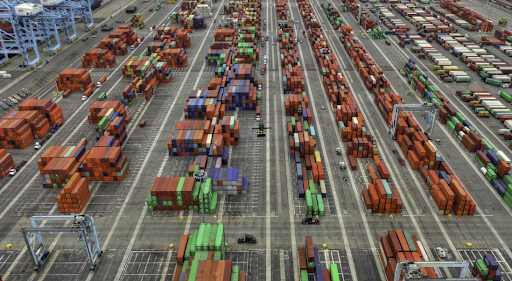
The scale of freight movement makes dock performance a high-impact warehouse function. In 2023, the U.S. transportation system moved an average of 55.5 million tons of freight per day, valued at more than $51.2 billion daily. This shows why even small delays at the loading dock can affect carrier schedules, inventory flow, labor planning, and outbound service levels.
This blog covers the warehouse loading and unloading process, key challenges, best practices, KPIs, and how Synkrato improves dock operations.
Warehouse Loading and Unloading Process
Warehouse loading and unloading follow a step-by-step process that ensures freight is handled safely, verified accurately, and dispatched efficiently.
Dock Scheduling and Truck Arrival
Preparation and staging should begin before the truck reaches the gate. Each appointment should include the carrier, trailer number, ASN or PO, pallet count, unloading method, temperature requirements, and required labor or equipment.
Reserve dock capacity based on cargo complexity, trailer type, and handling requirements, while ensuring the assigned dock and staging area are clear before truck arrival. Synkrato‘s 3D Digital Twin provides a real-time view of dock activity and material flow, helping teams allocate docks more efficiently and reduce congestion.
Vehicle Inspection and Safety Checks
Inspection should include verifying trailer condition, dock levelers, vehicle restraints, wheel chocks, lighting, PPE compliance, and seal integrity.
About 84 forklift-related workplace deaths reported in 2024 highlight why pre-shift equipment checks and controlled dock procedures should never be skipped.
Cargo Verification
Every shipment should undergo a freight assessment before entering inventory. Inspect for shifted loads, water or pest damage, broken packaging, and quantity discrepancies before comparing the shipment against the ASN, purchase order, and shipping documents.
Damaged goods should be photographed, documented, and moved to a designated inspection area before they enter inventory.
Loading and Unloading Operations
The loading or unloading method should match the cargo format and trailer type. Palletized freight can be handled with forklifts or pallet jacks, while floor-loaded cargo requires manual warehouse unloading procedures before palletization.
Good loading practices include:
- Use load restraints such as straps, load bars, or airbags to prevent cargo movement.
- Build loads in the delivery sequence to reduce unloading time and product damage.
Inventory Recording
Inventory should be updated immediately after quality verification. Real-time WMS updates improve stock visibility and reduce receiving errors.
An inventory workflow includes:
- Received at the dock
- Inspection completed
- Accepted into inventory
- Put away
- Moved to staging
- Loaded and dispatched
Shipment Dispatch
Complete final checks before dispatch by verifying the load plan, pallet count, destination, seal number, and shipping documents.
Finish with driver and supervisor sign-offs, apply security seals where required, and release the vehicle only after removing wheel chocks and disengaging mechanical restraints.
Types of Warehouse Loading and Unloading Operations
Loading and unloading in warehouses fall into four broad categories: manual, mechanized, automated, and cross-docking. The right method depends on cargo format, volume, trailer type, labor availability, equipment, and speed requirements.
Manual Loading and Unloading
Manual loading is used when workers physically lift, carry, sort, and stack boxes, bags, loose freight, or floor-loaded containers.
- Best used for: Irregular cargo, fragile goods, mixed cartons, returns, or non-palletized freight.
- Equipment: Hand trucks, manual pallet jacks, lift tables, ergonomic aids, and telescopic or accordion conveyors.
Manual does not mean uncontrolled. Teams still need clear work instructions, safe lifting practices, dock visibility, exception codes, and proper lighting inside trailers.
Forklift-Assisted Operations
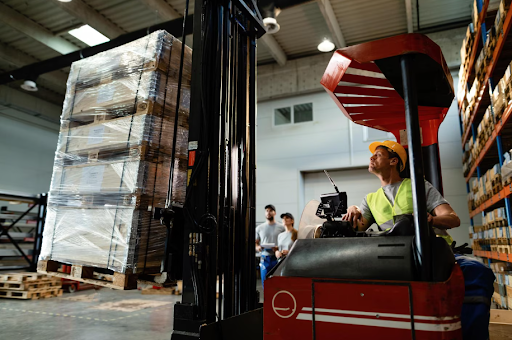
Forklift-assisted loading is a mechanized operation used for palletized goods, crates, drums, heavy cargo, and fast-moving distribution workflows.
- Best used for: Standardized shipments, bulk replenishment, trailer loading, and pallet movement.
- Equipment: Sit-down forklifts, stand-up forklifts, reach trucks, motorized pallet jacks, dock levelers, and vehicle restraints.
The main risks include trailer creep, dock-edge falls, pedestrian interaction, pallet damage, and wrong load sequencing.
Conveyor-Based Loading
Conveyor-based loading supports cartons, parcels, e-commerce orders, and high-volume case movement. It reduces walking, improves flow, and helps move goods faster from staging to the trailer.
- Best used for: Floor-loaded trailers, parcel operations, case-heavy distribution, and repetitive loading lanes.
- Equipment: Powered conveyors, telescopic conveyors, scan tunnels, dimensioners, weighing systems, and sortation equipment.
Palletized Loading and Unloading
Palletized loading moves unitized cargo on pallets instead of handling loose cartons. It is faster than manual case handling, but it still needs accurate labeling, load sequencing, and damage checks.
- Best used for: Stable SKUs, full-pallet moves, retail replenishment, manufacturing shipments, and warehouse transfers.
- Equipment: Forklifts, pallet jacks, AGVs, dock levelers, pallet wrappers, and WMS-directed loading.
Coca-Cola trialled a fully autonomous outdoor electric truck to move pallets and operate safely in mixed traffic with forklifts and other vehicles.
Cross-Docking Operations
Cross-docking skips long-term storage. Incoming goods are unloaded, sorted at the dock, and quickly reloaded onto outbound trucks.
- Best used for: Time-sensitive freight, perishable goods, just-in-time manufacturing, store replenishment, and consolidated outbound loads.
- Equipment: High-speed sortation systems, RFID, barcode scanners, conveyors, forklifts, and staging lanes.
Cross-docking works only when inbound data is accurate. Teams must identify the destination, SKU, quantity, and outbound lane as soon as freight reaches the dock.
Automated Loading Systems
Automated loading systems reduce manual intervention by using computer-controlled equipment to move goods in a repeatable sequence.
- Best used for: High-volume facilities, repetitive workflows, heavy cargo, hazardous goods, and controlled trailer types.
- Equipment: AGVs, AS/RS, robotic arms, automated conveyor belts, automated truck loading systems, and load confirmation software.
Common Challenges During Loading and Unloading
Loading and unloading operations face challenges that affect dock productivity, shipment accuracy, worker safety, and inventory visibility.
- Dock Congestion: Dock congestion occurs when dock schedules, yard movement, labor, and dock assignments are not synchronized. Real-time dock scheduling helps identify bottlenecks early.
- Long Truck Turnaround Times: Long truck turnaround times result from waiting outside the gate, delayed dock assignment, slow loading, paperwork, or inspection delays. Instead of measuring a single total time, track waiting, docking, working, documentation, and exit times separately.
- Labor Shortages: Labor shortages reduce loading speed, increase overtime, and make manual handling more difficult. About 35% of supply chain leaders identify workforce shortages as a major industry challenge.
- Equipment Downtime: Equipment downtime involving forklifts, dock levelers, conveyors, scanners, or vehicle restraints can slow dock operations. Computerized maintenance management systems (CMMS) and preventive maintenance programs identify equipment issues early and reduce unexpected downtime.
- Cargo Damage: Cargo damage is often caused by poor stacking, shifting cargo, uneven weight distribution, or incorrect load planning. Using load planning software, load locks, straps, and proper pallet sequencing reduces damage.
- Inventory Errors: Inventory errors occur because of delayed receiving, missing scans, manual data entry, duplicate labels, or misplaced pallets. Recording inventory at the point of movement creates a single source of truth for receiving, putaway, replenishment, and dispatch.
Best Practices for Faster and Safer Operations
The following loading and unloading best practices help streamline loading and unloading operations while improving efficiency, safety, and inventory control.
- Schedule Dock Appointments: Schedule dock appointments based on workload rather than fixed time slots. A WMS, yard management system (YMS), or dock scheduling software can allocate docks, labor, and equipment based on trailer type, cargo volume, and unloading requirements to reduce congestion.
- Stage Goods Before Truck Arrival: Stage goods by route, stop sequence, customer, and loading priority before the truck arrives. Use barcode scanning or RFID to verify staged pallets. Synkrato’s Enterprise Mobility enables real-time task execution and load verification, reducing loading time and cargo rehandling.
- Standardize Loading Procedures: Create standardized workflows for inspection, loading, securing, documentation, and dispatch. Digital checklists, mobile devices, and barcode verification help ensure every shipment follows the same process and reduce manual errors.
- Optimize Dock Layout: Design a flow-first layout with one-way traffic to reduce congestion. Optimize SKU placement by storing fast-moving products in the golden zone, group complementary items together, and separate forklift routes from pedestrian walkways to improve safety and productivity.
- Train Warehouse Staff: Provide continuous training on equipment handling, WMS workflows, safe lifting, emergency response, and loading best practices. Cross-trained teams can adapt more quickly during seasonal peaks or labor shortages.
- Perform Equipment Inspections: Conduct regular equipment checks on forklifts, dock levelers, restraints, conveyors, pallet jacks, and loading docks before each shift. Maintain clear aisles and floor markings, and use digital inspection apps to identify issues before they cause downtime.
Safety Controls Every Warehouse Should Follow
Strong warehouse safety controls reduce workplace injuries, protect inventory, and help maintain regulatory compliance during loading and unloading operations.
- Secure Vehicles at the Dock: Secure every trailer before loading or unloading using vehicle restraints, wheel chocks where required, brake confirmation, and dock communication lights.
- Use Dock Levelers and Vehicle Restraints: Inspect dock levelers and vehicle restraints routinely and include them in preventive maintenance. Forklift operations should begin only after pre-shift vehicle checks.
- Wear PPE: Enforce mandatory PPE, including high-visibility vests, steel-toed boots, gloves, helmets, hearing protection, and cold-chain gear where required.
- Maintain Clear Loading Zones: Use traffic management practices such as dedicated pedestrian lanes, speed limits, floor markings, and physical barriers or guardrails to separate forklifts from foot traffic.
- Follow Safe Lifting Practices: Use lift tables, conveyors, pallet jacks, adjustable workstations, and anti-fatigue mats.
- Conduct Routine Safety Audits: Conduct routine audits covering dock equipment, trailer securement, forklift behavior, housekeeping, PPE, lockout/tagout (LOTO) procedures, and exception handling.
KPIs That Measure Loading and Unloading Performance
Tracking the right KPIs helps warehouses measure loading speed, resource utilization, shipment accuracy, and operational efficiency.
Truck Turnaround Time
Formula: Gate-out time − Gate-in time
Also known as Dock Turnaround Time, it measures the total time a truck spends at the facility, from arrival to departure. Many warehouses also track Order Turnaround Time to measure the time from order release until the loaded truck leaves the dock.
Dock Utilization
Formula: Active dock time ÷ Available dock time × 100
Also called dock door utilization, this measures the percentage of time dock doors are actively used. Low utilization indicates poor scheduling or idle resources.
Loading and Unloading Time
Formula: Load/Unload completion time − Operation start time
This KPI assesses the time required to complete loading or receiving activities. It can also be extended to measure Dock-to-stock time, which tracks how quickly received goods become available for storage or order fulfillment.
Labor Productivity
Formula: Pallets, cartons, cases, or tons handled ÷ Labor hours
Also referred to as volume processed per hour, this measures warehouse throughput. Many operations also monitor loading and unloading cost per unit (cost per pallet, carton, or truckload) alongside this KPI to evaluate labor and equipment efficiency.
Shipment Accuracy
Formula: Correctly loaded units ÷ Planned units × 100
Also known as the Loading/Receiving Accuracy Rate, this KPI calculates whether shipments are loaded or received without errors, shortages, or damage.
Cargo Damage Rate
Formula: Damaged units ÷ Total units handled × 100
It measures the percentage of products damaged during loading or unloading. Tracking damage by dock door, operator, carrier, trailer type, packaging, and load pattern helps identify recurring handling or equipment issues.
Optimize Warehouse Loading and Unloading with Synkrato
Warehouses need real-time visibility into dock operations, inventory movement, labor execution, and warehouse workflows for effective loading and unloading. Synkrato helps optimize these processes by connecting data, people, and operations. The platform:
- Improves real-time visibility across dock scheduling, staging, loading, and unloading operations.
- Optimizes warehouse layouts and material flow.
- Executes warehouse tasks faster by reducing manual coordination and cargo rehandling.
- Improves inventory movement and shipment accuracy through connected warehouse workflows.
Book a demo with Synkrato to optimize dock operations, reduce loading delays, and improve warehouse visibility.
FAQs
What are the key steps in the warehouse loading and unloading process?
The process starts with dock scheduling and truck arrival. It then moves through vehicle inspection, trailer securement, cargo verification, loading or unloading, inventory recording, final checks, documentation, and shipment dispatch.
How can Synkrato help optimize warehouse loading and unloading operations?
Synkrato improves dock visibility and workflow coordination. Its 3D digital twin, enterprise mobility, AI agents, and simulation & optimization solutions help optimize staging, inventory movement, and loading sequences.
What challenges commonly affect warehouse loading and unloading operations?
Common challenges include dock congestion, long truck turnaround times, labor shortages, equipment downtime, and cargo damage. Inventory errors, safety risks, and poor communication between warehouse teams and drivers can also slow operations.
Why do loading and unloading bottlenecks still occur even with warehouse management systems without Synkrato?
A traditional WMS records warehouse transactions and inventory movements. However, it may not optimize dock operations, labor movement, or staging decisions in real time. This can lead to congestion, delays, and unnecessary rehandling.
How can warehouses improve loading and unloading efficiency?
Schedule dock appointments based on workload and stage goods before truck arrival. Standardize loading procedures, optimize dock layouts, train warehouse staff, and use Synkrato’s platform to improve operational efficiency.
How does Synkrato improve warehouse loading and unloading efficiency?
Synkrato provides real-time visibility into dock and warehouse operations. It helps optimize layouts, prioritize tasks, improve inventory movement, and recommend efficient loading sequences. This reduces delays, congestion, and shipment errors.
How does warehouse technology improve loading and unloading?
Warehouse technology connects dock scheduling, inventory tracking, equipment, and shipment verification. Synkrato improves these processes through real-time warehouse visibility and workflow optimization, helping reduce manual errors and loading delays.