Speed, accuracy, and scale: modern warehouses are under more pressure than ever to deliver all three at once. To keep up, businesses are turning to automation that can move faster, think smarter, and operate around the clock. What’s emerging is a warehouse that runs less on manual effort and more on intelligent systems.
In this blog, we’ll answer the question: What is warehouse automation? We’ll also explore how it has evolved over the years and the technologies redefining operations today.
What is Warehouse Automation?
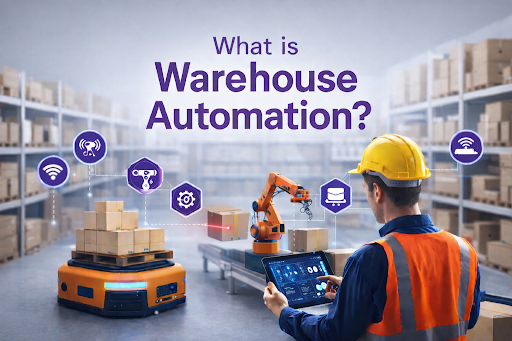
Warehouse automation refers to the strategic use of software, robotics, and data-driven systems to automate inventory movement, storage, and order fulfillment processes within a warehouse. It replaces manual decision-making with system-directed workflows, enabling faster, more consistent, and scalable operations across complex supply chain environments.
At an advanced level, warehouse automation is not limited to physical systems like robots or conveyors. It includes intelligent orchestration layers such as WMS, AI-driven optimization engines, and platforms like Synkrato that continuously analyze live data to improve operational decisions. Leading warehouses are evolving into fully integrated, data-centric ecosystems where automation drives both operational efficiency and strategic decision-making.
How Warehouse Automation Works
Warehouse automation works by integrating data, software, and machines to streamline and optimize every stage of warehouse operations. To understand how this seamless system comes together, let’s break it down step by step:
Step 1: Data Capture (barcode, RFID, sensors)
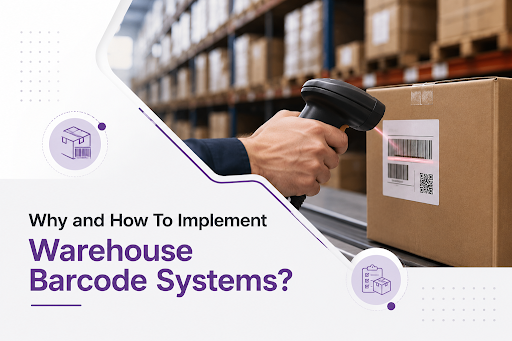
Automation begins with accurate, real-time data capture across all inventory touchpoints using barcode scanners, RFID tags, and IoT sensors. These technologies create a digital representation of physical inventory, enabling precise tracking of SKU location, movement, and status. High-quality input data is critical, as it directly impacts downstream decision-making and system accuracy.
Step 2: System Processing
Captured data flows into centralized platforms such as WMS or ERP systems. These systems apply rule-based logic, optimization algorithms, and increasingly, machine learning models.
Modern WMS platforms dynamically allocate inventory, prioritize orders, and optimize picking paths based on real-time constraints. Advanced systems also leverage predictive analytics to anticipate demand spikes and adjust workflows proactively. Beyond traditional rule-based systems, solutions like Synkrato introduce AI-driven decision intelligence that dynamically adapts workflows based on real-time operational conditions. Integrating Synkrato into the automation can help improve warehouse productivity by up to 25%.
Step 3: Task Execution
Once decisions are generated, execution is carried out through a combination of automated equipment and guided human actions. This includes robotic picking systems, AMRs, conveyors, and pick-to-light or voice-directed systems.
Execution layers ensure consistency, reduce variability, and significantly increase throughput across warehouse operations. For example, AMRs dynamically navigate warehouse floors, adjusting routes based on congestion and task priority.
Step 4: Real-Time Monitoring & Optimization
Automation systems continuously monitor performance metrics such as throughput, order accuracy, and equipment utilization. Real-time dashboards and analytics platforms provide visibility into operations, enabling immediate identification of bottlenecks. Real-time analytics can reduce operational inefficiencies by enabling faster corrective actions and continuous improvement cycles.
Human + Machine Collaboration Model
Modern warehouse automation operates on a hybrid model where humans and machines complement each other’s capabilities. While automation handles repetitive, high-volume tasks, human operators manage exceptions, oversee operations, and make strategic decisions. This collaboration improves overall system resilience while addressing key challenges of warehouse automation related to workforce adaptation and flexibility.
Types of Warehouse Automation Systems
Warehouse automation systems come in different forms, each designed to improve efficiency, accuracy, and operational speed at varying levels of complexity. Here’s a breakdown of key types of warehouse automation systems:
Basic Automation (barcode scanning, mobile devices)
Basic automation focuses on simple tools like barcode scanners, mobile devices, and basic inventory tracking tools to digitize manual tasks. These systems improve data accuracy and reduce manual errors but do not significantly alter physical workflows. They often serve as the first step toward more advanced automation.
Process Automation
Process automation introduces system-driven workflows using Warehouse Management Systems (WMS) and rule-based logic. These systems automate inventory allocation, order routing, replenishment triggers, and picking strategies based on predefined rules. This level significantly improves operational consistency and forms the backbone for scaling warehouse operations.
However, traditional WMS platforms are often limited to rule-based execution and lack adaptive intelligence. Synkrato acts as a decision intelligence layer on top of existing WMS, enabling dynamic optimization, real-time decisioning, and continuous performance improvement.
Physical Automation
Physical automation focuses on mechanizing material handling processes within the warehouse. This includes conveyor systems, automated sortation lines, robotic picking arms, and palletizing solutions. Autonomous Mobile Robots (AMRs) and Automated Guided Vehicles (AGVs) play a critical role in this layer by transporting goods efficiently across warehouse zones.
While AGVs operate on predefined paths, AMRs use real-time navigation and adaptive routing, making them more suitable for dynamic environments. This level significantly increases throughput and reduces manual handling. Physical automation systems can improve throughput by up to 40% while reducing manual handling costs by 30%.
Fully Automated Warehouses
Fully automated warehouses represent the highest level of automation maturity, with minimal human intervention in daily operations. Robotics, AS/RS systems, AI-driven orchestration, and integrated control systems manage end-to-end workflows.
These environments are designed for high-volume, high-speed operations where consistency, scalability, and precision are critical. However, they require significant capital investment and advanced system integration, making the ROI a key strategic consideration.
Advanced Automation
Advanced automation integrates artificial intelligence, IoT devices, and predictive analytics into warehouse operations. These systems dynamically optimize workflows, predict maintenance requirements, and improve demand forecasting accuracy.
They enable data-driven decision-making and continuous optimization, significantly enhancing the benefits of warehouse automation. Synkrato’s AI-driven slotting optimization, for instance, reduces travel time, enhances picking efficiency, and reduces bottlenecks, providing measurable value to warehouses.
Key Warehouse Automation Technologies
Warehouse automation is driven by a tightly integrated technology stack. Each component plays a specific role in improving throughput, accuracy, and system intelligence.
Automated Storage & Retrieval Systems (AS/RS)
AS/RS systems automate the storage and retrieval of inventory using cranes, shuttles, or vertical lift modules. They significantly improve storage density by utilizing vertical space and reducing the need for manual travel. These systems are ideal for high-volume environments with predictable demand patterns and tight space constraints.
Autonomous Mobile Robots (AMRs) & AGVs
AMRs and Automated Guided Vehicles (AGVs) handle material transport within warehouses. While AGVs follow fixed paths, AMRs use real-time navigation and dynamic routing.
AMRs are better suited for environments with variable workflows and frequent layout changes. These systems improve operational flexibility and reduce congestion in high-traffic zones.
Conveyor & Sortation Systems
Conveyor systems streamline the movement of goods between different warehouse zones, reducing manual handling. Sortation systems automatically route items based on predefined criteria such as destination, order type, or SKU. These technologies are critical in high-throughput operations, especially in e-commerce and distribution centers.
Goods-to-Person (GTP) Systems
GTP systems bring inventory directly to the operator, eliminating the need for manual travel across the warehouse. This significantly reduces picking time and improves productivity. It also enhances ergonomics and reduces worker fatigue, making operations more sustainable at scale
Warehouse Management Systems (WMS)
WMS platforms act as the central control system for warehouse operations. They manage inventory, coordinate workflows, and integrate with automation technologies such as robots and conveyors.
Modern WMS solutions enable real-time decision-making and provide visibility across all warehouse activities. Advanced WMS capabilities are essential for building digitally enabled supply chains.
Barcode, RFID & Scanning Systems
These systems enable real-time inventory tracking and data accuracy. Barcode scanning remains widely used due to its cost-effectiveness. RFID systems provide higher efficiency in environments requiring bulk scanning and non-line-of-sight visibility. Accurate data capture through these technologies is critical for ensuring the effectiveness of all downstream automation systems.
Digital Twins
Digital twins create a real-time virtual replica of warehouse operations, synchronizing physical assets with digital models. They enable continuous monitoring, scenario testing, and performance analysis without disrupting live operations. This allows leaders to identify inefficiencies, validate changes, and optimize system performance with minimal operational risk.
Synkrato’s Digital Twin provides a dynamic environment to visualize operations, identify inefficiencies, and validate changes before execution, reducing risk and improving decision-making.
Operational Simulation & Scenario Modeling
Simulation models replicate warehouse workflows to test different strategies, layouts, and demand scenarios before implementation. They help evaluate throughput, resource utilization, and bottlenecks under varying conditions such as peak demand or SKU expansion. This reduces deployment risk and ensures that automation investments are aligned with real-world performance expectations.
Synkrato’s simulation capabilities use live data to continuously refine decisions, ensuring strategies align with real-world conditions and deliver measurable results.
Benefits of Warehouse Automation
Warehouse automation delivers measurable improvements in speed, accuracy, cost efficiency, and operational control across fulfillment processes. Let’s look at the key benefits of warehouse automation:
Faster Order Fulfillment & Throughput
Automation reduces process latency by eliminating manual bottlenecks in picking, packing, and sorting. Technologies like AMRs, GTP systems, and sortation lines enable parallel processing of orders at scale. This results in significantly higher throughput, especially in high-volume and time-sensitive environments.
Higher Accuracy (reduced picking/packing errors)
Automation standardizes workflows and integrates validation checkpoints throughout the fulfillment process. Barcode scanning, RFID, and system-directed picking reduce human errors in order handling. Higher accuracy minimizes returns, rework, and customer dissatisfaction
Lower Labor Costs & Better Workforce Utilization
Automation reduces reliance on manual labor for repetitive and time-intensive tasks. It enables workforce reallocation toward higher-value activities such as exception handling and process optimization. This improves overall labor productivity while stabilizing operational costs.
Improved Inventory Visibility (real-time tracking)
Real-time data capture and system integration provide end-to-end visibility of inventory movement. This enables better demand forecasting, stock optimization, and faster decision-making. Improved visibility is critical for building resilient and responsive supply chains.
Enhanced Workplace Safety
Automation reduces physical strain by minimizing manual handling of heavy loads and repetitive movements. Robotic systems and automated equipment lower the risk of workplace injuries. This leads to safer working environments and improved compliance with safety standards.
Scalability for E-commerce Growth
Automation systems are inherently scalable, allowing warehouses to handle increasing order volumes without proportional increases in labor. They support complex fulfillment models such as omnichannel and same-day delivery. This makes automation a critical enabler for sustained e-commerce growth.
When combined with Synkrato’s decision intelligence, these benefits are amplified through continuous optimization and real-time adaptability.
Challenges of Warehouse Automation
Despite its advantages, organizations must address several challenges of warehouse automation to ensure successful implementation.
High Initial Investment Cost
Warehouse automation requires substantial upfront investment in hardware, software, and infrastructure upgrades. Costs include robotics, storage systems, integration layers, and facility modifications. Without a clear roadmap and volume justification, achieving the desired ROI of warehouse automation can be delayed.
Integration with Existing Systems
Integrating automation technologies with legacy ERP and WMS platforms is often complex and resource-intensive. Data silos, incompatible architectures, and limited API capabilities can slow down deployment. A phased integration strategy is typically required to ensure system stability and continuity.
Maintenance & Technical Expertise
Automated environments require ongoing maintenance, system monitoring, and specialized technical expertise. Breakdowns or system failures can disrupt operations at scale if not managed proactively. Organizations must invest in skilled resources or external partners to maintain system reliability.
Change Management & Workforce Adaptation
Workforce resistance and skill gaps can hinder automation adoption. Successful implementation requires structured change management and upskilling programs. This is a critical factor often underestimated during automation planning.
When Should You Implement Warehouse Automation
Warehouse automation becomes essential when operational inefficiencies begin to limit growth, accuracy, and profitability. Key indicators include:
- Increasing Order Volume: A sustained increase in order volume creates pressure on manual processes. Automation enables consistent performance without proportional increases in labor.
- High Error Rates: Frequent picking and packing errors indicate process inefficiencies. Automation introduces standardization and system validation to improve accuracy.
- Rising Labor Costs: Increasing labor costs and workforce shortages make automation a strategic necessity. Automation helps stabilize operational expenses and improve predictability.
- Space Utilization Issues: Limited warehouse space can restrict growth. Technologies like AS/RS and vertical storage systems maximize available space and improve storage density.
Move Beyond Automation to Intelligent Optimization with Synkrato
Most warehouse automation systems rely on static rules, limiting their ability to adapt to real-time operational changes. Synkrato acts as a decision intelligence layer on top of existing management systems, enabling warehouses to move beyond static automation.
It helps increase warehouse productivity by up to 25% while reducing travel time by up to 50%, directly improving operational efficiency. By optimizing workflows and inventory placement, it minimizes wasted movement and maximizes throughput. This results in faster fulfillment, better resource utilization, and stronger ROI from existing systems.
How Synkrato Enhances Warehouse Automation
- Real-Time Decision Intelligence: Continuously analyzes live warehouse data to optimize task prioritization, inventory allocation, and workflow execution.
- AI-Driven Slotting Optimization: Dynamically adjusts inventory placement based on demand patterns, reducing travel time and improving picking efficiency.
- Seamless WMS Integration: Works on top of existing systems without requiring full infrastructure replacement, minimizing disruption and implementation risk.
- Predictive Operational Insights: Identifies bottlenecks, demand fluctuations, and inefficiencies before they impact performance.
- Scalable for Complex Environments: Designed to support high-SKU, high-volume operations across e-commerce, retail, and 3PL warehouses.
If productivity and throughput are plateauing, it’s time to rethink your approach. Book a demo with Synkrato to reduce travel time, improve accuracy, and maximize ROI from your existing warehouse systems.
FAQs
What is warehouse automation?
Warehouse automation refers to the use of software, robotics, and data-driven systems to automate inventory handling, storage, and order fulfillment. It replaces manual processes with system-directed workflows, improving efficiency, accuracy, and scalability in complex, high-volume warehouse environments.
What problems does warehouse automation actually solve in daily operations?
Warehouse automation reduces manual errors, improves order processing speed, and enhances inventory visibility. It minimizes travel time, standardizes workflows, and optimizes labor utilization. These improvements address inefficiencies in picking, packing, and inventory tracking, leading to more consistent and reliable daily operations.
How do you decide which warehouse processes should be automated first?
Organizations prioritize automation based on high-impact, repetitive processes such as picking, sorting, and inventory tracking. A data-driven assessment of bottlenecks, error rates, and labor intensity helps identify areas with the highest ROI potential, ensuring effective and phased automation implementation. Decision intelligence platforms like Synkrato can further refine this prioritization by analyzing real-time operational data and identifying the highest-impact automation opportunities.
Can warehouse automation work without replacing human workers completely?
Yes, modern warehouse automation follows a human-machine collaboration model. Automation handles repetitive, high-volume tasks, while human workers focus on exception handling, supervision, and decision-making. This approach improves productivity while maintaining flexibility and operational control. Synkrato supports this hybrid model by enabling intelligent orchestration of tasks between humans and automated systems, ensuring smoother collaboration and higher operational efficiency.
What is the ROI timeline for warehouse automation investments?
The ROI of warehouse automation typically ranges between two to five years, depending on scale, complexity, and order volume. High-throughput environments often achieve faster returns due to efficiency gains, reduced labor costs, and improved accuracy across operations.
How does warehouse automation improve order accuracy and customer satisfaction?
Automation improves accuracy through system validation, barcode/RFID tracking, and standardized workflows. It reduces picking and packing errors, ensuring correct and timely deliveries. Higher accuracy directly enhances customer satisfaction, reduces returns, and strengthens overall service reliability.
What are the biggest mistakes companies make when implementing warehouse automation?
Common mistakes include underestimating integration complexity, lacking a clear ROI strategy, and ignoring change management. Many organizations also over-automate without aligning systems to actual operational needs, leading to inefficiencies and underutilized investments.
How does warehouse automation integrate with existing systems like ERP or WMS?
Warehouse automation integrates with ERP and WMS through APIs, middleware, and data synchronization layers. Modern solutions are designed to work with existing infrastructure, enabling real-time data exchange and coordinated workflows without requiring complete system replacement. Synkrato integrates seamlessly on top of existing WMS and ERP systems, enhancing them with real-time decision intelligence without requiring core system replacement.
Is warehouse automation scalable as business grows or order volume increases?
Yes, most warehouse automation systems are modular and scalable. Organizations can expand capabilities by adding robots, storage systems, or software layers. This flexibility allows warehouses to handle increasing order volumes and SKU complexity without major operational disruptions.
What level of warehouse automation is suitable for small vs large businesses?
Small businesses typically adopt basic or process automation to improve efficiency and accuracy. Large enterprises invest in advanced or fully automated systems to handle high volumes and complexity. The level depends on scale, budget, and operational requirements.